Tal Wagner: creativity rooted in curiosity

Pau Waelder

London-based artist Tal Wagner is engaged in a fruitful and limitless exploration of nature through digital media. Working in dialogue with AI, she develops a solid visual language that adapts to a different aesthetic in every series, reflecting on her evolving exploration and an expanding artistic vocabulary. Her work—featured on public media screens in Seoul and in immersive exhibits in Tel Aviv—invites viewers to slow down and discover the hidden beauty of the natural world. In this interview, Wagner shares her shift into digital art, her intuitive creative process, and how curiosity drives her work.

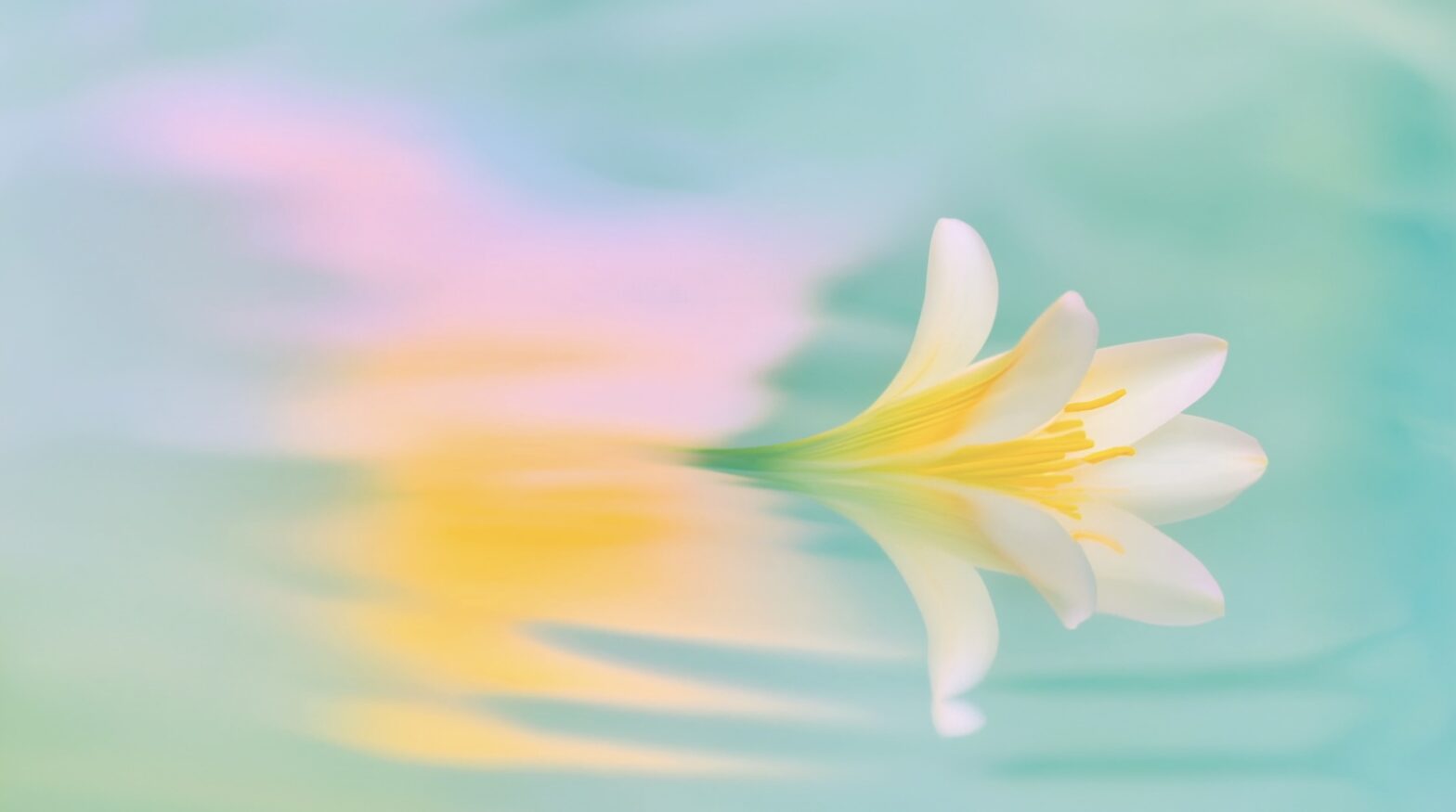
Tal Wagner. Prism of Spring, 2025

You have a background in graphic design, particularly focused on web design. How has your knowledge of visual communication shaped your artistic practice?

Working as a graphic and web designer has had a profound influence on my artistic practice. As a designer, my role is to develop unique visual languages for different clients and constantly search for creative visual solutions. Over the years, I have been exposed to a wide range of aesthetics, artistic styles, and design approaches, which has made me very flexible and open in the way I think about image-making.

I carry with me a kind of mental visual library— a collection of references, compositions, colors, textures, and visual worlds that I draw upon intuitively when I create. Alongside that, I’ve always been deeply fascinated by color, harmony, and the natural world, which have become central themes in my work.

I’m also naturally drawn to technology. I enjoy learning new creative tools and experimenting with emerging technologies, so working with AI felt like a natural evolution. It simply became another medium through which I could explore my ideas.

“I’ve always been deeply fascinated by color, harmony, and the natural world, which have become central themes in my work.”

You have mentioned that the widespread use of AI has driven your transition into digital art. Why is that so? Didn’t you consider creating artworks with the tools you already mastered as a graphic designer?

The truth is that alongside my career as a graphic designer, I was always making art. I’ve always considered myself an artist. Before AI, I worked with drawing, photography, and especially abstract painting. My background is rooted in fine art.

At the same time, I needed a stable career while raising my children, and web design became my main focus for many years while art making remained a parallel practice.

“With AI, the visual possibilities feel almost limitless, and every new project becomes an opportunity to explore territories that simply weren’t available before.”

When AI emerged in 2023, everything changed, not only for me, but for many creatives. It felt like we’d suddenly been given wings. I couldn’t resist exploring what this new medium could unlock. It opened up an entirely new creative playground where I could express ideas that had previously been difficult or impossible to realize: from surrealism and humor to influences from art history and entirely new visual aesthetics.

AI also allowed me to bring together many of my passions: my love of nature, animation, music, and video art. Before AI, producing animated artworks was a long and expensive process that required mastering highly complex software. Today, many of those technical barriers have disappeared. AI has made these forms of expression much more accessible, dramatically speeding up the execution process, allowing me to focus on creativity rather than technical execution.

For me, that’s the real revolution. The visual possibilities feel almost limitless, and every new project becomes an opportunity to explore territories that simply weren’t available before.

Tal Wagner. Animus Botanica V, 2026

You describe AI as a “creative partner.” Can you tell us more about how this creative collaboration takes place? What do AI systems bring to it, and in which cases do you feel either inspired or constrained by their output?

AI is simply another creative tool, another brush. For me, everything begins with visuals. Through experimentation in Midjourney, I occasionally come across an image that immediately captures my imagination. That’s when I begin to think about how it could evolve into a larger body of work, a group of images that leads to a story. The first visual is the trigger for everything.

One strong image takes me down the rabbit hole, and that’s where the real creative journey begins. I research, build mood boards, collect references, and compare different approaches, and experiment animation with different AI tools. Gradually, I weave the entire artwork around those initial visuals.

When I begin a project, I don’t always know exactly where it will end up, and that’s one of the things I love most about working with AI. Sometimes the results are completely different from what I expected. Occasionally they’re even better than what I had imagined, and I happily follow that new direction. The process is highly intuitive and incredibly rewarding.

I don’t believe in having complete control over AI. There’s beauty even within the limitations of the tool. A creative process should leave room for improvisation, spontaneity, glitches and happy accidents. Just as we appreciate visible brushstrokes and imperfections in a painting, I believe digital art should also preserve a sense of experimentation and discovery.

“I don’t believe in having complete control over AI. There’s beauty even within the limitations of the tool.”

You express your interest in both organic and artificial systems, and this is made evident by your choice of subject matter in series such as Animus Botanica or Prism of Time, as well as the use of generative AI. How do you approach your study of these systems? What determines the choice of elements in each composition, and how do you decide to conclude a series and move to a different theme or style?

Nature has been the common thread running through all of my work so far. I’m endlessly fascinated by its beauty, by botany, and by the remarkable intelligence of natural systems. The more I explore, the more I discover— from the sophisticated mechanisms of plants to the complexity of entire ecosystems.

Each series is really a different conversation with nature. In Germinative AI, I explored the parallels between the information stored within a seed and the data that fuels artificial intelligence. In Animus Botanica, I became interested in ecological relationships and the delicate balance between different living organisms. In Prism of Time, I reflected on the fleeting nature of beauty and the cycles of growth, bloom, and decline.

The choice of elements in each composition is very intuitive. It develops through visual research and experimentation. I continue exploring a theme until I feel I’ve taken the idea as far as I can, and that’s usually when I know it’s time to begin a new series.

Tal Wagner. Echoes of Hue, 2026

You describe your visual language as “rooted in curiosity.” This seems to imply working more with exploration than systematization, more doubts than certainties. What drives your curiosity, and how do you balance open exploration with constructing a distinct visual language that remains consistent across artworks in the same series?

My curiosity comes from staying open to new ideas that emerge through experimentation with AI tools. Nature is always the central theme of my work, but I’m constantly discovering new ways of looking at it. Sometimes it’s a scientific concept that captures my attention, sometimes the history of botanical art, and sometimes it’s simply the leafy, green neighborhood where I live in North London. I never know exactly what will spark the next series.

Although my process is very open, each body of work is built around a clear concept and a distinct visual language. Once I discover the aesthetic that best expresses that idea, I continue exploring within that framework. This allows each series to evolve organically while maintaining a strong visual coherence.

“Although my process is very open, each body of work is built around a clear concept and a distinct visual language.”

Prism of Time features almost abstract compositions, dominated by the interplay between blooming flowers and crystal cubes, creating a flowing rhythm of expansion and contraction. At times, there is a hint of a human presence. Can you elaborate on the concepts behind this series and the affinities and tensions between the elements?

Prism of Time was inspired by the fleeting beauty of flowers and our desire to preserve it. In this series, flowers are enclosed within blocks of ice and crystalline prisms, as if their moment of full bloom could be frozen in time. Yet nature is in constant motion, moving through endless cycles of growth, bloom, decay, and renewal. The vibrant colour palette, inspired by the rainbow, symbolizes hope.

With a background in abstract painting, I enjoy working with abstraction. By interweaving it with recognizable forms, I create a tension between the abstract and the familiar. Even within an almost entirely abstract composition, we as viewers instinctively search for something familiar to recognize and hold on to.

In these animations, the interplay between recognition and ambiguity is not just an aesthetic choice, but an essential part of the experience I want to create.

Occasionally, a human figure appears as a quiet witness. It offers a human perspective within this ever-changing world, reminding us that we too are part of the same cycles of growth, bloom, and decline.

Tal Wagner. Ripples of Colour, 2026

Animus Botanica consists of a series of morphing arrangements of flowers, with the occasional presence of birds and insects. Compared to Prism of Time, this series is aesthetically more sober and contained, at times evoking Baroque still life and also X-Ray images. Can you tell us about the inspiration behind this series and what you describe as “the hidden vitality of the natural world”?

Animus Botanica was inspired by a combination of botanical arrangements and X-ray botanical photography. I’ve always been fascinated by the way X-ray images reveal the hidden architecture of plants: the veins, petals, and internal structures that are invisible to the naked eye. I love that these images are both scientifically fascinating and visually beautiful. By layering textures and botanical forms, I create flowers that feel rich, delicate, and fragile, inviting viewers to appreciate the intricate beauty hidden beneath the surface.

Your comparison to Baroque flower paintings feels very natural to me. I am drawn to dramatic lighting, dark backgrounds, and I love how the colours of the flowers pop against them. I am also drawn to nature morte and to the way artists throughout art history have interpreted the natural world. Looking at the work of these artists continues to be an important source of inspiration for me.

When I talk about “the hidden vitality of the natural world,” I’m referring to the extraordinary relationships that exist beneath the surface. Plants, insects, birds, and entire ecosystems depend on one another in delicate and often invisible ways. That sense of interdependence, harmony, evolution and quiet intelligence is what I try to express in this series.

Tal Wagner. Animus Botanica l, 2026

Ocean Flora follows Animus Botanica in its exploration of the natural world, yet in this case the flora seems more surreal, at times suggesting jellyfish or even extraterrestrial beings from a 1950s science fiction illustration. What inspired you to explore this subject?

Ocean Flora was a natural continuation of my exploration of the natural world, but this time I wanted to expand it into the underwater environment.

The series was inspired by artists throughout the history of art who studied and documented marine organisms, blending aesthetic vision with documentary accuracy. Their work reveals the remarkable geometry and architecture of these living forms, which often appear almost surreal despite being completely real.

When I began interpreting these references through AI, the results became even more unexpected and otherworldly. The process reinforced my fascination with the intelligence and beauty of nature, including the underwater world, and reminded me that organic forms offer an endless source of inspiration and discovery

“The more I explore nature, the more questions I discover, and I feel that I’ll never run out of things to investigate or express through my work.”

Germinative AI is the seed of your other projects and actually consists of a process of translating and interpreting an image of a real seed through AI models. Can you explain the process behind this work and how it informs your other series?

Germinative AI began with a simple question: what would happen if I gave AI a real seed as its starting point? I scanned seeds into Midjourney and allowed AI to interpret them step by step. From these images, ChatGPT generated fictional botanical descriptions, which then became the basis for creating entirely new, imaginary plant species. It was a process of translation: from a real object into machine imagination.

What fascinated me wasn’t only the strange and beautiful images themselves, but the parallels between natural and artificial intelligence. A tiny seed contains all the information needed for a plant to grow, while AI generates new forms from the vast amount of information it has been trained on. Both systems transform stored information into something new, although in very different ways.

More importantly, this project sparked my curiosity. I love research, and Germinative AI made me realize that nature is the subject I keep returning to. The more I explore it, the more questions I discover, and I feel that I’ll never run out of things to investigate or express through my work.

Tal Wagner. Chromatic Gaze, 2026

Ambient sound is an important element in your work. How does it come into play? Do you create it after the video is complete, as an element that supports the visual output? Or does it shape what we see on the screen in any way?

There is a meditative quality that runs through all of my work.  You can feel it in the slow movement, the gentle flow, and the atmosphere I want to create. My goal is to invite the viewer to slow down and become immersed in the experience. If the movement of the artwork is more dynamic, I add a sound that will reflect that.

I often listen to ambient music while I’m creating on my computer. Sometimes I’ll hear a unique sound that feels like a perfect match for the animation I’m working on, and that’s when I realize what kind of sound the artwork needs. 
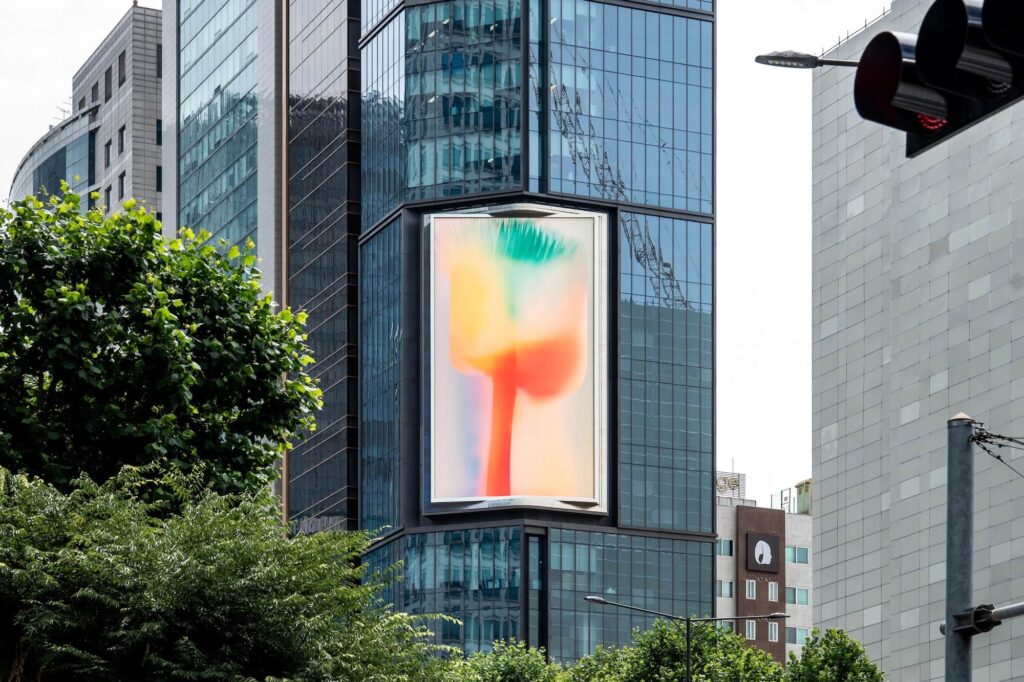
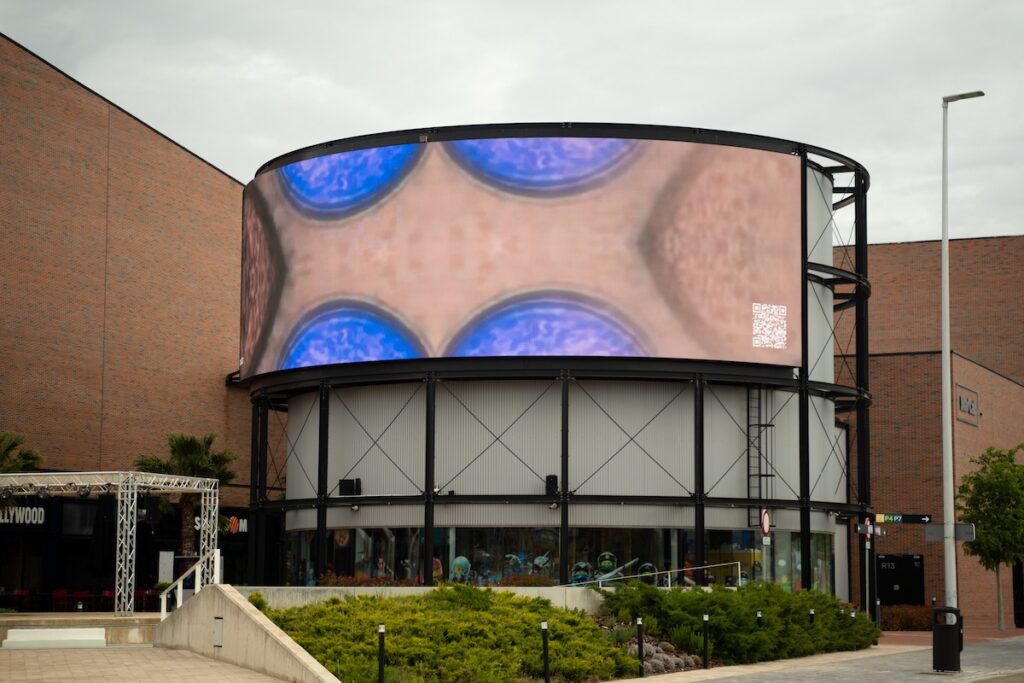
Tal Wagner’s work has been exhibited in media facades in Seoul (South Korea)

While your artistic career is relatively short, you have already exhibited your work in art spaces, commercial environments, and on large public screens. What is your experience of these different showcases?

Each setting creates a different relationship between the artwork and its audience.

Immersive exhibitions allow viewers to step inside the work. Seeing my animations projected across a 270-degree space was an unforgettable experience and made the work feel much more powerful.

“I love exhibiting in public and commercial spaces because they bring art into everyday life.”

Watching my artwork displayed on a large public screen in the heart of Seoul was another important milestone for me. It was incredible to see something I had created just three months earlier become part of the city’s visual landscape and be experienced by thousands of people in their everyday lives. It felt surreal and deeply rewarding.

I also love exhibiting in public and commercial spaces because they bring art out of the gallery and into everyday life. Through movement, colour, and sound, digital art has the ability to transform the atmosphere of a space and create a quiet moment of reflection. I enjoy exhibiting in all of these environments because each one offers a different way for people to connect with the work.
The Meditative Surrealism of MiraRuido

Niio Editorial

Joseba Elorza—the Spanish artist from Vitoria-Gasteiz better known by his synesthetic moniker MiraRuido—delves into the delicate balance between tranquil aesthetics and underlying tension that defines his signature form of collage surrealism. Originally trained as a sound technician before his passion for visual collage took over, Elorza has spent the last two decades building an impressive portfolio with clients like National Geographic, The Wall Street Journal, and Green Day. In this interview for Niio Editorial, the artist discusses his evolving creative process, from meticulously hunting for found footage to carefully building his intricate digital collages.

MiraRuido. 2 Lands, 2026

You have ample professional experience as an illustrator and creator of music videos. In both these types of creative projects there is a strong narrative element that guides each composition or animation. How do you work with this narrative aspect in your work? Does it drive your choice of elements, aesthetics, and the development of each scene, or do you keep to a central form of narration that is the core of your artistic practice?

Two decades of creative work give you room to experiment, and along the way I’ve realized I basically work in two different but complementary ways. One is the obvious one: I open a blank notebook, think about what I want to say, and start sketching whatever visual forms come to mind to say it. The other starts somewhere else entirely. I open the archive of photographs and footage I’ve been collecting for years and just browse through it. Sometimes a photo of a person doing one very specific thing triggers an idea, and I connect it straight to whatever commission or project is sitting on my desk. From there a snowball starts rolling and there’s no stopping it.

The narrative is usually the spine, but it doesn’t always come first. Sometimes I know the story and go looking for the image. Other times the image arrives before I know what it’s about, and the meaning surfaces while I’m building it. What stays constant in both cases isn’t a plot so much as a single situation, usually a figure who’s witnessing something rather than acting on it.

MiraRuido. Hold, 2023

Your visual style could be described as “sunny day surrealism” for its uplifting themes, bright colors, and overall positive and calming atmosphere. What leads you to create this particular ambience in your compositions? Which are your sources of inspiration?

I understand why it gets described that way, though I’d add a layer to it. The bright skies and the calm are deliberate, but they’re a hook, not the subject. What I’m really after is the moment right before discomfort, a beautiful space with something slightly wrong in it that you can’t immediately name. The light and the color are there precisely so the unease lands softer and stays with you longer.

The difference between a piece and a decorative image, for me, is whether something in it quietly refuses to let you feel entirely comfortable. My inspiration comes less from other image-makers than from cinema and from certain everyday situations that already feel surreal on their own.

“What I’m really after is the moment right before discomfort, a beautiful space with something slightly wrong in it that you can’t immediately name.”

Collage animation is a particular form of artistic expression that requires the ability to find the right elements and create a living scene from still, bidimensional images. Can you walk us through your creative process and the making of your animations?

Finding the right elements for a piece eats up a huge part of my time, and it’s something I’ve always loved, that search. They say a person spends a third of their life asleep; I’ve easily spent a third of my working life looking for photos and footage.

These days you can generate your own assets with AI, but my process hasn’t really changed. An animation always begins with a composition in Photoshop. Sometimes I detail it heavily, sometimes less, but the image has to hold up on its own first. Once it does, I rebuild everything in After Effects and the animation begins. Water moves, clouds drift, a flock crosses, but the figure usually stays still. And it’s during that search for material that the work itself can take directions I hadn’t planned, which is the part I find most rewarding.

MiraRuido. Life, 2026

“I’d rather create an artwork on two levels and let the viewer choose their depth than spell out the theme”

Some of your artworks have been conceived as NFTs. What has been your experience in the NFT community and market?

It’s a complicated world that’s lived through its own bubble. But at the time it mattered to me for a very concrete reason. As a digital artist who’d spent nearly twenty years handing his work over for other companies to monetize without ever seeing a cent of it, that moment opened a door: the door to actually living off my personal work. Client illustration and animation have always been my livelihood and I’m grateful for that, it’s wonderful work. But getting to live off the pieces that genuinely resonate with you, with no client brief in sight, is the best thing there is for an artist like me. It was impossible to turn down. 

MiraRuido. Roomscape 01, 2023

The Roomscapes series was created during the pandemic, but it still resonates with our daily experience of the spaces we live in and the places we would like to escape to. You have expressed that this project was well received. Can you tell us about its development and what has fascinated viewers about it?

Roomscapes grew out of a previous series called ‘Inside Worlds’, which I made in 2021 with the lockdown still fresh, landscapes folded inside four walls. But I quickly realized those rooms meant something more personal than the pandemic. I’m an extremely introverted person, and my home has always been a refuge that also makes me feel slightly guilty for staying in. That tension, where the interior keeps me safe but the exterior keeps pulling at me, is what the rooms are really about. I think it resonated because everyone recognizes it now: the comfort and the quiet claustrophobia of the space you live in. With Roomscapes I cut the pandemic thread and left the concept open, so each viewer could furnish the room with their own version of that feeling. 

“Roomscapes resonates with people because we all experience the comfort and the quiet claustrophobia of the space you live in.”

Decoupled is a particularly evocative and fascinating artwork that has been very favorably received among our audience at Niio. Despite its apparent simplicity, it is an elaborate combination of different animations that has been presented in different formats and contexts. Can you tell us more about this artwork and its making?

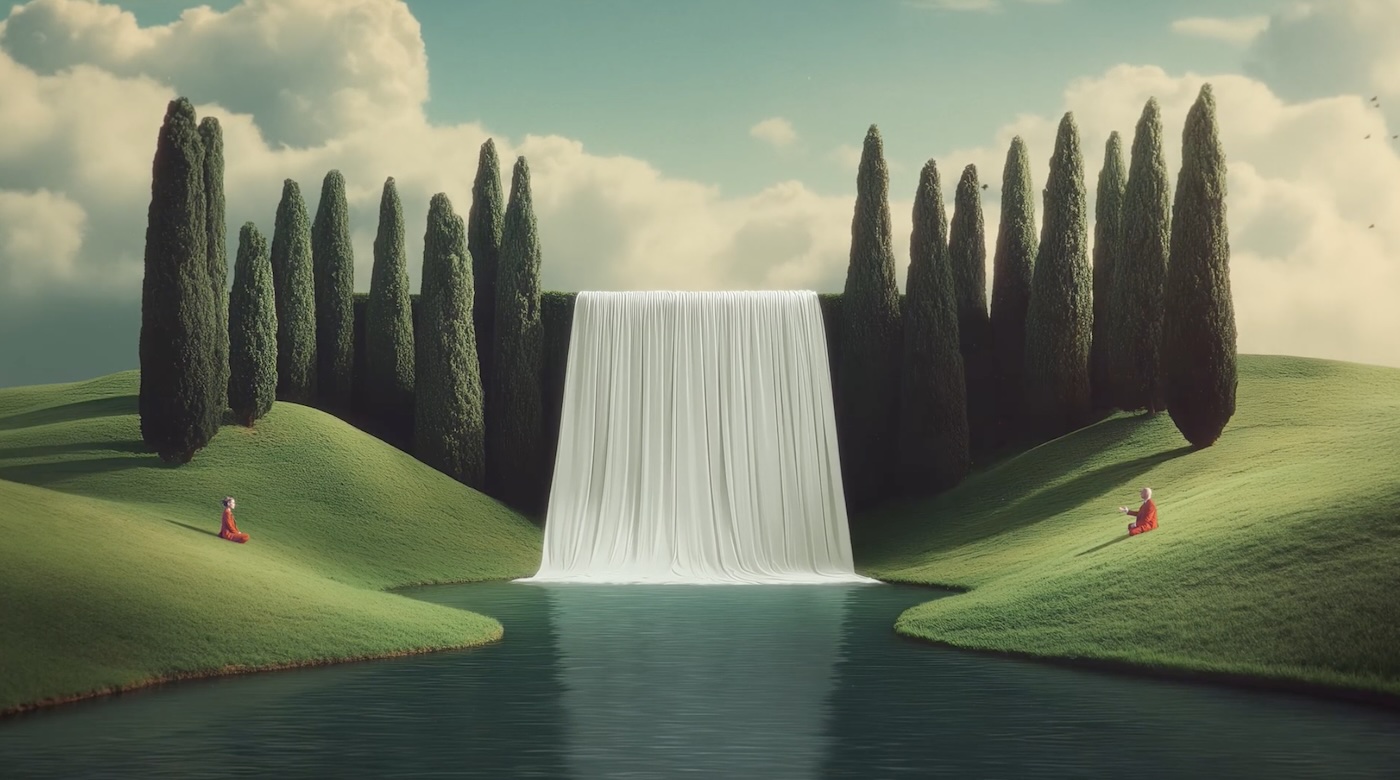
It looks simple, but it’s the opposite. The piece is about the sterile dialogue a couple ends up trapped in, the one where you’re not really listening, just waiting for the other person to stop talking so you can say your part. Two figures exchange gestures that never quite connect. The cypresses are their shared world, swaying back and forth in a loop that goes nowhere. And the veil running down the center is the distance growing between them, beautiful and indifferent. I always saw Magritte’s Les Amants as a painting about frustrated passion. Decoupled is what I imagine comes after: the veil is still there, but the passion’s gone and what’s left is the silence.

Technically it’s a combination of separate videos and images that come together to compose one enormous piece. 

MiraRuido. Decoupled, 2026

The Afterlife series depicts a series of calm, dreamlike scenes which actually illustrate reflections about life, death, and eternity. The contrast between the peaceful images and the profound themes they address is particularly interesting, but it also might lead to misunderstanding what the artworks are about. How do you deal with the multiple readings of your work?

I don’t try to control the readings, and the contrast you mention is intentional. Afterlife places very heavy subjects, death, eternity…. The risk is obvious: someone sees only a peaceful image and stops there. But I’ve made my peace with that. I’d rather create an artwork on two levels and let the viewer choose their depth than spell out the theme and kill it. The serene surface isn’t a disguise for the dark content; they’re the same thing. Death is dramatic, but it’s peaceful too. It’s the final stillness, the total stop, the most peaceful and the most dramatic thing at once. The series itself is about how I imagine life after death, if it existed at all: as an infinite tension, eternally unresolvable. 

MiraRuido. Cloud, 2021

In a similar vein, Death addresses the end of life but it does so through a beautiful depiction, a composition whose theatricality is inevitably mesmerizing. Considering this series, as well as Afterlife, and Life, how do you imagine the emotional response of viewers? 

I don’t aim for a specific emotion, and I’m wary of artists who claim they do. What I hope for is recognition more than reaction, that someone stands in front of one of these and feels something they were already carrying but hadn’t seen put into an image. With the death pieces especially, I’m not after sadness or fear. If anything I want a strange calm, the kind you feel looking at a landscape that’s completely indifferent to you. In Death the grand architecture adds the theatricality, that melodrama we’ve all collectively built up around dying over the centuries. The beauty isn’t there to soften the subject. It’s there because I think these themes really are beautiful, in a way we’ve been taught to find frightening.

“The real challenge is keeping the work recognizably yours as it moves between contexts that each pull it in a different direction.”

You have exhibited your work in art galleries, festivals, public spaces, streaming platforms such as Niio, and have even created merchandise. What can you tell us about the possibilities and challenges that artists face when distributing their work through these different spaces and channels?

Each channel asks for a different version of the same work, and each one teaches you something. Galleries and festivals give you context and credibility but reach few people and move slowly. Public space is the opposite, enormous reach and almost no context, so the work has to land in three seconds. Streaming platforms like Niio are the most interesting shift for me, because screens are everywhere now and a moving piece can finally live in a space the way a painting does, only designed for light and time instead of canvas. Merchandise is humbler but honest; it’s how people who can’t collect a piece still get to take it home. The real challenge isn’t picking one channel. It’s keeping the work recognizably yours as it moves between contexts that each pull it in a different direction.

Philippe Ceulemans: Creating Conditions for Contemplation

Pau Waelder

Based in Antwerp, Belgian artist Philippe Ceulemans approaches both oil painting and digital art not as opposites, but as two different ways of exploring the same underlying questions of perception, structure, and space. Moving away from generative AI models to write every line of his algorithms by hand, he treats code as a raw, tactile material—much like the pigments and metal leaf he applies to his physical canvases. Here, Ceulemans discusses how the quiet, un-spectacular beauty of the Kempen landscape shapes his minimalist ethos, why he uses light-absorbing pigments like Black 3.0 to explore silence, and how slow, intentional digital movement can create a space for contemplation in a moving world.

Philippe Ceulemans. Power Flower I — Electric Orchid, 2025

Looking at your oil paintings, particularly the abstract compositions, as well as your interest in stillness and silence, I wonder if this has been influenced by the natural surroundings of Turnhout and its natural reserves. Can you elaborate on the connections between the Kempen landscape and your work?

Very much so.

The Kempen landscape is not spectacular in the way mountains or coastlines are spectacular. Its beauty is quieter. It reveals itself slowly. I think that has influenced me deeply.

I spend a lot of time walking in the forests and nature reserves around Turnhout. What stays with me is not a particular tree or view, but a feeling: the silence, the openness, the changing light, the sense that everything is moving while appearing still.

That experience has become central to my work. I am not interested in depicting nature literally. I am interested in translating the experience of being present within it. Whether I work on canvas or write code, I am searching for a space where attention slows down and where the viewer can become more aware of subtle things.

In that sense, the Kempen landscape is present in almost everything I create, even when it is no longer visible.

Philippe Ceulemans. Aqua e Sole. Oil on canvas, 100 x 100 cm.

In your paintings there is a clear interest in nature, but also in going beyond depiction to look for structures, movement, flows, that directly connect with your digital artworks. Can you tell us more about how your creative process transits between canvas and code?

For me, painting and coding are simply two different ways of exploring the same questions.

When I paint, I work with color, texture, layering, and material. When I write code, I work with movement, mathematics, repetition, transformation, and emergence. But the underlying curiosity remains the same.

“I am not interested in depicting nature literally. I am interested in translating the experience of being present within it.”

Ideas often travel back and forth between the two practices. A texture discovered in a painting may inspire a digital system. A mathematical behavior discovered while coding may later influence a painting.

I think both practices are really about observing relationships. How elements interact. How complexity can emerge from simplicity. How order and unpredictability coexist.

Many people see technology and painting as opposites. I don’t. For me they are simply different tools for exploring perception. 

Philippe Ceulemans. Bermuda Triangle. Oil on canvas, Black 3.0 pigment. 100 x 120 cm.

The use of the Black 3.0 (or Vantablack-like) pigment is an interesting indication of your interest in going beyond traditional forms of painting on canvas and looking for new forms of perception. It is also interesting that this pigment is linked to the pioneering work of another Belgian artist, Frederik De Wilde. What drove you to use this pigment, and how do you see the concepts of silence and nothingness represented by the color black in both your canvases and your digital work?

My interest in Black 3.0 was never about finding the darkest possible black. It was about perception.

When you stand in front of a surface that absorbs so much light, something unusual happens. It almost stops behaving like a color and starts behaving like an absence. It challenges the way we normally read space, form, and depth.

That fascinated me.

I have always been interested in silence, emptiness, and stillness —not as negative concepts, but as spaces of possibility. Black can function in that way. It removes distractions. It creates room.

I often think about silence in music. Silence is not the absence of sound. It is what allows sound to have meaning. Black operates in a similar way within my work.

The same idea appears in my digital pieces. Moments where movement becomes extremely slow, where forms dissolve, or where visual information becomes minimal are often the moments that interest me most. They create space for reflection rather than consumption.

“I have always been interested in silence, emptiness, and stillness as spaces of possibility. Black can function in that way. It removes distractions. It creates room.”

Your interest in science is also patent in series such as The Unrepeatable Field, which is inspired by cellular structures and the possibilities of expressing them through mathematical formulas. Can you elaborate on how this scientific view of nature complements the more poetic aspects of your work, and how it is shaped by creative coding?

I have always been fascinated by the fact that nature combines strict rules with endless variation.

A cell follows certain principles. A tree follows certain principles. An ecosystem follows certain principles. Yet no two outcomes are ever exactly the same.

That tension fascinates me.

Science helps us understand the structures behind the visible world, while art allows us to experience them emotionally. I don’t see those approaches as contradictory. I see them as complementary. Creative coding has become a natural extension of this interest. Through mathematics and algorithms, I can create systems that behave in a similar way. I establish a framework, but I never know exactly what will emerge from it.

The Unrepeatable Field was born from that idea: that uniqueness is not the exception in nature, but its fundamental condition.

Philippe Ceulemans. A Singularity Flow — The Unrepeatable Field II, 2026

You underscore the fact that you do not use AI models in your work but rather write every line of code. This brings to mind the craft behind applying pigments to a canvas to create a work of art. Please tell us about your decision to move away from AI and how you carry out your creative process writing algorithms.

I don’t consider myself anti-AI. I find the technology fascinating and I follow its development with great interest.

At the same time, I realized early on that it wasn’t the path I wanted to take in my own artistic practice.

What attracts me is the process of building something myself. I enjoy understanding every mechanism that contributes to the final work. When I paint, I work directly with materials. When I write code, I work directly with systems.

In many ways, coding feels surprisingly close to painting.

I often spend weeks or months developing a visual idea. A small mathematical adjustment can completely change the behavior of an artwork and lead me somewhere unexpected. Those discoveries are some of the most rewarding moments in my practice.

For that reason, I write all my own code and do not use generative AI models in the creation of my artworks.

The process is slower, but it allows me to maintain a direct relationship with every aspect of the work. The algorithms themselves become part of the artwork. They are not just tools used to create images—they are artistic material.

“Science helps us understand the structures behind the visible world, while art allows us to experience them emotionally.”

You have described your work as “a still point inside the moving world.” Your attention to a more meditative and calm artistic expression can be clearly perceived throughout your work, but since your digital artworks incorporate motion, I’d like to know how you create motion to denote stillness and introspection.

This is probably the central question in my work.

I am interested in motion that does not seek attention. Most moving images today compete for our attention through speed, intensity, and constant change. My work moves in the opposite direction. The movement is often extremely slow, sometimes almost imperceptible.

I am not interested in creating images. I am interested in creating conditions for contemplation.

Paradoxically, very slow movement can make us more aware of stillness. It changes the way we experience time. The work remains active, yet it can feel calm and stable.

I often think of these pieces less as animations and more as environments for perception. Their purpose is not to tell a story. Their purpose is to create a space in which reflection becomes possible.

Philippe Ceulemans. After Ice III — Residue, 2026

“I am not interested in creating images. I am interested in creating conditions for contemplation.”

Many of your works feel particularly timeless, subtly suggesting ancient symbols and rituals, as is the case of the Aureate series. While you state that you do not intend to dictate meaning, the choice of colors, textures, and elements does insert a certain narrative, albeit subtle and open to interpretation. How do you play with the balance between creating a purely abstract composition and hinting at certain meanings?

I am very interested in the space between recognition and ambiguity.

If everything is explained, the viewer has little room to participate. If nothing is recognizable, it can become difficult to establish a connection.

I try to work somewhere in between.

Certain colors, forms, textures, and spatial relationships naturally evoke memories, symbols, or cultural references. Rather than defining their meaning, I prefer to leave them unresolved.

The Aureate works are a good example. Some viewers see ritual objects, sacred spaces, ancient architecture, or spiritual symbols. Others see purely abstract compositions.

Both responses are valid.

I want the work to remain open enough that viewers can bring their own experiences and interpretations into it.

“The algorithms themselves become part of the artwork. They are not just tools used to create images—they are artistic material.”

Tell us a bit about Lumin820 and your collaboration with your brother Olivier. Has his photographic work influenced your creative process? How do your visions of the world connect?

Lumin820 grew out of a shared fascination with observation, light, and image-making. Although Olivier and I work in different mediums, I think we share a similar sensitivity toward the world around us. We are both interested in looking beyond the obvious and paying attention to things that are often overlooked.

His photographic work has certainly influenced me. Photography teaches patience. It teaches observation. It teaches the importance of light and atmosphere.

At the same time, our approaches remain distinct. Olivier works through the camera, while I often move toward abstraction, painting, and algorithmic systems.

What connects us is a desire to create work that invites people to slow down and look more carefully.

Philippe Ceulemans. Aureate Radiant Core, 2026

Your digital artworks are displayed on screens in public spaces such as hotel lobbies and offices through platforms such as Niio. How do you imagine the experience of the viewer and the interaction between the artwork and the surrounding space in these contexts?

I find these contexts very interesting because they are different from traditional exhibition spaces.

People do not necessarily arrive with the intention of looking at art. They encounter the artwork while moving through everyday life.

Because my pieces evolve slowly, they can operate almost like a presence within a space. Someone may notice the work briefly, walk away, and then encounter it again later from a different perspective.

I like that relationship.

Rather than demanding attention, the work can coexist with its environment and gradually influence the atmosphere of a space. If it encourages someone to pause for a moment or become more aware of their surroundings, then it has already achieved something meaningful.

“Rather than demanding attention, the work can coexist with its environment and gradually influence the atmosphere of a space.”

Philippe Ceulemans. Papaver Nocturne, 2026

Given your interest in taking art beyond the canvas, have you considered creating artworks for immersive environments using Virtual Reality technology, or developing Augmented Reality pieces that could be connected to a specific location?

Absolutely.

Many of the ideas I explore already exist beyond the limits of a traditional frame. They deal with space, perception, movement, and presence. Immersive technologies therefore feel like a natural extension of that exploration. What interests me most is not spectacle but experience.

Much immersive technology focuses on stimulation and visual impact. I would be more interested in creating contemplative environments—places where viewers can slow down, reflect, and experience a different relationship with time and space.

Augmented reality also offers exciting possibilities because it allows digital artworks to enter into dialogue with specific locations, landscapes, or historical contexts.

For now my focus remains on painting and hand-coded digital works, but I definitely see immersive environments as a possible future chapter in my practice.

Florence Lefebvre: Marine Emotions

Niio Editorial

Florence Lefebvre is a self-taught French digital artist whose practice emerges from a lifelong dialogue with the sea. Growing up with formative summers in the South of France and later observing the shifting coasts of Normandy, Brittany, and the North Sea, she developed a deep sensitivity to tides, light, and movement. What began as hours spent underwater with a mask and snorkel evolved into a visual language built from fluidity, rhythm, and transformation. Today, she translates these marine memories into immersive digital compositions, describing herself as a “digital explorer” navigating an ocean of pixels.

Following the launch of her solo artcast Waltz of Flowers on Niio, we had a conversation about her creative process and the sources of her inspiration.

Florence Lefebvre. Waltz of Flowers #1, 2022

You have stated that your work draws its inspiration from “marine emotions.” Could you share with us a specific memory, place, or marine sensation that continues to inspire your work today?

For me, the sea is an emotional language: an endless immersion where fluid, uninterrupted movement inspires my digital exploration.

Every summer, during long family holidays in the South of France, I discovered my first wonders beneath the surface of the water. Equipped with just a mask and snorkel, I spent hours exploring this secret realm, fascinated by the light filtering through the waves and the shifting reflections. The green of the seaweed rippled gently, while fish, their hues ranging from red to orange, then to blue and silver, moved through this world like a living dance. These moments instilled in me the beauty of rhythm, color, and movement—essential elements of any artistic composition.

My creations immerse us in a universe where art transcends the boundaries of the canvas!

Even today, I regularly observe the beach and the sea along the Normandy and Brittany coasts, as well as in the North Sea, where the tides constantly create new patterns on the sand and alter the dance of the waves. On winter mornings, on calm or windy days, I watch the light change with every moment: the sky merges with the sea, clouds stretch to the horizon, and sometimes silvery reflections illuminate the surface. I feel fully connected to this shifting space, attentive to every ripple of the water and every variation of color brought about by the tides.

The sea has taught me that nothing is fixed, that everything is fluid and transformative. In my digital ocean, each pixel becomes a grain of sand to explore!

My art is a dialogue between the real and the digital, where each composition carries the memory of an inner journey that continues endlessly!

Florence Lefebvre. Stellar Melodies, 2025

In your work, you prioritize contemplation first, then mastering the production process. What does “contemplation” look like in your daily practice?

For me, contemplation is an active immersion, the starting point of all creation. It always begins far from screens, with careful observation of nature. I am deeply moved by the spectacle of the tides and the perpetual movement of the waves.

My approach unfolds around three axes: flow and energy, forms and textures, and time for reflection. By exploring the Normandy and Brittany coasts, I capture the metamorphosis of the shores under the action of the sea, the power of the waves, and the fluidity of their movements. I linger on the rhythms of the water, the undulations of the sand, the contrasts between rock and sea, building a repertoire of sensations that I then transpose into my digital creations.

“It is during my walks along wild coastlines that my works take shape in feeling, before technology becomes an extension of my gaze”

The settling time involves knowing how to detach oneself from the digital world, allowing these impressions to organize themselves internally. It is during my walks along wild coastlines that my works take shape in feeling, before technology becomes an extension of my gaze, transcribing into images what the sea has whispered to me.

My art is thus a dialogue between the real and the digital, a perpetually transforming flow, where each pixel mirrors an instant, as a grain of sand carried away by the tide.

When did digital creation become the medium where you felt you could “fully” express your sensitivity, and what did it reveal that other forms did not allow?

One day, I embarked on this artistic quest of creativity and exploration as a self-taught artist, using whatever tools I had at hand. I explored, tested, observed, experimented, and created with passion, fascinated by the possibility of bringing to life the movements, textures, and colors I had observed in the sea since childhood. This moment remains very important to me because it marked the beginning of an intense period of artistic creation. I instinctively grasp computer tools and naturally become familiar with them, while working regularly and rigorously, which allows me to acquire technical mastery of the software. It’s a passion fueled by daily exploration, research, and creation.

“The sea has taught me that nothing is fixed, that everything is fluid and transformative. In my digital ocean, each pixel becomes a grain of sand to explore!

Digital creation became a universe for me where I could fully express my sensitivity when I felt the need to translate the flows, movements, and nuances of nature in a more immersive and vibrant way. Unlike other traditional forms, digital art allows me to capture the fluidity, light, and rhythm of my marine memories, to create subtle movements, infinite oscillations, and to experiment with variations of color and texture that paper, canvas, or sculpture don’t always allow.

Throughout my exploration, I also developed a passion for flowers, which I animate like peintures mouvantes (moving paintings), creating a dialogue between nature and digital art to produce living, poetic works.

This creative space has revealed to me that emotion can be immersed, amplified, and reinvented; that each pixel can convey a feeling; and that the interaction between the real and the virtual opens an infinite dialogue with the viewer. Where other forms could freeze a moment, digital art allows me to bring movement and transformation to life, to recreate the memory of ocean currents and the dance of the elements, while remaining true to my vision and artistic intuition.

Since then, I’ve defined myself as a digital explorer, approaching the screen as an ocean of possibilities. Each video I create becomes an immersive atmosphere, where every shape and color contributes to the experience and the feeling, offering a dialogue between the real and the virtual.

“Unlike other traditional forms, digital art allows me to capture the fluidity, light, and rhythm of my marine memories”

Florence Lefebvre, Infinitesimal, 2023

Your work often revolves around “digital fluids and forms.” Are these abstractions meant to evoke water, emotions, memory, or something else?

I work with digital fluids and forms to translate what I feel in the face of the sea and life, rather than representing the world literally. Water, with its fluidity and oscillations, becomes a central metaphor: it evokes movement, emotion, memory, and transformation.

For me, digital art is a space of infinite exploration, where each work can evolve, reinvent itself, and engage in a dialogue with the viewer.

I create dynamic and evolving fluids, where each element transforms and interacts across multiple dimensions. This universe allows me to explore inaccessible realms, where movement and color harmonize perfectly, offering the viewer a true escape.

“My goal is for the artwork to transport the viewer, transforming their contemplation into a unique emotional experience.”

Each work is born from a subtle balance between observation of reality and digital exploration. Waves, currents, and ocean currents inspire my rhythms and textures, but these elements are reinvented as free abstractions, capable of conveying the flow of an emotion or the memory of a moment.

My goal is for the artwork to transport the viewer, transforming their contemplation into a unique emotional experience. Each creation is designed to resonate with the space around it and invite everyone to feel emotion, a memory, or a sense of escape.

My works thus become a space for exploration where the viewer can perceive movement, color, and depth, while giving free rein to their interpretation. Digital fluids are therefore not just water: they constitute a visual language that evokes feeling: a dialogue between real and virtual, memory and emotion.

You mention algorithms and multidimensional composition. How do you reconcile control and emergence, and at what point do you want surprise to appear in the image?

In my work, control and emergence interact like two complementary forces. Through the software’s algorithms, I shape my creations, orchestrating rhythms, textures, and movements that I wish to explore.

However, I always leave room for surprise, because it is often in the unexpected that the most poetic and vibrant moments are born. Sometimes, a flow reacts differently, a color blends differently, a ripple forms unexpectedly: these moments become creative triggers that I then choose whether or not to incorporate.

I then become a conductor, or rather a captain: I steer my digital compositions with intention and mastery, while leaving the necessary space for emergence. “Ctrl+Z” becomes my magic wand: surprise is no longer a constraint, but the wind that fills my sails toward the unknown, transforming the unpredictable into an opportunity for exploration!

Florence Lefebvre. Flowergraph, 2022

You speak of linking contemporary life to the “cradle of primitive life.” What does “primitive” mean to you: biology, mythology, evolution, spirituality, or a psychological state? Your goal is to represent “the depths of the subconscious.” Do you start with an emotion and then find an image for it, or with an image to discover the emotion later?

I perceive the primitive as the vital force that animates the entire universe, a cradle of life that is simultaneously biological, instinctive, and psychological. It is this raw energy that flows through nature, from ocean currents to distant stars, and that inspires creation. My approach is akin to a biology of the imagination: an exploration of matter coming to life, where instinct and memory intertwine with digital technology.

My goal is to represent the depths of the subconscious, where emotions and memories converge. Sometimes, I begin with an emotion, allowing it to percolate and transform into image, form, and movement; sometimes, an image emerges spontaneously, revealing the latent emotion it carries. In all cases, the unexpected becomes the raw material of creation, and the primal, a living and inspiring source.

“I have also developed a passion for flowers I animate like peintures mouvantes (moving paintings), creating a dialogue between nature and digital media.”

The orchestration of my digital fluids allows me to create shifting, dreamlike worlds where life, poetry, and the invisible meet. I explore the infinitely small with works like “Infinitesimal,” observing digital fluids under a microscope.

In my series ‘Abyss’ and ‘The Secret of the Abyss’, the ocean depths mingle with the subconscious, giving rise to abyssal creatures that I call ‘Abyss’, born in the heart of these depths and bearers of the mysteries of the ocean. Finally, the celestial journey with the “Nebula” series connects the ocean depths to the most distant stars, continuing this quest for energy, cosmic fluidity, and infinite reverie.

Digital art offers me immense freedom of exploration, a boundless, dreamlike, and ever-shifting universe where the invisible becomes visible and the unexpected transforms into living inspiration.

Florence Lefebvre. Confusion, 2022

A significant portion of your work is abstract, dominated by fluids and fluidity, with some references to nature. However, some of your most recent works, created with AI models, lean towards figuration, with scenes reminiscent of street art and early hand-painted photographs. What does AI bring to your creative process that has motivated this evolution towards figurative compositions?

AI is primarily used in my work when I explore figurative art. It allows me to develop scenes, characters, and visual worlds that I explore through various themes, from street art to early hand-painted photographs, including sketches reminiscent of drawing or comics.

I use it as a tool for shaping and experimentation: I define the intentions, adjust the parameters, select, refine, and rework the images. The AI ​​generates suggestions, but the vision, direction, and aesthetic choices remain entirely my own.

“Working with AI is not a change of direction, but an expansion of my artistic language, where each work, with its own tools, contributes to the same vision.”

What interests me is not just the speed of execution, but above all the possibility of exploring a wide variety of subjects and styles without hindering the creative flow. Where my passion for digital fluidity explores colors, flows, geometric shapes, and multidimensional interactions, AI allows me to introduce a narrative dimension.

The common thread remains the same: life, color, and the subtle connections that interact with each other.

This is not a change of direction, but an expansion of my artistic language, where each work, with its own tools, contributes to the same vision.

Florence Lefebvre. Pop Culture, 2022

You stated that your work transcends the canvas, incorporating 3D and movement. What is your ideal viewing context: phone, large screen, installation, home space? And how does this context influence the perception of the work?

My work transcends the traditional canvas, incorporating 3D, movement, and an immersive dimension. I design my pieces to be felt in space, not just seen.

The viewing context plays a central role in the perception of the work:

  • Large screen or projection: this is ideal for fully experiencing the fluidity of movement, the depth of textures, and the Waltz of my flowers. The viewer is immersed in the universe I have created. The animated flowers, which I conceive as moving paintings, reveal all their subtlety, creating a poetic and immersive dialogue between nature and digital technology.
  • Installation or dedicated space: the artwork engages with its environment, and the viewer becomes an active participant in the perception, moving around the piece, discovering details and dynamics depending on the viewpoint.
  • Phone or small screen: even on a smaller screen, the artwork retains its power. Some details or subtleties of movement may be less perceptible, but the experience becomes more intimate, offering a direct connection that integrates into the viewer’s daily life.
  • Everyday setting: the artwork interacts with the rhythm of life and the environment, creating an emotional resonance where the digital and the living meet in everyday life.

Thus, the format and context influence how movement, depth, and narrative are perceived. I aim for a subtle balance between individual connection and total immersion in the world of my artworks, respecting the fluidity and energy of each piece, so that the viewer can fully experience the movement, color, vibration of the flows, and the digital life I seek to convey.

Florence Lefebvre. Waltz of Flowers #2, 2022

Regarding the context of experiencing the artwork, how do you think Niio and other companies that distribute digital art on public screens can benefit artists and art lovers? What has been your experience of presenting your work on digital screens in public spaces?

Niio displayed two works from my collection, “Waltz of Flowers” and “LINK,” on a high-quality screen at an event in a prestigious hotel. This was an enriching experience, as it allowed a wide audience to discover my creations and perceive the interaction between digital art and space. Seeing artworks presented on screens demonstrates how essential these exhibitions are in making digital art accessible and introducing it to a diverse audience.

Platforms like Niio and other companies that broadcast digital art on public screens offer artists invaluable visibility and allow their work to reach a wider audience. They also make digital art more accessible by integrating it into everyday spaces, where passersby can spontaneously discover the works.

I would also like my work to be exhibited in art galleries, where the context fosters a more attentive and contemplative experience. In this setting, the public can take the time to look at and interpret the works, creating a deeper dialogue between the artwork, the space, and the viewer. It is also an environment that encourages exchanges with visitors, curators, and other art professionals.

“Platforms like Niio offer artists invaluable visibility and allow their work to reach a wider audience”

I am also very interested in the possibility of collaborating with other artists on joint projects. Working with multiple artists allows for the confrontation of different approaches, techniques, and sensibilities, thus enriching the creative process and paving the way for more experimental or ambitious projects.

I am curious to see how my work can engage in dialogue with other artistic practices and different exhibition contexts, and I would like to explore new forms of interaction between the artwork, the public, and the space.

Cruda Collective: mapping the untamed

Pau Waelder

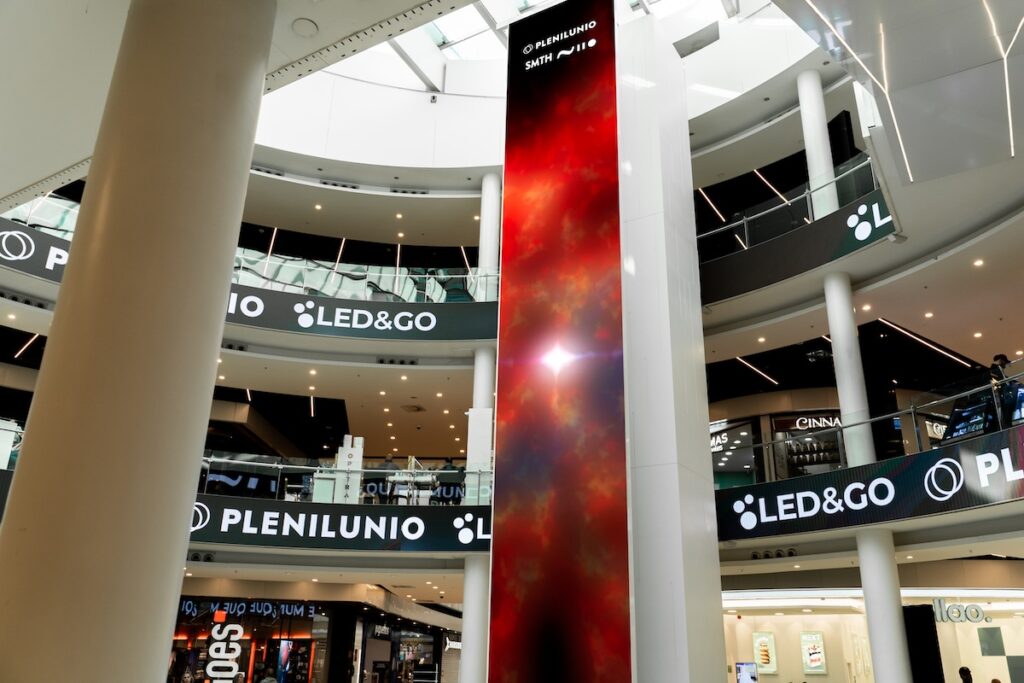
This interview is part of a series dedicated to the artists whose works have been selected at the SMTH + Niio Open Call for Art Students. The jury been selected at the SMTH + Niio Open Call for Art Students. The jury members Valentina Peri, curator, Wolf Lieser, founder of DAM Projects/ DAM Museum, and Solimán López, new media artist, chose 5 artworks that are being displayed on more than 60 screens in public spaces, courtesy of Led&Go

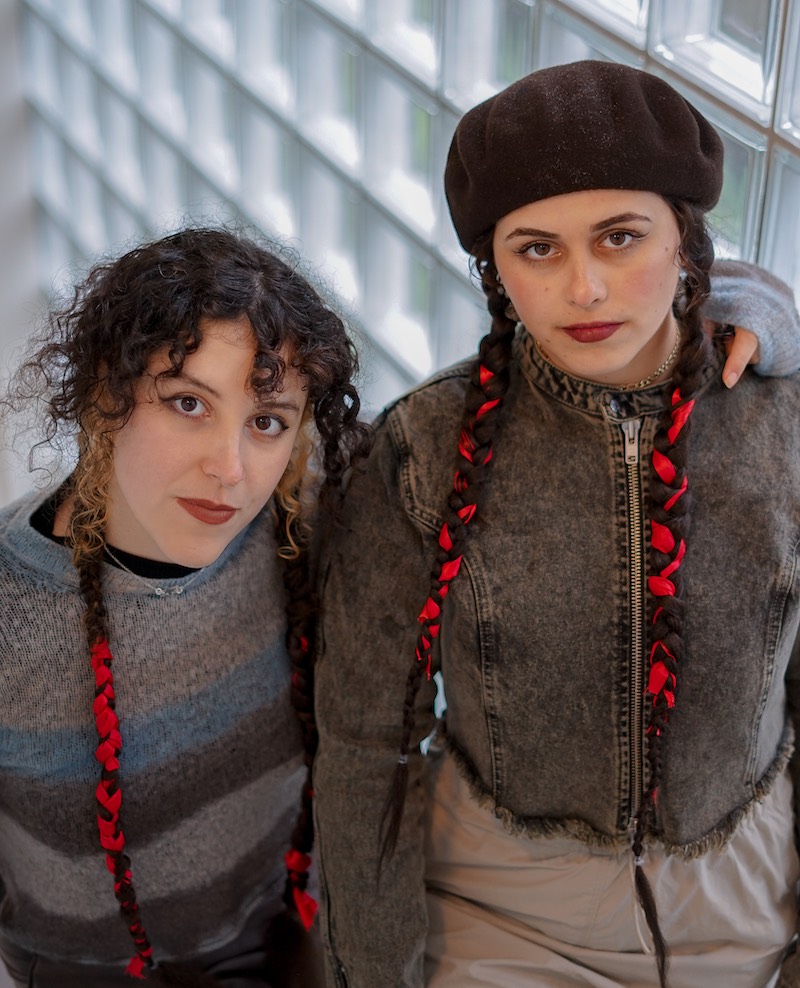
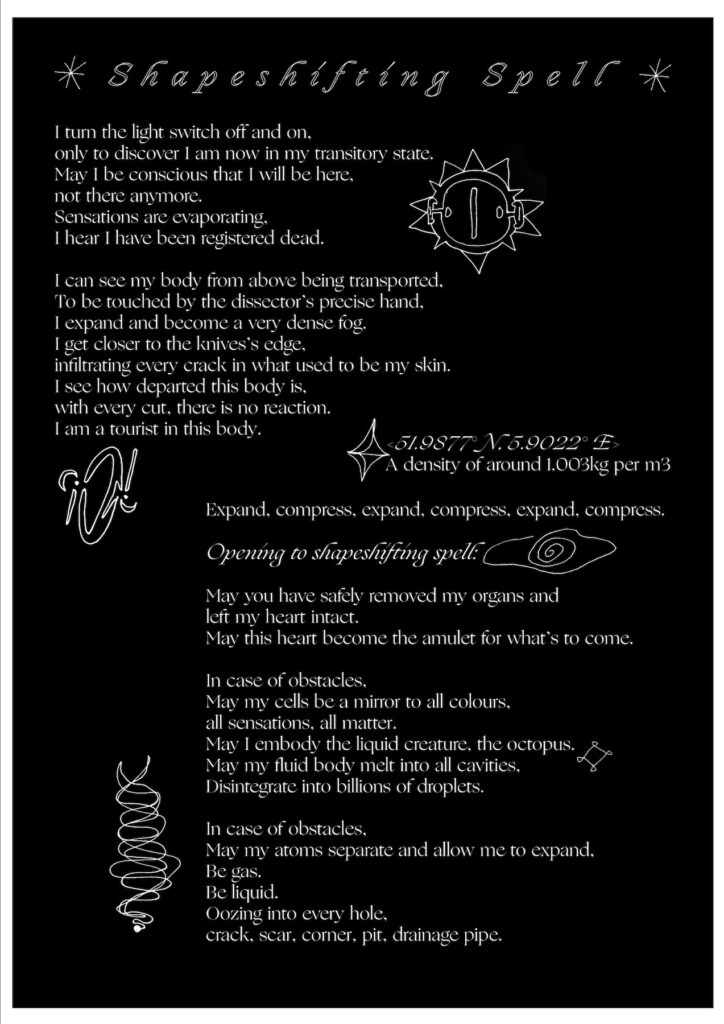
The artist duo Cruda Collective, formed by Laila Saber Rodriguez (CAI-CDMX) and Andrea Galano Toro (CL, ES), creates ways of re-thinking established narratives and mindsets through what they describe as rewilding practices: “ to activate the wilderness, playfulness and the glitches within storytelling & mythology.” They approach the world, aesthetic, and language of magic to address the non-normative through playful action and critical thought. Their artistic practice mainly consists of audiovisual performances, videos, workshops, and spell-casting.

Cruda Collective. Re-Rooted, 2024

Your work deals with magic, hybridity, transformation, the non-normative, wild, unseen, and obscured. You address these fields of knowledge and existence through workshops, bestiaries, performances, and spells. How do you deal with the dichotomy between the untamed and the systems of order and rationalization behind analytical practices such as making a bestiary or a cartography, and the necessary application of rules and consistent methods in the elaboration of a workshop or a spell?

Andrea Galano: We are fascinated with the processes that have a certain order, because we’re very interested in transformation. We like to adopt processes such as those involved in cartography, or burial too, which have a certain method or ritual. We then switch the narrative, still within that particular method, to talk about transformation or spells: we appropriate certain structures or ways of ordering. It is useful when you’re talking of things that can be ungraspable.

Laila Saber: In order to apply a method, an order, or an analytical practice, we need to be involved and interact with that practice or method in order to break it and disrupt it. And we also consider how the incomprehensible or the disorganized, the disobedient as an archetype, or as a process is what can create new models and new systems of knowledge. We reference a lot the concept of “Body without Organs” by Deleuze and Guattari: how can the breaking down of the body, and the normal functions of the organs, address new maneuvers and new functions of the body? And then how can it produce new models of thinking?

Andrea Galano: Mappings, rituals, the functions of the body… These are things that create the world we live in. So if we transform them, then we are somehow creating other worlds.

It seems that we are always attracted to chaos and everything that is mysterious or hidden, but at the same time, we need structures to understand these “untamed” aspects of reality. How is the experience of people who are in your workshop, what are their expectations, and how do they react to the methods that you suggest to them?

AG: Sometimes we start with something that is very playful, not knowing yet what you’re going to do with what you’re making. And then later we ask them to think of a narrative with it. So rather than thinking of the concept, and then making something, sometimes we do it the other way around, just to see what happens. This is the method that tends to work best, first doing hands-on or embodied exercises, and later on asking participants about the narrative and perhaps bringing in theory. 

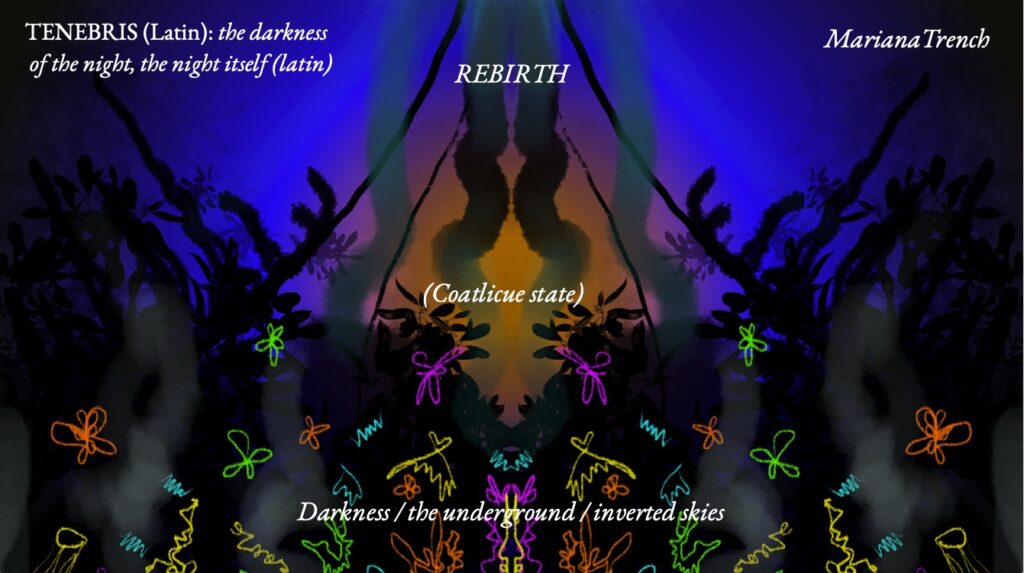
LS: I think most of our participants are from the art world: they are makers, or creatives, or artists and designers. So it becomes super interesting to propose to them to think with their hands and think with the body rather than with the rationale of having to produce a perfect product. By starting with this uncertainty and playfulness, we also ask them to defy the linear structures that makers are so conditioned to go follow. We actually just start all the workshops by saying: “Okay, today we die. Today everything is gonna die.” We start with death, and from death everything begins. We read really beautiful texts specially written by Gloria Anzaldúa on Coatlicue and Mesoamerican deities, which are all about transformation and rebirth.

“Mappings, rituals, the functions of the body… These are things that create the world we live in. So if we transform them, then we are somehow creating other worlds.”

Andrea Galano

Writer Alan Moore has said that magic was once “a science of everything,” and that “If magic were regarded as an art it would have culturally valid access to the infrascape, the endless immaterial territories that are ignored by and invisible to Science, that are to scientific reason inaccessible, and thus comprise magic’s most natural terrain.” Would you agree to this connection between magic and art? How do you see this idea from the context of your artistic practice?

AG: It is true that there’s a certain first reaction or expectation that we’re going to talk about, I don’t know, paganism. Which anyway, we find very interesting, but it’s not in the way we are approaching it. However, this is good because it creates this reaction of  “oh, but what is it gonna be about?” That is an interesting starting point. Also, for example, we always talk about knowledges, in plural. There are many ways of thinking that coexist, and have coexisted in the past, but perhaps were erased or they’re not part of the main Western narrative. So already thinking that there are other alternatives to this monolithic Western thinking, becomes very intriguing to the participants, and also to ourselves. We are very interested in different fields of knowledge, such as biology or ecology, and we find that some of the processes they study are very magical. For instance, the fact that something new can emerge out of two separate things that were put together, that feels like magic.

LS:  Something we’ve also been working on is how magic animates worlds and landscapes or elements. We imagine what it would be like to engage in a conversation with, for example, the ocean or the mountain. What can those bodies tell us about the world we live in? And how, within that conversation, another world can emerge? And I would say that magic is another word for speculation or imaginative thinking, engaging in a really beautiful and often confronting or disruptive way of thinking and acting. In this way, we can apply Magical Thinking to everything, not only science, but let’s say cooking, business, or politics. In all discourses there is the possibility of redirecting what is expected and opening new paths to creative thinking.

“Magic is another word for speculation or imaginative thinking, engaging in a really beautiful and often confronting or disruptive way of thinking and acting.”

Laila Saber

Similarly to how science has undervalued magic, as Alan Moore states, it has often dismissed art and artistic research. When you approach science, how is your connection to art and magic perceived? Have you had this discussion with scientists?

AG: There are many people from the sciences that are very inspiring to us, such as Karen Barad, who has a background in quantum physics. We do find references from science that resonate with us, and at the same time we’ve had workshops where some participants were scientists who found it very interesting for them to actually play and think of something that didn’t have to be real or measured.

LS: It’s in the symbiotic fusions between disciplines where we can find interesting models and new forms of seeing the world. I don’t think that, as artists alone, we can make those changes, and neither can biologists alone. We need to have conversations, and work together to open up these worlds, which are often isolated and self-referential. It also comes down to the language barrier: the way we speak, as artists, is very different from the language of science, and of course we need to find ways of understanding each other.

You take the concept of rewilding beyond the sphere of the natural sciences and the environment to encompass a rewilding of our inherited ideas and dogmas, particularly in relation to a society driven by Western colonialism and patriarchal structures. Can you elaborate on how your work addresses this expanded notion of rewilding?

LS: We like to think of rewilding as a practice of planting new seeds. Just as in an ecosystem or a rainforest, seeds travel and grow into plants, bushes, and trees, by communicating ideas we are planting something that ultimately will regenerate the terrain. These ideas mingle and all the new thoughts, disciplines, and discourses entangle within one another. In this way, rewilding is a portal into other possibilities of what there is, both in the natural world as in society and in our mindsets.

AG: The artist Johanna Hedva, who works a lot with witchcraft, once said: “It’s no coincidence that as capitalism began to take root, a regime of colonial exploitation started to run amok, de-enchanting the world. If the world is seen as a lifeless resource, it can be mined without compunction.” In this sense, rewilding is re-enchanting, not only in terms of ecology, as Hedva suggests, but also culturally and artistically, connecting with those cultures that celebrate the enchantment of the world and have been sidelined by post-colonial Western rationalism. In these cultures and in the concept of rewilding we find a more sustainable relationship with our planet

“Rewilding is a portal into other possibilities of what there is, both in the natural world as in society and in our mindsets.”

Laila Saber
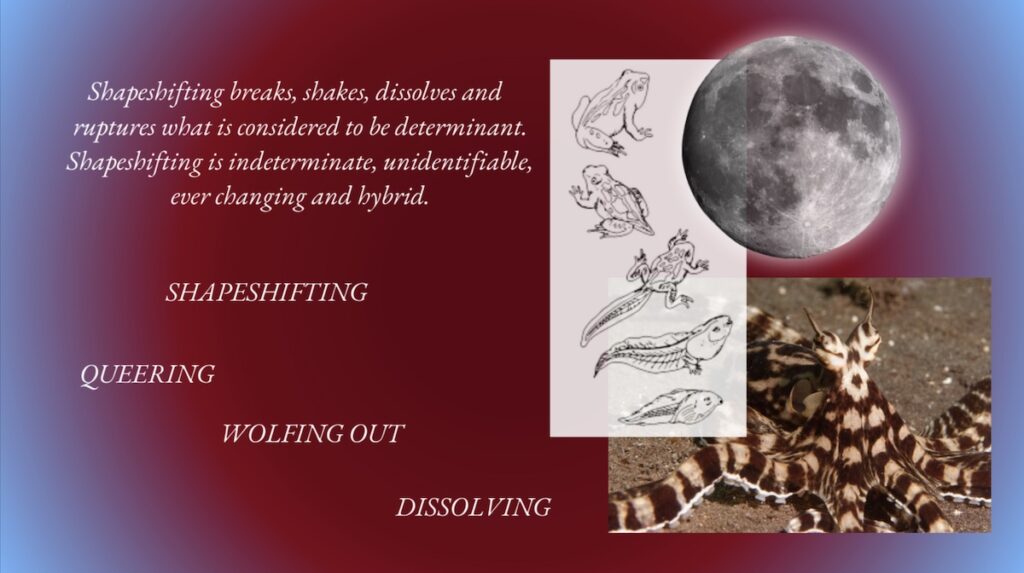
Cruda Collective. SHAPESHIFTERS: Matters of Demons, Ghosts and Monsters, 2023

Your interest in beasts and shapeshifting brings to mind Donna Haraway’s concept of the Cthulhucene, with its tentacular, earth-bound, promiscuously hybrid forms as a response to the rational, human-centric view of the Anthropocene. How does your work relate to Haraway’s concept, and subsequently to our relationship to the environment?

AG: Haraway also talks about kinship with other species. We relate a lot to this idea: when we talk about bees or hybrids, there’s definitely this kinship with other beings. Also, in the spells we write or perform, we usually embody creatures that have other forms of communicating, such as bioluminescence, or the snake shedding its skin… 

LS: In terms of the Cthulhucene, we are also interested in the chthonic, which relates to what lies under the earth or soil. We’ve been recently researching on our last workshop about this, the underworld and the gestures and acts of burial. We have found inspiration in the book Underland by Robert Macfarlane, in which the author speaks about Anthropocene unburials: “Forces, objects and substances thought safely confined to the underworld are declaring themselves above ground with powerful consequences.” We are a species that buries, and also a species that digs, and in our exploitation of the Earth’s resources, what was buried comes back to the surface. 

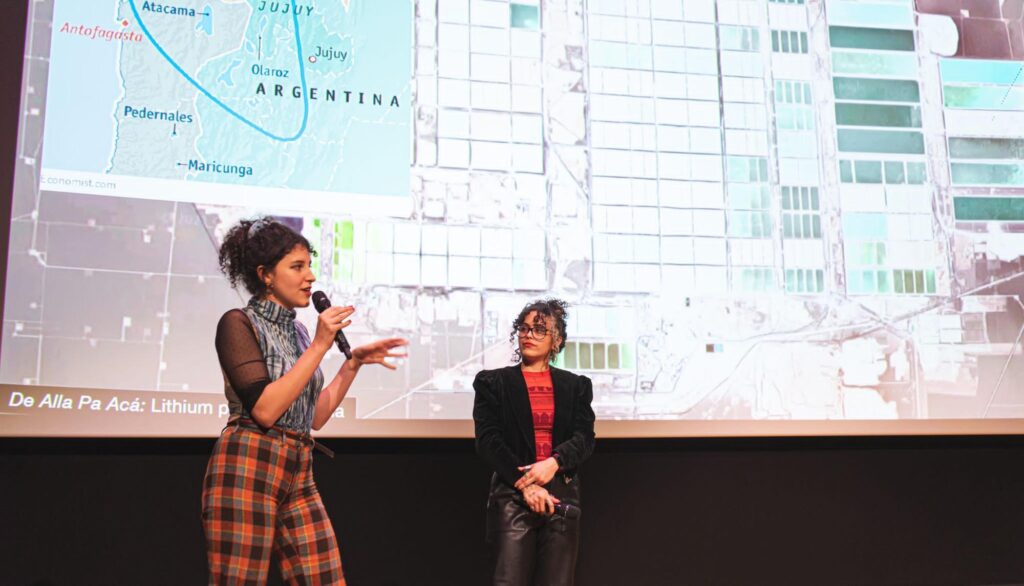
Cruda Collective. Worldbuilding lecture. Media Arts Festival Arnhem, focus theater, Arnhem NL

Process and narrative can be said to be driving elements of your performances and workshops. How do these two concepts translate into your videos? How does the video, as an audiovisual narrative passively consumed by a spectator, connect to your other forms of knowledge transmission and active participation? What do you expect of the video as a medium?

AG: We’re very drawn to video because it has the capacity to build a particular world and, when it is combined with sound, it can create an immersive experience. We love storytelling, and we find in video a way to play with narratives and also a dissonance between what you see and what you hear. In our video pieces we aim to take the viewer through a certain journey, and also give them space to process their experience. 

LS: We often refer to our video artworks as portal openers. The term “video” sounds very limiting, so we try to use this medium to bridge different narratives and suggest new meanings, subvert expectations. We like to think about forms of nonlinear filmmaking, fluid filmmaking, a kind of storytelling that is sometimes slippery, that sometimes leaves you wondering what is going on. 

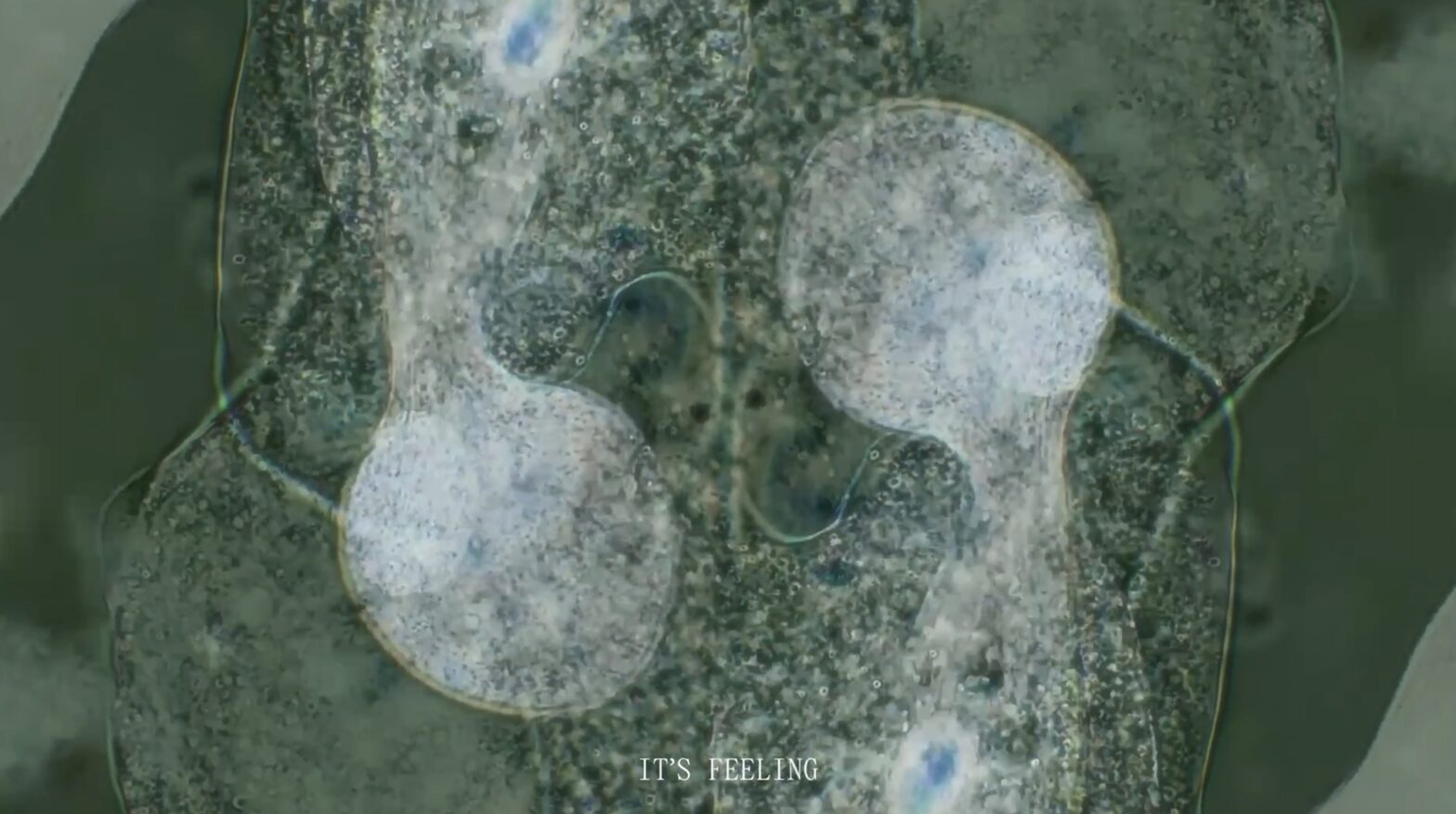
AG: Another aspect of video that attracts us is the possibility of working with different levels of perception, from images of the cosmos to those of a microscope. Also with audio, we can play with very different sources to create a hybrid of contents and meanings.

LS: Our practice is also evolving in this sense, we are increasingly interested in creating immersive experiences through audio visual performances where we have both visual and sound as we’re performing. We often describe our videos as “spells” because our performances and videos are actions of enchantment, and as a video piece, this action becomes a spell that is out there and can be activated by any viewer.

Cruda Collective. Re-Rooted. Displayed at CC Plenilunio (Madrid) as part of the SMTH + Niio Open Call. Photo: SMTH

Since your work addresses that which is outside of the normative and established, how do you see the possibility of taking it out of the exhibition space, the cultural institution, and into an everyday commercial space as is the case in this distributed screening project with SMTH and Niio?

AG: This is something new for us, and therefore it is also exciting. As we were saying earlier, playing a video can be like activating a spell, enchanting a place, so I’m curious to see if it resonates with the people in these spaces or not. In any case, it is occupying a space where it is not expected, and that is interesting in itself. I also think that it is important that the artworks do not only stay in the galleries or in spaces dedicated to art and presented to an art audience. 

LS: It feels magical to have this artifact existing in several spaces, having a presence in these commercial locations. In a way, it is like breaking a curse, maybe the colonial curse, the capitalist curse… It is about rewilding too, in this shopping mall in which it may not be seen or understood, but it will still be there, and possibly prompt questions, reflections, or experiences.

“Playing a video can be like activating a spell, enchanting a place, so I’m curious to see if it resonates with the people in these spaces or not.”

Andrea Galano

You are currently students at Bau and Elisava Design Schools in Barcelona. What is your experience of the educational models in these schools? How do your studies inform your artistic practice? What is your opinion about the current perception of artistic research as a field of knowledge creation?

AG: We come from different studies in the past, and now we are also in different studies in our respective schools. As for me at BAU, I’m doing a Master’s Degree in Audiovisual and Immersive Spaces. And I think I can only speak for my master rather than the school, but I’d say we’ve learned a lot about having a critical approach to the ways of making. I think that’s very interesting, because it’s not so much about the topic or the concept, but about the tools you use, such as open source software or making your own electronics. It is also a very collaborative environment. Being part of a community that is open to sharing knowledge is an eye opening experience that helps you get rid of the old-fashioned idea of the artist as the sole creator of their work. 

LS: I studied Fine Arts in the Netherlands, in a super good program, which involved a lot of theory, so we read Deleuze, Foucault, Haraway and many others as part of our studio practice, and I think that set the foundation for my ongoing studies at Elisava Design School in a Master’s Degree in Art Direction and New Narratives. I do feel that there’s a gap between making and keeping with a critical speculative practice that is really valuable in any artistic research. In that sense, it has also been interesting for me to be immersed in a space that is really focused on functionality and communication. I’d say that this has led me to be more receptive or more agile, so I can sense what it is exactly that I’m disrupting or trying to disrupt eventually. I also find it valuable that my classmates are from different nationalities, which brings an intersection of multiple cultures, that helps a lot in working with the concept of new narratives.

Cruda Collective. Re-Rooted. Displayed at Zaragoza Outlet as part of the SMTH + Niio Open Call. Photo: SMTH

ReRooted presents an interesting take on the patriarchal notion of masculinity from a wider perspective that connects with the notion of rewilding ideas and avoids traditional imagery about masculinity to suggest addressing this subject from the perspective of living beings and natural systems. It is also connected to a workshop activity. Can you elaborate on the context and intentions behind this audiovisual artwork?

AG: In this artwork it is important to mention our collaborator the writer Virginia Vigliar, who hosted a workshop titled ReRooted: an ecological approach to masculinity. It is in the context of this workshop and our conversations with Virginia that we decided to create this video. It takes elements from discussions we had with participants in the workshop, with some quotes making it into the video itself. It was challenging for us to decide which imagery to use, since we wanted to disrupt traditional views of masculinity.

“We need to reconceive masculinity as not being patriarchal per se, and explore those micro stories of masculinity that are hidden.”

Laila Saber

LS: We spoke a lot about how we are all affected by the patriarchal archetype of men and the patriarchy. Virginia’s approach in the workshop is to uproot myths in our stories surrounding masculinity, and rethink them. Actually, we came to say reboot it, because we need to reconceive masculinity as not being patriarchal per se. For the visuals, we decided to focus on microscopic imagery and then macroscopic images, from the cosmos. And in bridging those two, we were trying to reflect on how masculinity has its macro stories, which form a big corpus, but also micro stories that, perhaps, are hidden, and you can’t really see until you zoom into them.

Hadar Mitz: on the fluidity of time

Roxanne Vardi

Hadar Mitz is deeply engaged with the philosophical underpinnings of perception, time, and the ephemeral nature of existence. Her practice is located at the intersection of photography, video, and installation, employing these diverse media not merely as tools but as integral components of her conceptual framework. Her goal is ambitious: in her own words, “to gain hold onto unholdable things, and to communicate an intimate time perception by works that deal with our experience of impermanence and infinity, encompassed in our sense of now.”

Through her explorations, Mitz invites viewers to reconsider their relationship with time and the natural world. Her installations are immersive experiences that juxtapose the order we impose on nature with the chaos inherent in the natural order itself. Her videos and photographs are not mere representations but are imbued with the essence of time, challenging viewers to perceive beyond the immediate, to sense the imperceptible flow of existence.

On the occasion of her recent solo artcast on Niio, Duration, we had a brief conversation in which the artist elaborated on the concepts behind her work and her creative process.

Experience a different perception of time in Hadar Mitz’s artcast Duration

Hadar Mitz. Adolescence, 2018

When did you start focusing your work on the concept of time, was there a turning point in your artistic career which led to this?

Since I can remember, I have been interested in paradoxes and different perceptions of time 🙂

As a child I watched a movie that really shook me, “Flight of the Navigator”, in which a young boy is kidnapped into space. When he returns to earth he finds out that all of his relatives aged significantly whereas the boy remained the same age. A few years after I watched the movie I found out that this is an actual fact: time slows down the farther away one distances oneself from the Earth.

Hadar Mitz. Butterfly Pond, 2018

How do photography and video art as new media assist you in your goal of creating alternative perceptions of time?

The camera, whose action challenges the tangibility of the present moment, is the starting point of the majority of my works. In my creations I attempt to establish a dialogue with the concept of time. In some of them I try to re-experience the present, for instance by breaking down a video into single still frames or by bringing to life stuffed animals and inanimate stones. I do so due to my belief that time isn’t a linear movement from the past into the future but rather a continuous present that begins over and over again. This is a notion I borrow from the writings of French philosopher Henri Bergson, who coined the term “La durée” to express the idea that time is made up of fragments that give birth to one another, with each event giving rise to the creation of a new moment, a new mode of being.

“I believe that time isn’t a linear movement from the past into the future but rather a continuous present that begins over and over again.”

Your work on one hand leans on and deals with the natural world while on the other, by making use of new media technology, focuses on fabricated and mass produced elements. How do you bridge between these two seemingly opposite realms?

I am interested in the meeting point between the ever-changing natural world and the human attempt to comprehend it and provide it with meaning. Humans have fabricated a complete world of categories and perceptions that are seemingly equivalent to the natural world, but in fact they always narrow down and miss it because the natural world refuses to become fixated. In some of my video works, the representations of nature become manipulated, meaning that they don’t represent the things themselves. These are thus representations which have the goal to be exhibited, similar to infinite cabinets of curiosities or natural art museums. By these means we are asked to contemplate what exists outside of our existence, but in this process we are doomed to fail. Through my artworks I try to create spaces in which accepted global definitions become blurred. This lack of comprehension in turn gives space to the beauty and mystery of the world.

Hadar Mitz. Two Moons, 2020

In works such as Jetty (2018) you rearrange the picture frame to create a different scene from reality, which reinforces the potential of different perceptions and perspectives of a picture plane. What is it in this process and outcome that interests you most?

In my opinion, in the act of creation, the artist is his own sole authority: it is she who creates and gives birth to reality. Thus, the artist has the opportunity to change accepted rules –for example the way time flows, gravity, or the resurrection of dead objects. In this work as well as others, I took ruins of things that were at once filled with life, like feathers that I gathered, and recreated them as wings to provide them with a new life form, a new creation. One of the motivations in my work is the encounter with this new force of creation, which I identify with the potential of substances that I find around me and their never-ending potential to transform. Therefore, this force does not need a reason or external validation in order to reorganize the conditions of this new reality.

‫Hadar Mitz. Jetty, 2018

“Through my artworks I try to create spaces in which accepted global definitions become blurred. This lack of comprehension in turn gives space to the beauty and mystery of the world.”

You have referred to your work Gradient, 2019 as representing “a single space where different planes of reality intersect” which is interesting to think of vis a vis the internet-era and AI in creating new human experiences. Can you share your thoughts on this and your opinion on the future of the art world in an AI dominated space?

Lately, I have been working with desecrated AI imagery. I am enchanted by the endless possibilities that this collaboration gives space to. I see AI as a gate into the space of the collective unconscious of the Internet. In my opinion, this is the present realization of Carl Jung’s theory where we found an infinite treasure of encrypted-idiosyncratic images. AI mixes and processes these images through the networks that it creates between them and reconstructs them according to our requests. 

It is hard for me to define how AI will change the future of the art world. I am especially curious to find out how the new conditions that AI supplies to the act of artmaking will allow us to reveal our human qualities either through conflict or through collaboration.