Elsa Carvalho: The Art of Impermanence

Pau Waelder

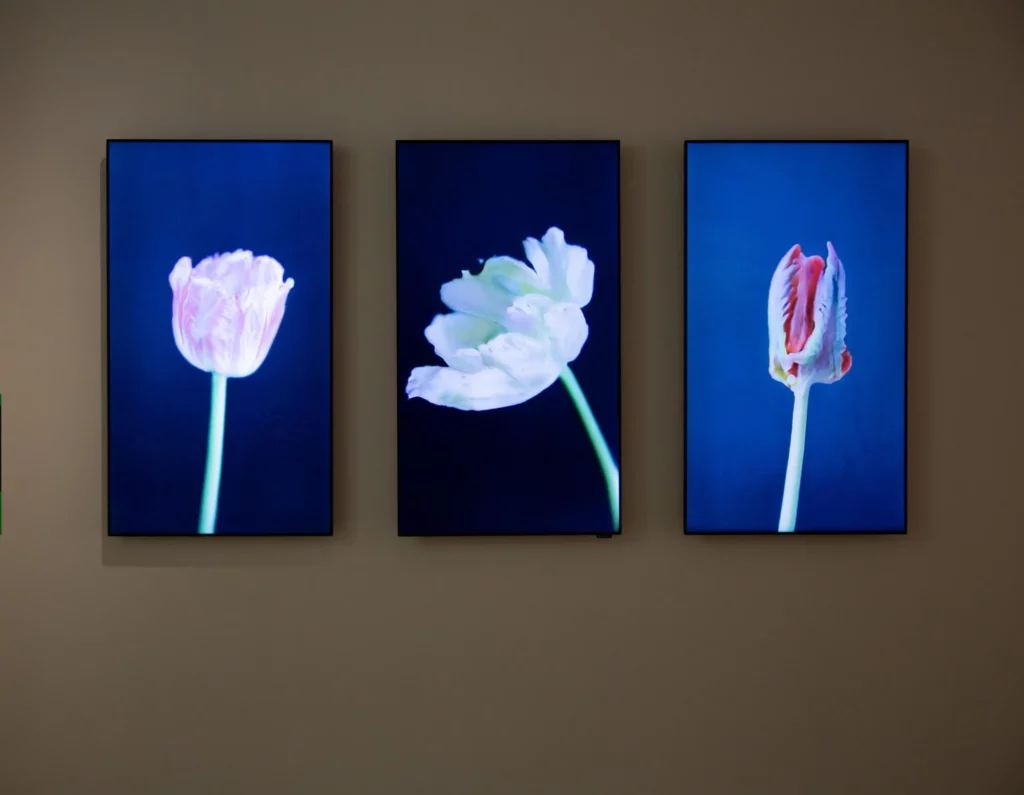
Elsa Carvalho’s path into visual art began not in a studio, but in the structured logic of computer science. A Portuguese software engineer with a PhD completed in 2012, she turned toward artistic creation in 2021, at a moment when the NFT movement opened new doors for digital experimentation. On the occasion of her solo artcast The Unfolding on Niio, we asked her a series of questions about her artistic practice and creative process.

In this conversation, Carvalho reflects on how poetry and coding share a common ground in working within constraints, how open access to AI tools made image-making accessible to her as a newcomer to visual art, and how she gradually moved from early experimentation toward a more personal visual language.

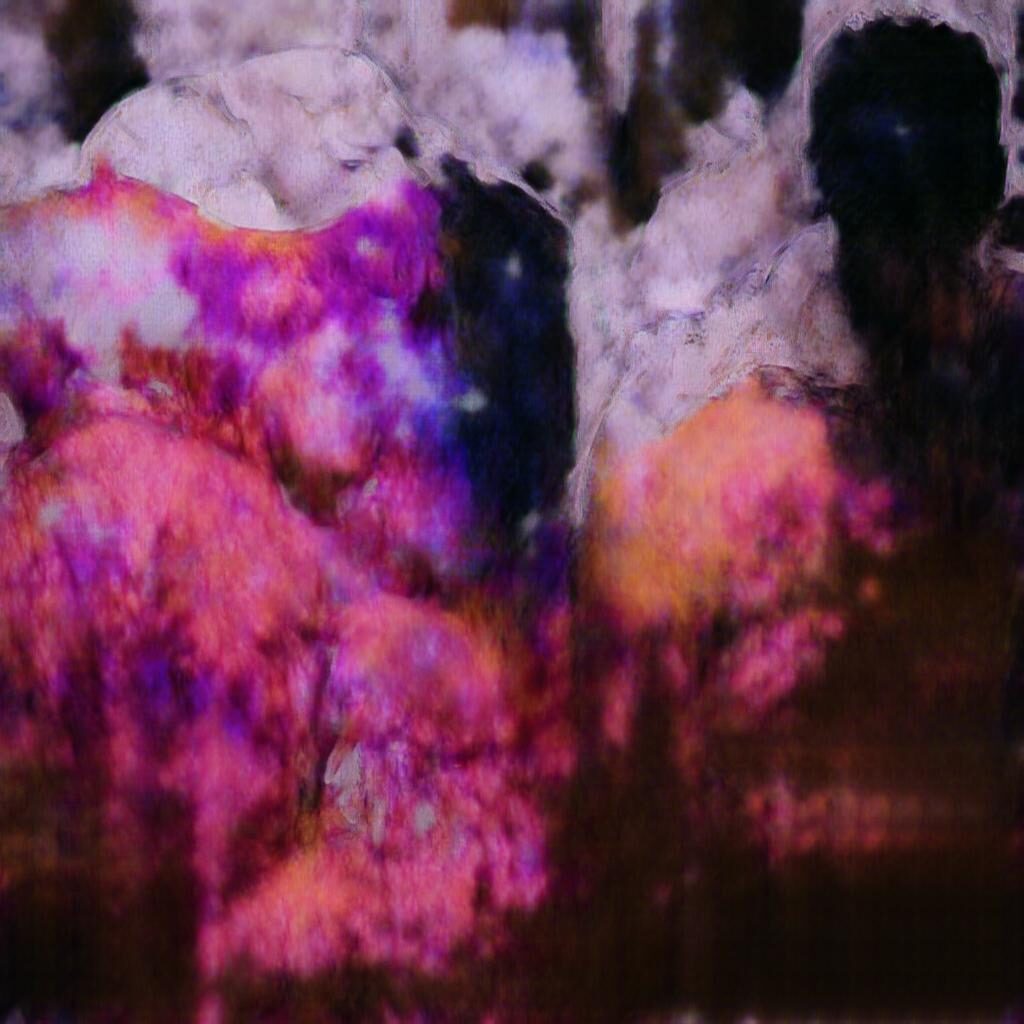
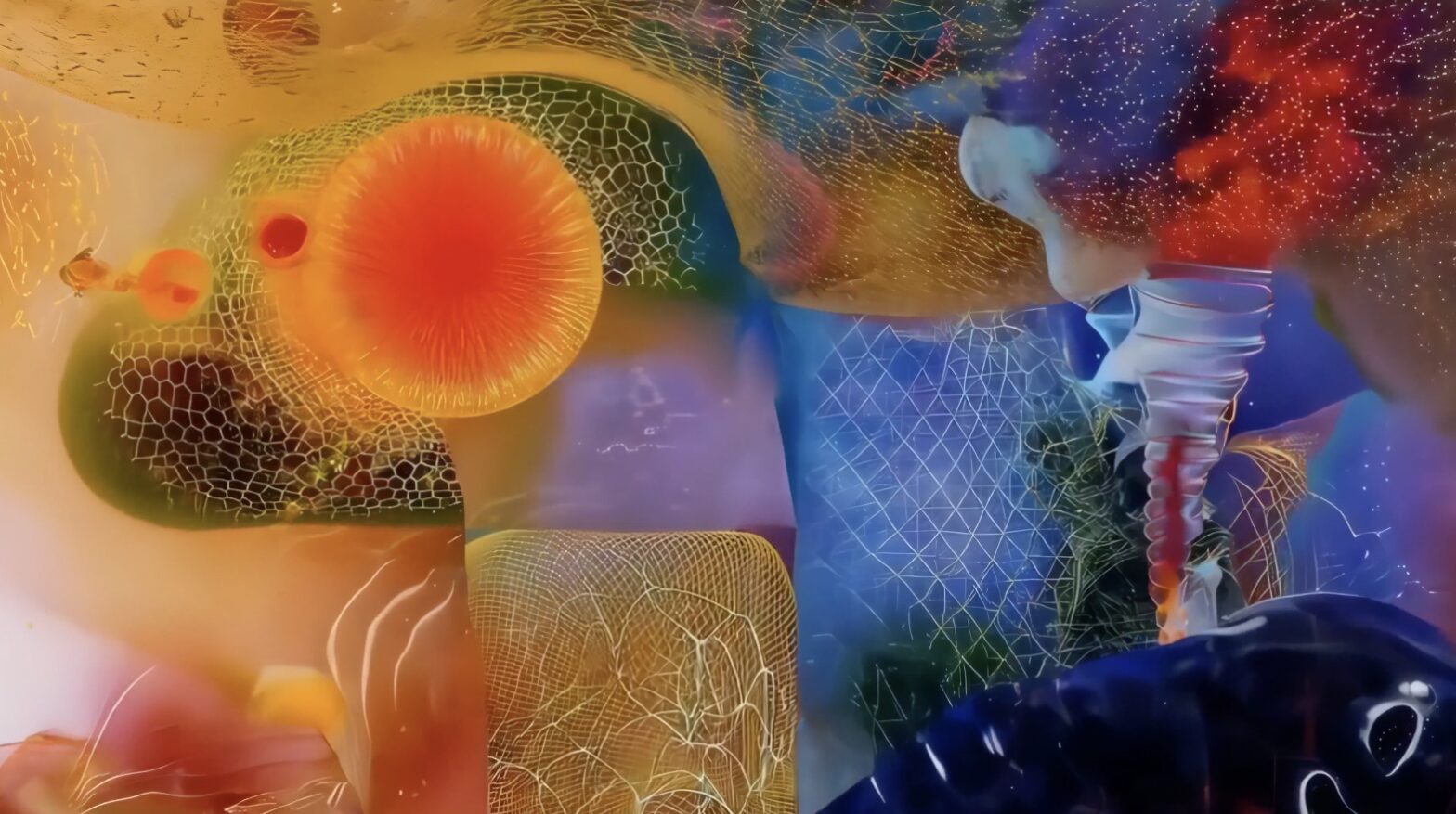
Elsa Carvalho. TheUnfolding#1, 2025.

You work as a software engineer but you have also always been interested in the arts, and have written poetry and prose. How would you relate poetry and literature to creative coding?

In my professional practice I always felt that coding is a very creative activity. Although this may seem counterintuitive, because it is full of rules and constraints, the fact is that you are creating something and, in the end, a result will emerge. There are different ways of achieving the same result, and the process of searching for and choosing a path is something I find very appealing. Often, what matters is not only the final output, but the decisions made along the way.

The same happens with writing. There are rules in language as well, but they can be bent or broken for poetic reasons. In creative coding I feel a similar freedom: working within constraints, but still allowing intuition, experimentation, and small deviations that can change the outcome.  

“Creative coding means working within constraints, but still allowing intuition, experimentation, and small deviations that can change the outcome.”

You decided to dive into visual art in 2021, at the time of the NFT boom. How did the NFT scene shape your understanding of art, and how has it evolved over the last years?

The NFT movement was the trigger for me to start exploring digital art. It felt like something important was happening and I wanted to be part of it, not to be left out of what seemed like a meaningful way to step into digital creation. In many ways, it was the entry point that allowed me to discover this artistic side of myself.

At that time, I had no experience with digital art, and that was one of the reasons AI attracted me so much. It opened the possibility to experiment visually without a traditional background. In that sense, AI felt very democratizing, allowing many people, including myself, to explore image-making in a more accessible way.

More recently, my relationship with that space has changed. I became more interested in slower processes and in developing a personal visual language. Discovering platforms like Niio, where my work can exist on large screens or in people’s living spaces, appeals to me more now than the NFT space itself. Still, I feel I will always be connected to that movement, as it was the precursor to my entry into the artistic world, and I owe a lot to it for opening that door.

Elsa Carvalho. TheUnfolding#2, 2025.

As a software expert, you know how software can shape what a user is able to do or even think they can do. Over the last decades, artists working with code have developed new tools that allow them to bypass the limitations of commercial software, and created a community around sharing. What do you think of this open source movement and how has it helped you as an artist?

I think the open source movement is very relevant and powerful. One of its biggest strengths is that it allows people to bypass the high costs of commercial software and to build tools together that anyone can use. This kind of shared effort has a real impact and reaches millions of people.

In my own practice, I did not take full advantage of artist-led open source tools, but open access to AI algorithms was essential for me in the beginning. Having Google notebooks available, with increasingly better GAN models and later other algorithms, was what allowed me to start experimenting with AI and image generation.

I also used non-paid platforms like Artbreeder, especially in my early exploration, alongside commercial AI tools. So my path was a mix of open, shared resources and proprietary software. Without that initial access to open algorithms and notebooks, I probably would not have entered this field in the same way.

“Discovering platforms like Niio, where my work can exist on large screens or in people’s living spaces, appeals to me more now than the NFT space itself.”

You use creative coding to generate visuals that then feed into an AI model to create a unique visual language. Can you take us through this process?

My process usually starts with creative coding. Through code, I generate images with more geometric structures, and this is where the core aesthetic of the work is defined. At this stage, I also establish the color palette and the visual coherence that runs through the series.

These images then become the starting point for the use of AI. AI allows me to introduce more organic qualities into the visuals, inspired by natural forms. It transforms the geometric structures and adds a layer of complexity and softness that I could not achieve through code alone.

From there, I curate the resulting images and use them as the basis for video works. I use AI tools to create the videos, either by introducing movement into the images or by morphing between different images. This final step allows the work to unfold over time and reinforces the idea of transformation that is central to my practice.

“I started my artistic practice with a mix of open, shared resources and proprietary software. Without that initial access to open algorithms and notebooks, I probably would not have entered this field in the same way.”

Both creative coding and artistic creation with AI deal with the tension between controlling the output and letting the program surprise you. How do you manage this tension? Do you sometimes fear that a good visual might be ruined once interpreted by the AI?

There is always a balance between control and surprise in my process. With creative coding, I have more control over structure, color, and overall direction. With AI, I accept that the visuals will change in ways I cannot fully predict.

Of course, there is always the risk that a visual I like might be altered in a way that does not work. But one of the pleasures of working with AI, and also with creative coding that includes some degree of randomness, is precisely the possibility of being surprised by the process.

Unexpected results often become important. Sometimes they even guide the direction I decide to follow. Rather than trying to protect a single image, I work through many variations and curate carefully, trusting that the process itself will lead me to the right outcomes.

Elsa Carvalho. TheUnfolding#3, 2025.

You have stated that your interest in organic forms stems from your childhood experiences in a farm, surrounded by animals and nature. Yet the forms you create are abstract and strongly evoke Surrealist painting. Why have you chosen this aesthetic?

Organic forms appeal to me a great deal, and that comes from growing up surrounded by animals and nature. Those experiences stayed with me, even if they are not represented in a direct or literal way.

At the same time, I am not interested in reproducing nature as it is. I prefer to work with suggestion rather than representation. By keeping the forms abstract, I can give hints instead of clear answers and leave space for the viewer’s own interpretation.

This approach allows me to connect personal memories with a more open visual language. The work does not describe something specific, but it can still evoke familiar sensations or emotions linked to nature.

Your early work shows more “mainstream” experimentation with AI, first applying textures to photographs of nature, then generating portraits of women with surreal elements, then moving into classical painting and surreal scenes that remind the work of Max Ernst and Paul Delvaux, as well as some photorealistic imaginary landscapes. What didn’t work for you in all these phases, that made you move forward? How have the advances in AI image generation contributed to this process?

It is interesting that you ask this question. When I started this path, not long ago, I met several Portuguese artists who were also involved in NFTs. I remember speaking with one of them about how to find my own style, and she explained it very simply: it can only happen with time, experimentation, and by understanding what makes sense for you at each moment.

In the early days, I was mainly exploring the tools. I was trying different approaches, testing what AI could do, and learning through practice. What did not work for me in those phases was the feeling that the results were too dependent on existing visual references, and that they resolved too quickly.

I enjoy experimenting, and I tend to move on when repetition becomes too comfortable. Over time, and with the advances in AI image generation, I was able to refine my process and gain more control. Now that my creation pipeline is better defined, it is easier for me to explore different themes while keeping a consistent process and aesthetic, which I hope is becoming more recognisable.

“One of the pleasures of working with AI, and also with creative coding, is precisely the possibility of being surprised by the process.”

Color plays an important role in your compositions, which feature deep blues and bright oranges and yellows, as well as a wide range of strongly contrasting colors that underline the constant changes taking place. How do you work with color? Does it serve purely compositional concerns or does it incorporate a particular meaning?

I work with a small set of color palettes that I use in a more or less random way during the creative coding phase. This helps give consistency to the final works, even when the forms and structures change.

I am very drawn to strong colors. Sometimes the world feels very grey, especially in the period we are going through, and I feel that people need strong colors in their lives. For me, color brings energy and intensity to the work.

There is no specific meaning attached to the colors I choose. Intuition plays an important role. In the end, the resulting colors are a mix of what comes from the initial coded image and what comes from the AI prompts, and I curate the results by choosing the images that appeal to me the most.

“Sometimes the world feels very grey, and I feel that people need strong colors in their lives. For me, color brings energy and intensity to the work.”

In the series tran·sience you collaborated with Bruno Miranda, who created a musical score for your compositions. Seeing the artworks with music almost feels as if the shapes are reacting to the score. How did this collaboration come to be? What does music bring to your work?

Bruno Miranda is my husband, and although music is not his day-to-day work, he has a strong passion for composition. The collaboration came very naturally, as it felt like a way to give the videos a stronger impact.

The process usually starts with the visuals. Once a video is ready, I ask him to create a musical composition for it, sometimes suggesting a mood or style. Music adds rhythm, movement, and emotional depth that the visuals alone cannot convey, making the work feel more alive and immersive.

Elsa Carvalho. TheUnfolding#4, 2025.

You have stated that impermanence is one of the most fundamental truths of life. Following this line of thought, where do you think your work might take you next? Have you considered video mapping, installation, sculpture, or other forms of creation?

Like my works, I tend to let life and intuition guide me. After several years working consistently on my process, sharing my work on X (ex-Twitter), and selling NFTs occasionally on different platforms, I began receiving more recognition. Instead of going after opportunities, I started getting invitations.

First, I was invited to sell my videos as NFTs on a well-known AI video platform. Later, platforms like Niio, which provide video artworks to be shown in public spaces or companies, invited me to submit my work so their clients could choose from my artworks. More recently, I was invited to create pieces for an important event here in Portugal. Challenges make our minds search for creative solutions, and if somebody challenges me to show my work in a different or innovative way, I will certainly try to make it happen. I prefer to let these kinds of invitations guide me and shape the work I explore next.
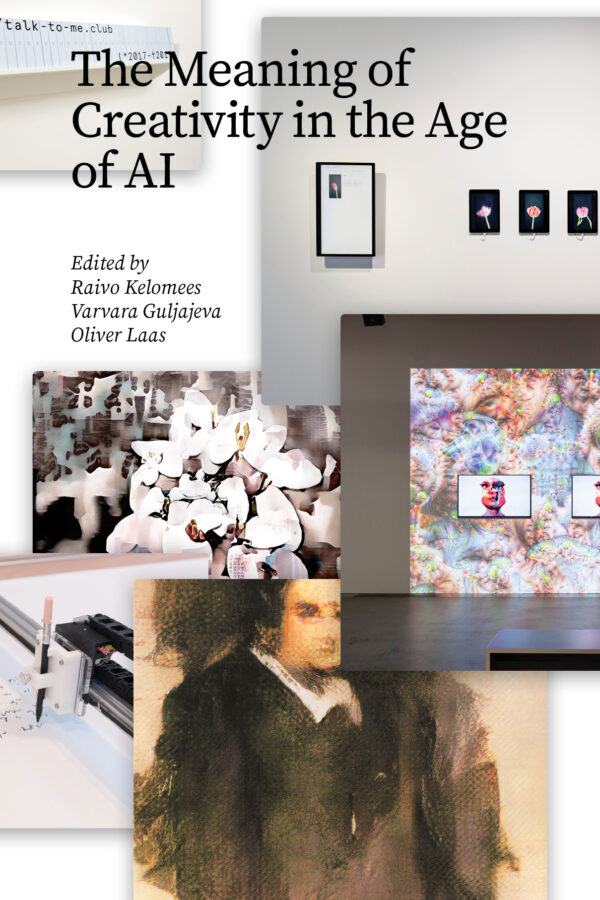
It was never about replacing the artist: AI and post-creativity

Pau Waelder

The following text is an excerpt from my contribution to the book The Meaning of Creativity in the Age of AI, edited by Raivo Kelomees, Varvara Guljajeva, and Oliver Laas (Tallinn: EKA, 2022). The volume is focuses on critical observations of the possibilities of Artificial Intelligence in the field of the arts and includes contributions by artists, art professionals, and scholars Varvara Guljajeva, Chris Hales, Mar Canet Solà, Jon Karvinen, Luba Elliot, Oliver Laas, Raivo Kelomees, Mauri Kaipainen, Pia Tikka, and Sabine Himmelsbach.

The book, which addresses key questions currently being debated around AI systems such as DALL-E 2 and Chat GPT, has been recently made available as a free PDF.

Cover of the book The Meaning of Creativity in the Age of AI (EKA, 2022)

Can you teach your machine to draw?

On 5th February 1965, during the opening of Georg Nees’ exhibition of algorithmic art at the Technische Hochschule in Stuttgart, there was an exchange between the engineer and an artist who asked him provocatively if he could teach the computer to draw the same way he did. Nees replied that, given a precise description, he could effectively write a program that would produce drawings in the artist’s style (Nake, 2010, p.40). His response echoes the conjecture that had given birth to the field of artificial intelligence ten years earlier: that “every aspect of learning or any other feature of intelligence can in principle be so precisely described that a machine can be made to simulate it” (Moor, 2006, p.87). It should be noted that, at least at this point, the machine is not meant to think or create, but simulate. In his seminal paper from 1950, Alan Turing already suggested that computers could perform an “imitation game” (later known as the Turing Test) in which the aim was to mimic human intelligence to the point of seeming human to an external observer (Turing, 1950).

Therefore, what Nees asserted is that the computer could create a successful imitation of the artist’s work. The exchange between Nees and the artist did not go well, as the engineer’s vision of a computable art seemed to threaten the superiority of artistic creativity. Upset and resentful, the artist and his colleagues left the room, with philosopher Max Bense trying to appease them by calling the art made with computers “artificial” (Nake, 2010, p.40) – as opposed, one might think, to a “natural” art made by human artists. The need for this distinction denotes the uneasy relationship between artists and their tools, the latter supposedly having no agency at all, being mere instruments in the skilled hands of the artist.

The computer introduced an unprecedented level of autonomy: the artist only needed to write a set of instructions, the program did the rest.

Certainly, there had been some room for randomness and uncontrolled processes to emerge in the different artistic practices that had succeeded each other during the 20th century, but until that point creativity was unquestionably anthropocentric, with the artist (or their assistants), at the centre of the creation of every artwork. The computer introduced an unprecedented level of autonomy: the artist only needed to write a set of instructions, the program did the rest. This was challenging for artists at a time when few had seen a computer and even fewer knew how to write a program or understood what it could do.

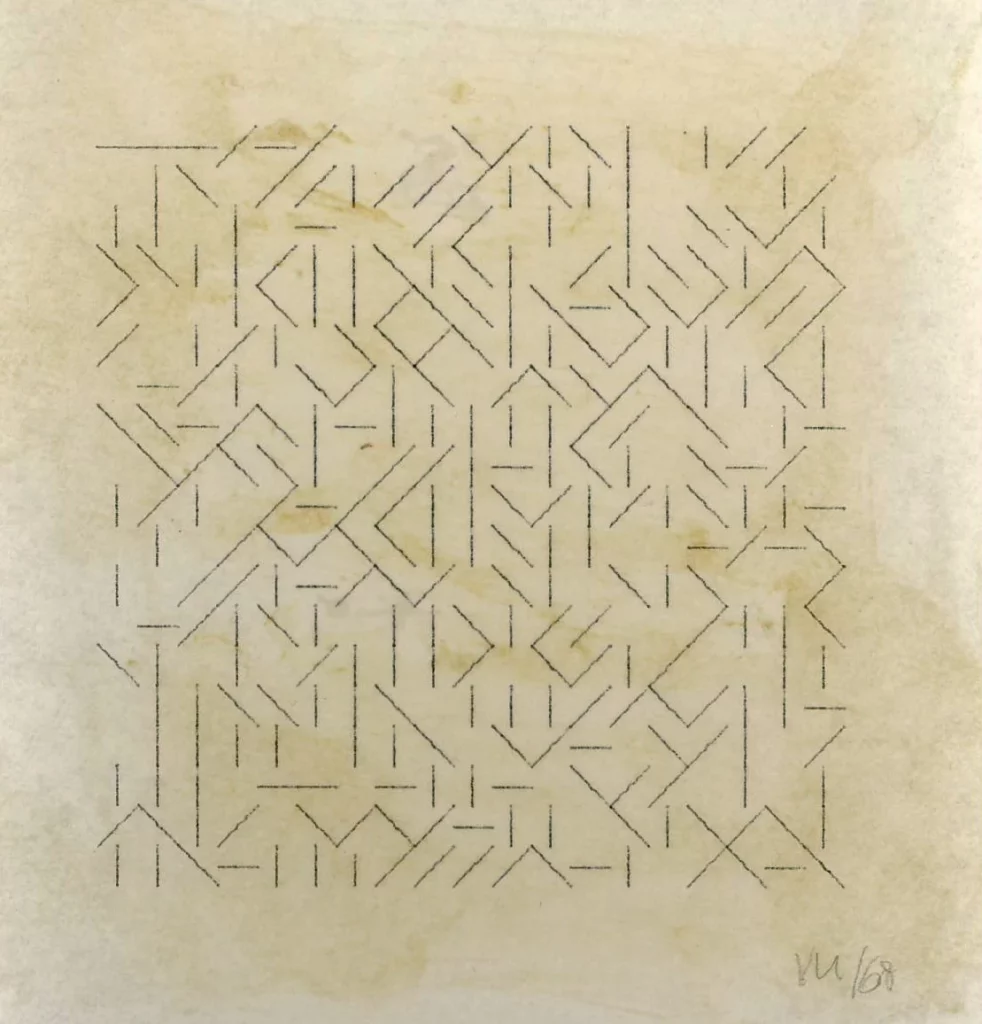
Vera Molnar. Untitled. Plotter drawing. Ink on paper, 1968. Courtesy DAM Museum

Despite the profound differences from our current perception of computers, over fifty years later, AI still holds the same fascination and is subject to the same misunderstandings as early computer art. The initial rejection of computer-generated art has turned to uncritical enthusiasm, and the prospect of an art that does not need human artists has been celebrated with a spectacular sale at Christie’s. But the artist was never out of the picture. 

Pioneering computer artist Vera Molnar created her first artworks in the 1960s with a “machine imaginaire”, a program for an imaginary computer that helped her develop a series of combinatorial compositions of geometric forms and colours. In 1968, she started working with a real computer (which back then was only available at a research lab), but she has always stressed that the machine is, to her, nothing but a tool: “The computer helps, but it does not ′do′, does not ′design′ or ′invent′ anything” (Molnar, 1990, p.16).

“The computer helps, but it does not ′do′, does not ′design′ or ′invent′ anything”

Vera Molnar

Another pioneer, Frieder Nake, recalls the experience of creating his first algorithmic drawing in 1965, underscoring his role as the creator of the artwork:

“Clearly: I was the artist! A laughable artist, to be sure. […] But an artist insofar as he – like all other artists – decided when an image was finished or whether it was finished at all and not rather to be thrown away. I developed the general software, wrote the specific program, set the parameters for running the program. […] I influenced the process of materialization by choosing the paper, the pens, and the inks; and I finally selected the pieces that were to be destroyed or to leave the studio to be presented to the public.”

Nake, 2020

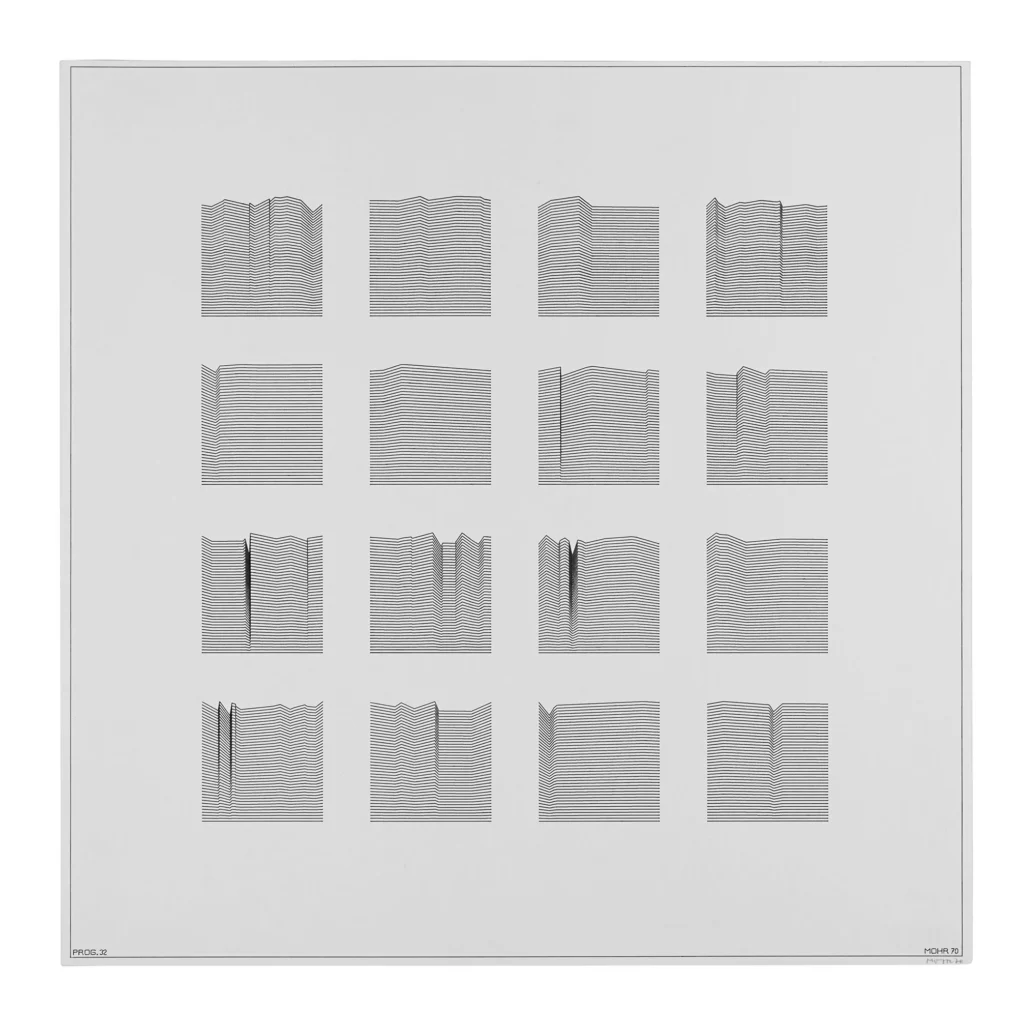
Manfred Mohr, one of the first artists to work with computers who, like Molnar, had a background in fine arts instead of mathematics, has frequently stated that his artworks transcend the computational process they are based on: “My artistic goal is reached” he states, “when a finished work can visually dissociate itself from its logical content and convincingly stand as an independent abstract entity” (Mohr, 2002). 

Manfred Mohr. P032.Plotter drawing on paper, 38 x 38 cm., 1970. Courtesy DAM Museum

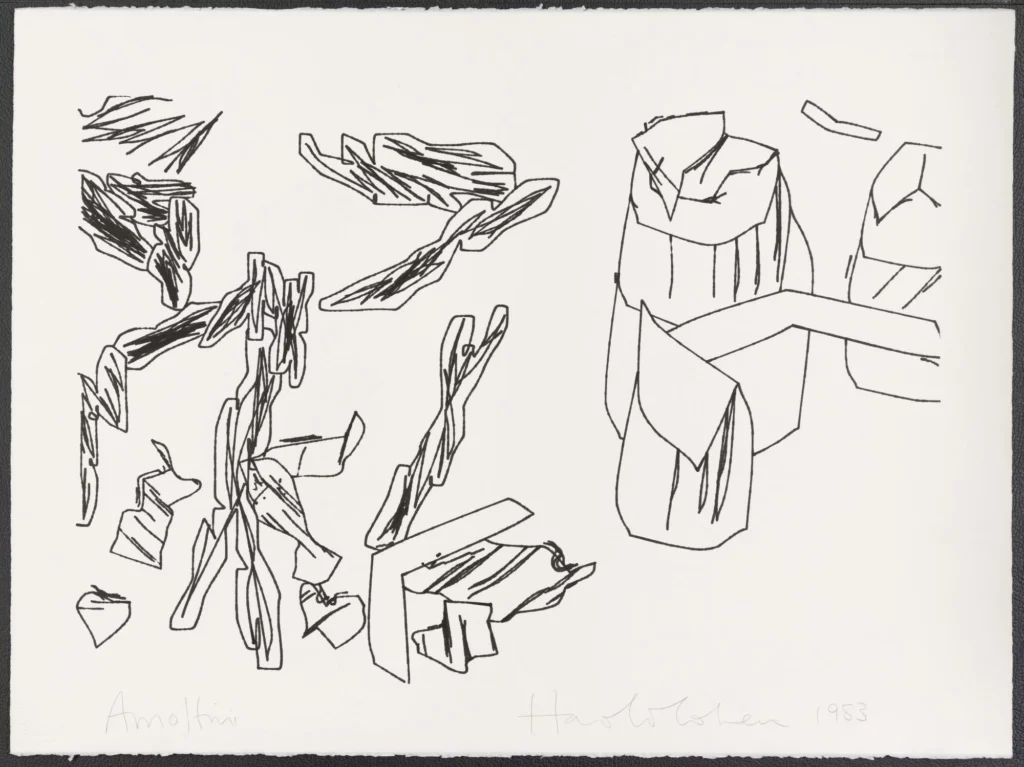
Algorithmic artists have played with the balance between control and randomness, always keeping a direct involvement in every part of the process of creation, from the code to the final output. The software, however, can be allowed a greater portion of the decision making. This is what Harold Cohen did in 1973 when he developed AARON, a computer program designed to generate drawings on its own, with no visual input, based on a complex series of instructions written by the artist.

Influenced by the ideas that were being discussed at Stanford University’s Artificial Intelligence Laboratory at the time, Cohen sought to understand how images were made. AARON aimed to answer that question by creating drawings that simulated those of a human artist, without human intervention. Cohen stressed AARON was “not an artists’ tool” but “a complete and functionally independent entity, capable of generating autonomously an endless succession of different drawings” (Cohen, 1979). This autonomy led to thinking about AARON in cognitive terms, with Cohen himself stating that the program “has a very clear idea of what it is doing” (Cohen and Cohen, 1995, p.3). For over four decades, the artist kept developing the program, establishing a relationship that he described as the kind of collaboration one would have with another human being:

“AARON is teaching me things all the way down the line. From the beginning, it has always been very much a two-way interaction. I have learned things about what I want from AARON that I could never have learned without AARON”

Cohen and Cohen, 1995, p.12

Cohen’s work prefigured the current applications of AI systems in art making, not only in the way the program worked but also in its role as a collaborator rather than a mere tool. 

Harold Cohen. Arnolfini series. Plotter drawing, ink on paper, 1983. Courtesy DAM Museum

Artists working with artificial neural networks nowadays describe their experience in similar terms to those expressed by AARON’s creator. When Anna Ridler created her own dataset of 200 drawings to train a GAN for her animated film Fall of the House of Usher I (2017), she sought to push the boundaries of creativity by producing an artwork that is a machine generated interpretation of her drawings, which in turn represent scenes from a silent film based on a short story by Edgar Allan Poe. The outcome has led her to wonder where is the “real” artwork, and to doubt the role that the program plays in its making: “I do not see a GAN as a tool like I would think of say a photoshop filter but neither would I see it is as true creative partner. I’m not really quite sure what is is” (Ridler, 2018).

For Patrick Tresset, working with robots that can draw in their own style enables him to distance himself from his work: “I found it very difficult to show my work, as a painter, as an emotional thing, and the distance that we have with the action when you use computers, that you are not directly involved… makes it far easier for me to exhibit” (Upton, 2018).

Memo Akten explores the structure and functioning of artificial neural networks and uses Machine Learning as a form of exploring human thinking: “My main interest,” he states, “is in using machines that learn as a reflection on ourselves, and how we navigate our world, how we learn and ‘understand’, and ultimately how we make decisions and take actions” (Akten, 2018).

Gregory Chatonsky criticizes the perception of the artist as purely autonomous and the machine as a simple tool, while describing his creative process as an interaction with the software that not only generates images but also spurs his imagination: “Working with a neural network to produce images or texts,” he states, “I perceive how my imagination develops, becomes disproportionate and germinates in all directions. I try to adapt to this rhythm, to this breath. It’s almost alive” (Chatonsky, 2020).

Artists have carried out a dialogical relationship with the software they have used, considering it not just an instrument, but a collaborator.

These statements show that artists have carried out a dialogical relationship with the software they have used, considering it not just an instrument, but a collaborator. However, the deeply entrenched perception of the artist as the sole creator of the artwork, in full control of every aspect of the outcome, looms over this partnership insisting that either the machine is to remain a mere tool or it is destined to take over the artist’s role.

Anna Ridler. Mosaic Virus. 3-screen GAN video installation. 2018-2019. Courtesy DAM Museum

Towards post-anthropocentric creativity

The question whether a machine can be creative is recurrently asked as AI systems increase their capabilities and become more sophisticated. Recently developed systems such as CAN (Creative Adversarial Network), which is taught to deviate from the examples it has learnt in order to produce new types of images (Elgammal et. al., 2017), or DALL-E, which can generate images from text descriptions (Ramesh et. al., 2021), illustrate how far computers can go in creating visual content.

CAN has even been used in an attempt to pass the Turing Test, that is, to produce machine-generated art that appears indistinguishable from that created by an artist. The results have been disputed in a study that shows a preference for art made by humans and suggests that what should be asked is not if AI can create art, but whether the art created by AI is worthy (Hong and Ming, 2019).

What should be asked is not if AI can create art, but whether the art created by AI is worthy.

Seen from this perspective, the debate pivots to more practical considerations: what can AI do, and how can it be used? GANs are widely employed by artists nowadays, but they tend to generate the same type of images because of the limitations of the programs and the processors. In this sense, the artificial neural networks are not particularly creative because they do not produce anything that breaks out from a set of established parameters and similar outputs. The creativity stems from how artists use these images and assign them a certain narrative. Therefore, to expect machines to become creative by following problem-solving approaches seems limiting and even counterproductive (Esling and Devis, 2020), given that we don’t even understand how creativity works and cannot translate it into computable formulas.  

Instead of asking whether an AI system can replace an artist, it would be more interesting to consider how artists can expand their creativity using AI. This proposition does not imply considering the artist as the sole creator of the artwork, but moves past this preconception to embrace a notion of creativity that includes all the actors involved, human and non-human.

Guido Segni. Demand Full Laziness. Lot 2018/000022. AI-generated image, 2018.

Jan Løhmann Stephensen suggests the terms “postcreativity” or “postanthropocentric creativity” to challenge the idea of creativity as something that is exclusive to humans and a marker of human “greatness” (Løhmann, 2019). Through the lens of postcreativity, we can consider artworks as the outcome of an interaction between a variety of actors, including humans, objects, systems, and environments. In AI-generated art, this means taking into account all the people, animals, natural environments, institutions, communities, software, networks, etc. that take part, more or less directly, more or less willingly, in the artwork’s making.

This opens up deeper reflection on how the piece is created, as do Anna Ridler and Memo Akten in their examination of the artificial neural networks they use. It also allows artists to distance themselves from the specific output while retaining authorship of the process, as do Patrick Tresset and Guido Segni – the latter currently engaged in a five year project titled Demand Full Laziness (2018-2023), in which he outsources his artistic production to a deep learning algorithm trained with images from his moments of rest. Overall, it emphasises the potential of co-creation between humans and machines, in which computers do not mimic, but expand human creativity. 

Through the lens of postcreativity, we can consider artworks as the outcome of an interaction between a variety of actors, including humans, objects, systems, and environments.

Artificial Intelligence has developed at a growing pace over the past seven decades, and it will continue to do so, bringing new challenges and possibilities for computer-generated art. As several authors point out, AI is currently at a stage equivalent to the daguerrotype in photography (Aguera, 2016; Hertzman, 2018), and it is difficult to predict what novel forms of creativity it will unfold. It might well be, if AI were to reach a stage of consciousness or self-volition, that a program may not be interested in producing a drawing or a photograph and would rather express itself through elegant programming code or a beautiful mathematical equation. Or, maybe it would even create art that is not intended for humans to understand, but is addressed to fellow AIs. 

This text was written in March, 2021

References

Aguera, B., 2016. Art in the Age of Machine Intelligence. Medium, [online].Available at: https://medium.com/artists-and-machine-intelligence/what-is-ami-ccd936394a83 [Accessed 14 March 2021].

Cetinic, E., and She, J., 2021. Understanding And Creating Art With Ai: Review And Outlook. Cornell University [online] Available at: https://arxiv.org/abs/2102.09109 [Accessed 14 March 2021].

Chatonsky, G., 2020. Imaginer avec le possible des réseaux de neurones. Gregory Chatonsky, [online]. Available at: http://chatonsky.net/imager-neurones/ [Accessed 14 March 2021].

Cohen, B. and Cohen, H., 1995. Conversation: Harold Cohen & Becky Cohen. In: The Robotic Artist: Aaron in Living Color Harold Cohen at The Computer Museum. Boston: The Computer Museum. Available at: https://dam.org/museum/essays_ui/essays/the-robotic-artist/ [Accessed 14 March 2021].

Cohen, H., 1979. What is an image?. AARON’s home, [online]. Available at: http://www.aaronshome.com/aaron/publications/index.html [Accessed 14 March 2021].

Cohn, G., 2018. AI Art at Christie’s Sells for $432,500. The New York Times, [online]. Available at: https://www.nytimes.com/2018/10/25/arts/design/ai-art-sold-christies.html [Accessed 14 March 2021].

Elgammal, A., Liu, B., Elhoseiny, M., Mazzone, M., 2017. CAN: Creative Adversarial Networks Generating “Art” by Learning About Styles and Deviating from Style Norms. Cornell University [online] Available at: https://arxiv.org/abs/1706.07068  [Accessed 14 March 2021].

Esling, P., and Devis, N., 2020. Creativity In The Era Of Artificial Intelligence. Cornell University [online] Available at: https://arxiv.org/abs/2008.05959v1 [Accessed 14 March 2021].

Hertzmann, A., 2018. Can Computers Create Art?. Arts, 7(2), 18. [online] Available at: https://doi.org/10.3390/arts7020018 [Accessed 14 March 2021].

Hong, J. and Ming Curran, N., 2019. Artificial Intelligence, Artists, and Art: Attitudes Toward Artwork Produced By Humans vs. Artificial Intelligence. ACM Trans. Multimedia Comput. Commun. Appl., 15(2). Available at: https://doi.org/10.1145/3326337 [Accessed 14 March 2021].

Løhmann Stephensen, J., 2019. Towards a Philosophy of Post-creative Practices? – Reading Obvious’ “Portrait of Edmond de Belamy.” In: Politics of the Machine Beirut 2019 (POM2019). [online] Beirut: BCS Learning and Development Ltd., pp.21-30. Available at: http://dx.doi.org/10.14236/ewic/POM19.4 [Accessed 14 March 2021].

Marcus, G. and Davis, E., 2019. Rebooting AI. Building Artificial Intelligence We Can Trust. New York: Pantheon Books.

Mohr, M., 2002. Artist’s Statement. Ylem Journal, Artists using Science & Technology, 22(10), p.5. 

Molnar, V., 1990. Lignes, Formes, Couleurs. Budapest: Vasarely Múzeum.

Moor, J., 2006. The Dartmouth College Artificial Intelligence Conference: The Next Fifty Years. AI Magazine, 27(4), pp.87-91.

Nake, F., 2010. Roots and randomness –a perspective on the beginnings of digital art. In: W. Lieser, ed., The World of Digital Art. Postdam: h.f. Ullmann, pp.39-41.

–– 2020. Three Drawings and one Story. DAM Museum, [online]. Available at: https://dam.org/museum/essays_ui/essays/three-drawings-and-one-story/ [Accessed 14 March 2021].

Ramesh, A., Pavlov, M., Goh, G., Gray, S., Voss, C., Radford, A., Chen, M., Sutskever, I., 2021. Zero-Shot Text-to-Image Generation. Cornell University [online] Available at: https://arxiv.org/abs/2102.12092  [Accessed 14 March 2021].

Ridler, A., 2018. Fall of the House of Usher. Datasets and Decay. The Victoria and Albert Museum, [online]. Available at: https://www.vam.ac.uk/blog/museum-life/guest-blog-post-fall-of-the-house-of-usher-datasets-and-decay [Accessed 14 March 2021].

Russell, S. and Norvig, P., 2010. Artificial Intelligence. A Modern Approach. Third edition. Boston: Prentice Hall.

Turing, A.M., 1950. Computing Machinery and Intelligence. Mind, LIX(236), pp.433–460. Available at: https://doi.org/10.1093/mind/LIX.236.433 [Accessed 14 March 2021].

Upton, D., 2018. Interview with Patrick Tresset by David Upton for the Computer Arts Society. YouTube, [online]. Available at: https://youtu.be/vb1Cj0fVq1M [Accessed 14 March 2021].

Quayola: Asymmetric Archaeology

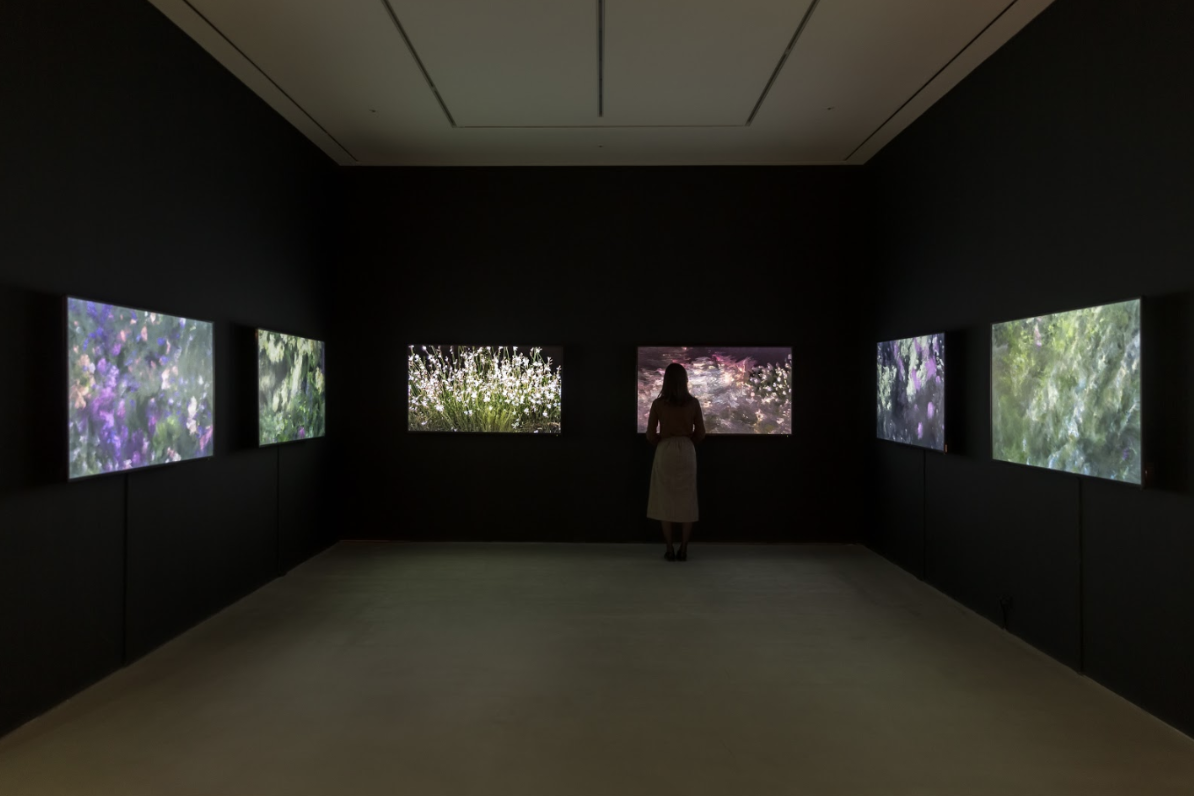
Quayola’s first comprehensive exhibition in Asia, which is atArt Space at Paradise City, Incheon, Korea until 24 February 2019, reimagines the past and rediscovers nature through the perspectives of machine. The past is revisited in relationship with the present and future – exploring asymmetry – that completely excludes humans’ subjective views and leaves machine processed objective ideas. Through these processes, classical art forms such as Hellenistic sculptures, old master paintings, and Baroque architecture are detached from iconographical semantics of the past to be regenerated into digital abstract works. In addition, familiar visual tropes of nature are transformed into a new artificial landscape engendered by machinery.

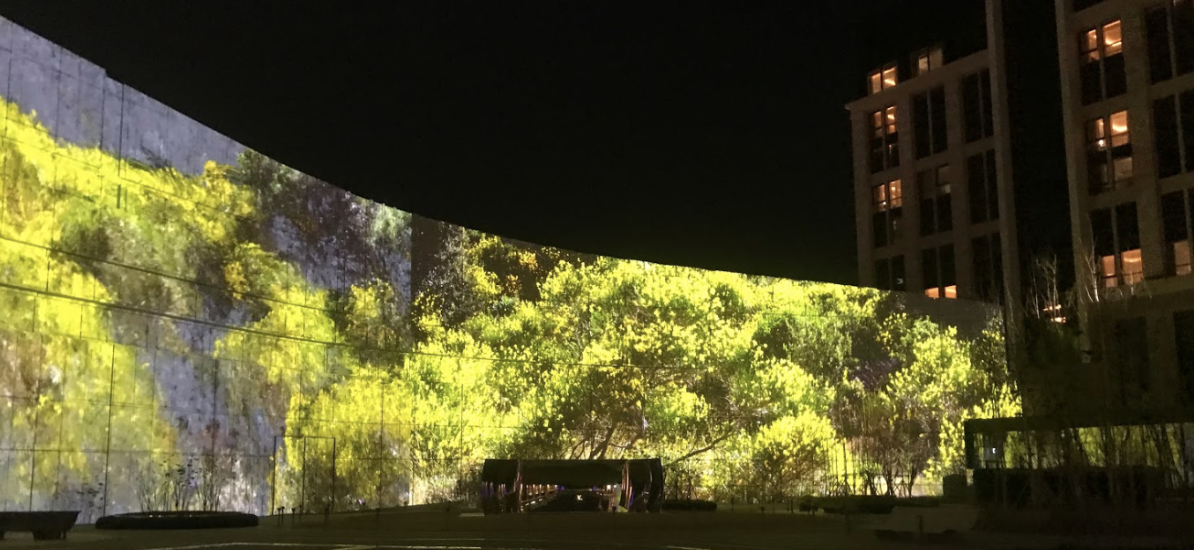
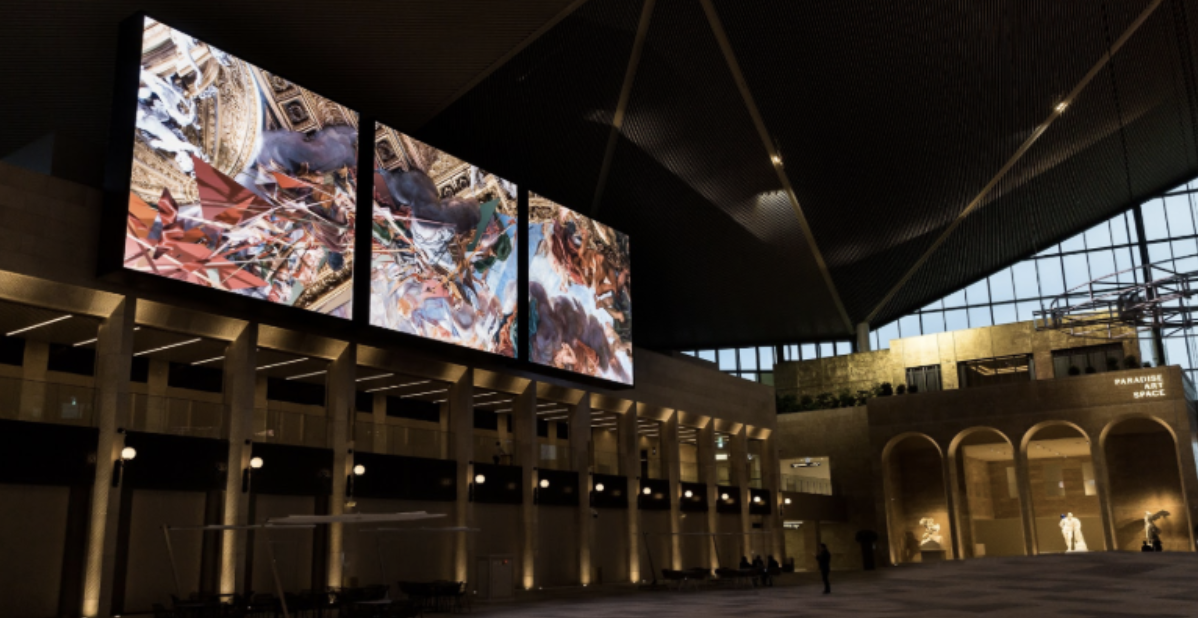
The exhibition, curated by Doo Eun Choi, consists of six sections with multi-genre artworks, including about 50 pieces of digital print, video, sculpture, and robotic installation. The breadth of the exhibit presents major works of Quayola not only inside Art Space, but also extends into the Art Garden with large-scale projection mapping and 3 channel-screenings at the Art Plaza.

Quayola, Pleasant Places

Iconographies, Strata, and Sculpture Factory are projects that analyse classical paintings, sculptures, and architecture through complicated computer algorithms, recreating contemporary abstract works by severing religious and mythical scenes of the past.

Quayola, Strata

Remains, Jardins d’Été and Pleasant Places are his ongoing projects that reexamine familiar visual languages of nature and traditional compositions of landscape paintings. Through complicated digital rendering, new digital landscapes emerge from actual natural landscapes that are captured in high resolution by high-precision laser scanners and cameras. Diverse motifs come in to play for each work by recreating a new visual literacy; Remains observes the En plein air in the late 19th century; Jardins d’Été co-opts imagery from the French impressionism of Claude Monet; and Pleasant Places evokes the 17th century Dutch landscape paintings, which are considered to be the origin of landscape paintings. Ultimately, the works become hybrid landscapes – neither real nor virtual – transcending the boundaries of the figurative and abstract domains.

The exhibition is powered by Niio

“It’s quite an amazing system for preserving, managing and distributing digital video editions. My gallerist and I are using Niio for transferring limited editions to buyers and to museums for exhibitions.” Quayola, new media artists, represented by bitform gallery, NY

Niio is  the premium discovery, display and management platform for new media art, embraced by leading artists, galleries, museums, curators, collectors and arts organisations from around the world, who are using Niio’s proprietary technology tools to securely safeguard, showcase, transfer, monetise and display thousands of their high-quality works on any type of “digital canvas.

About Paradise Art Space

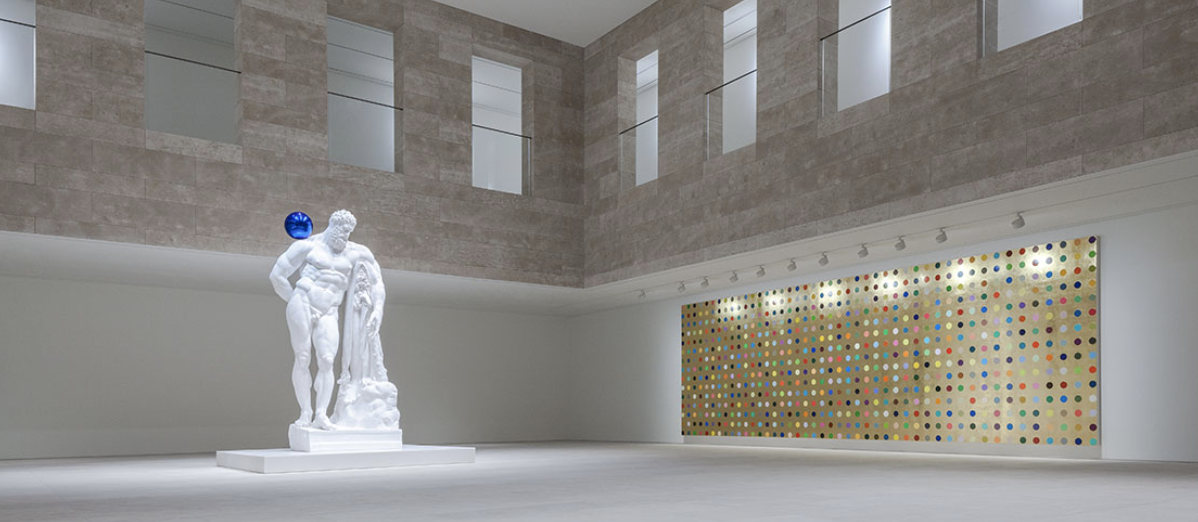
Paradise Art Space recently opened with works by world-class artists from East and West including Jeff Koons, Damien Hirst, Kim Ho Deuk, and Lee Bae. Meet the past, present and future of contemporary art from all around the world at this exhibition directed by director Chung, Goo-ho.Paradise City’s art exhibition gallery showcasing a new level of cultural experience and works from wide-ranging genres by prominent Korean and global artists.