Florence Lefebvre: Marine Emotions

Niio Editorial

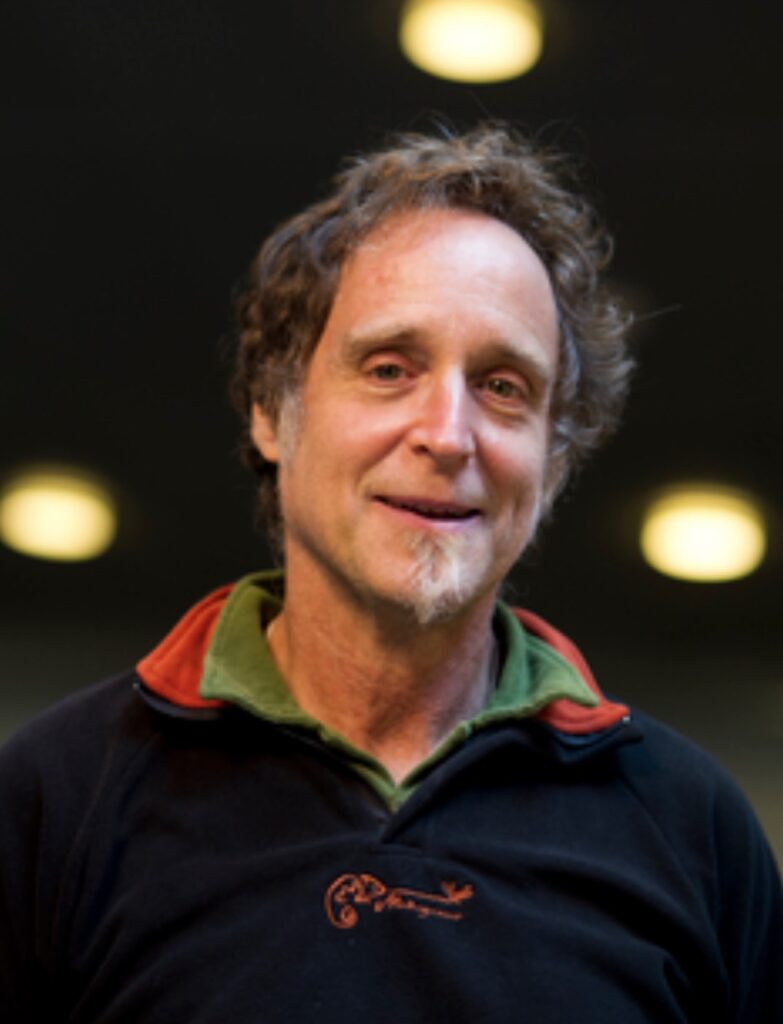
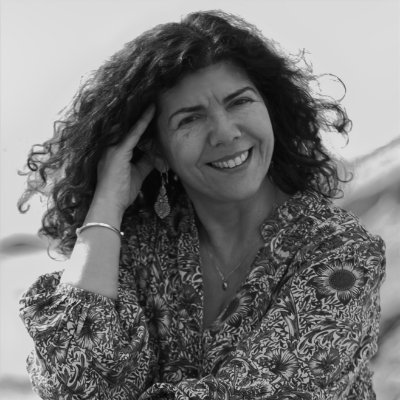
Florence Lefebvre is a self-taught French digital artist whose practice emerges from a lifelong dialogue with the sea. Growing up with formative summers in the South of France and later observing the shifting coasts of Normandy, Brittany, and the North Sea, she developed a deep sensitivity to tides, light, and movement. What began as hours spent underwater with a mask and snorkel evolved into a visual language built from fluidity, rhythm, and transformation. Today, she translates these marine memories into immersive digital compositions, describing herself as a “digital explorer” navigating an ocean of pixels.

Following the launch of her solo artcast Waltz of Flowers on Niio, we had a conversation about her creative process and the sources of her inspiration.

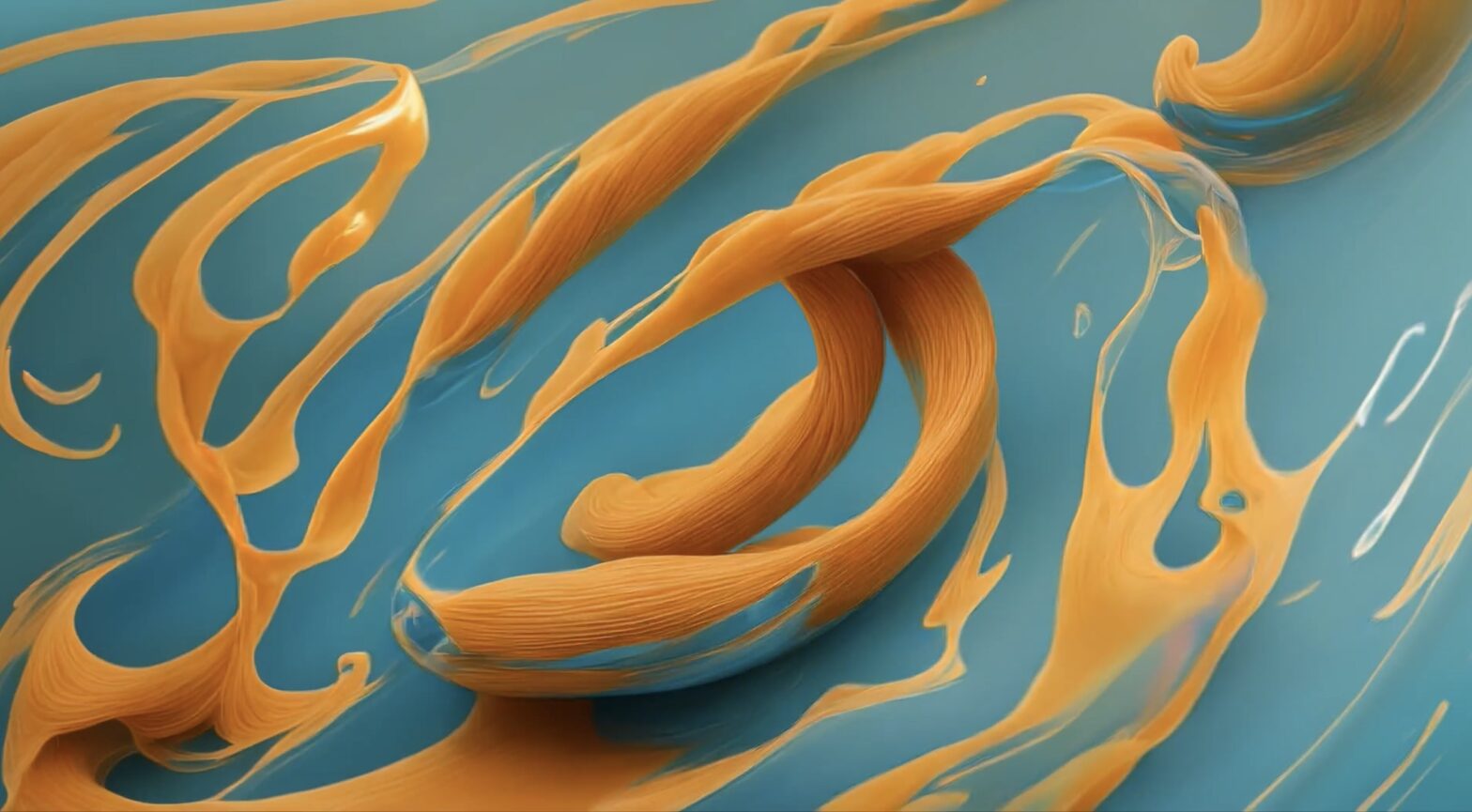
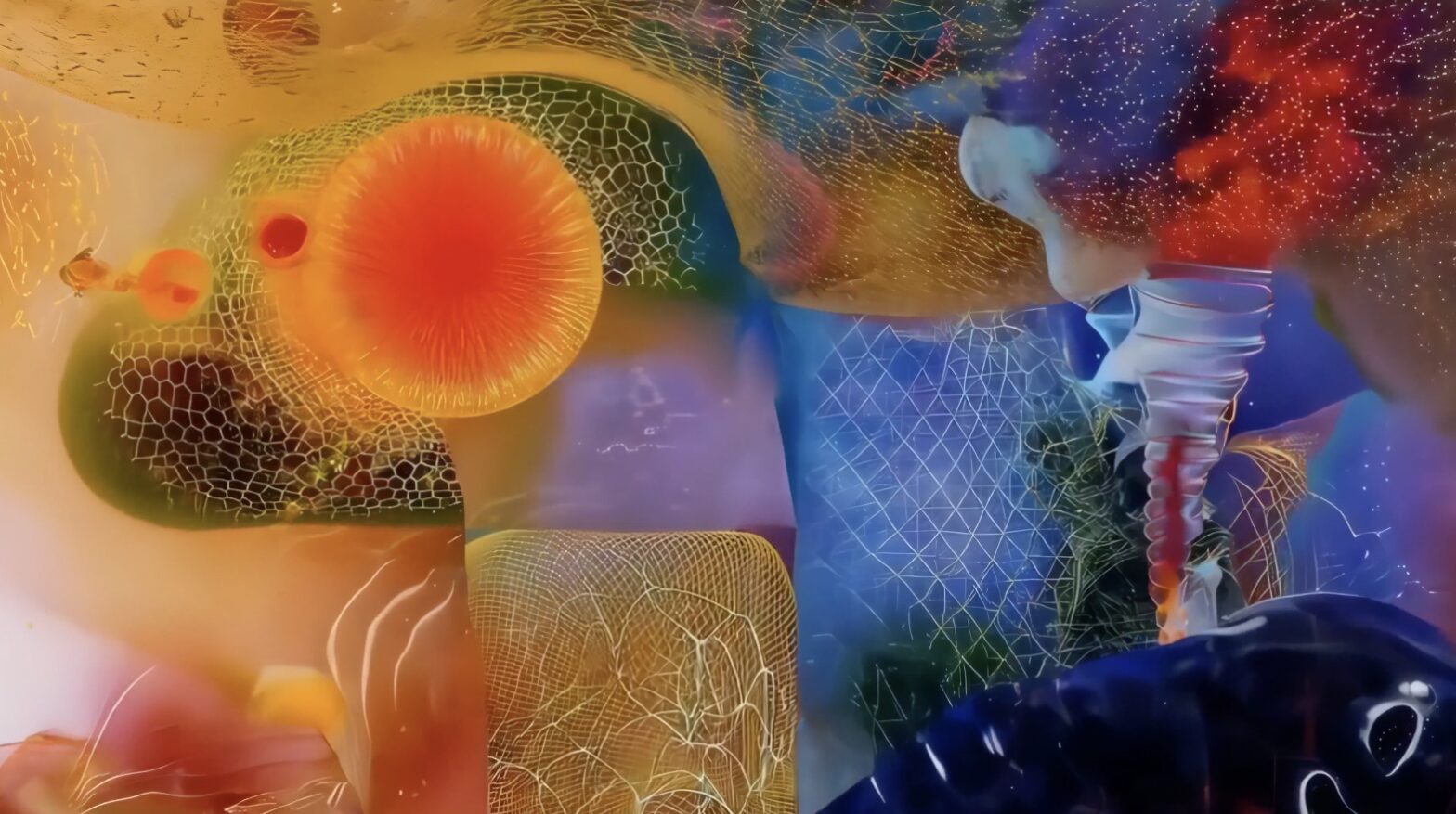
Florence Lefebvre. Waltz of Flowers #1, 2022

You have stated that your work draws its inspiration from “marine emotions.” Could you share with us a specific memory, place, or marine sensation that continues to inspire your work today?

For me, the sea is an emotional language: an endless immersion where fluid, uninterrupted movement inspires my digital exploration.

Every summer, during long family holidays in the South of France, I discovered my first wonders beneath the surface of the water. Equipped with just a mask and snorkel, I spent hours exploring this secret realm, fascinated by the light filtering through the waves and the shifting reflections. The green of the seaweed rippled gently, while fish, their hues ranging from red to orange, then to blue and silver, moved through this world like a living dance. These moments instilled in me the beauty of rhythm, color, and movement—essential elements of any artistic composition.

My creations immerse us in a universe where art transcends the boundaries of the canvas!

Even today, I regularly observe the beach and the sea along the Normandy and Brittany coasts, as well as in the North Sea, where the tides constantly create new patterns on the sand and alter the dance of the waves. On winter mornings, on calm or windy days, I watch the light change with every moment: the sky merges with the sea, clouds stretch to the horizon, and sometimes silvery reflections illuminate the surface. I feel fully connected to this shifting space, attentive to every ripple of the water and every variation of color brought about by the tides.

The sea has taught me that nothing is fixed, that everything is fluid and transformative. In my digital ocean, each pixel becomes a grain of sand to explore!

My art is a dialogue between the real and the digital, where each composition carries the memory of an inner journey that continues endlessly!

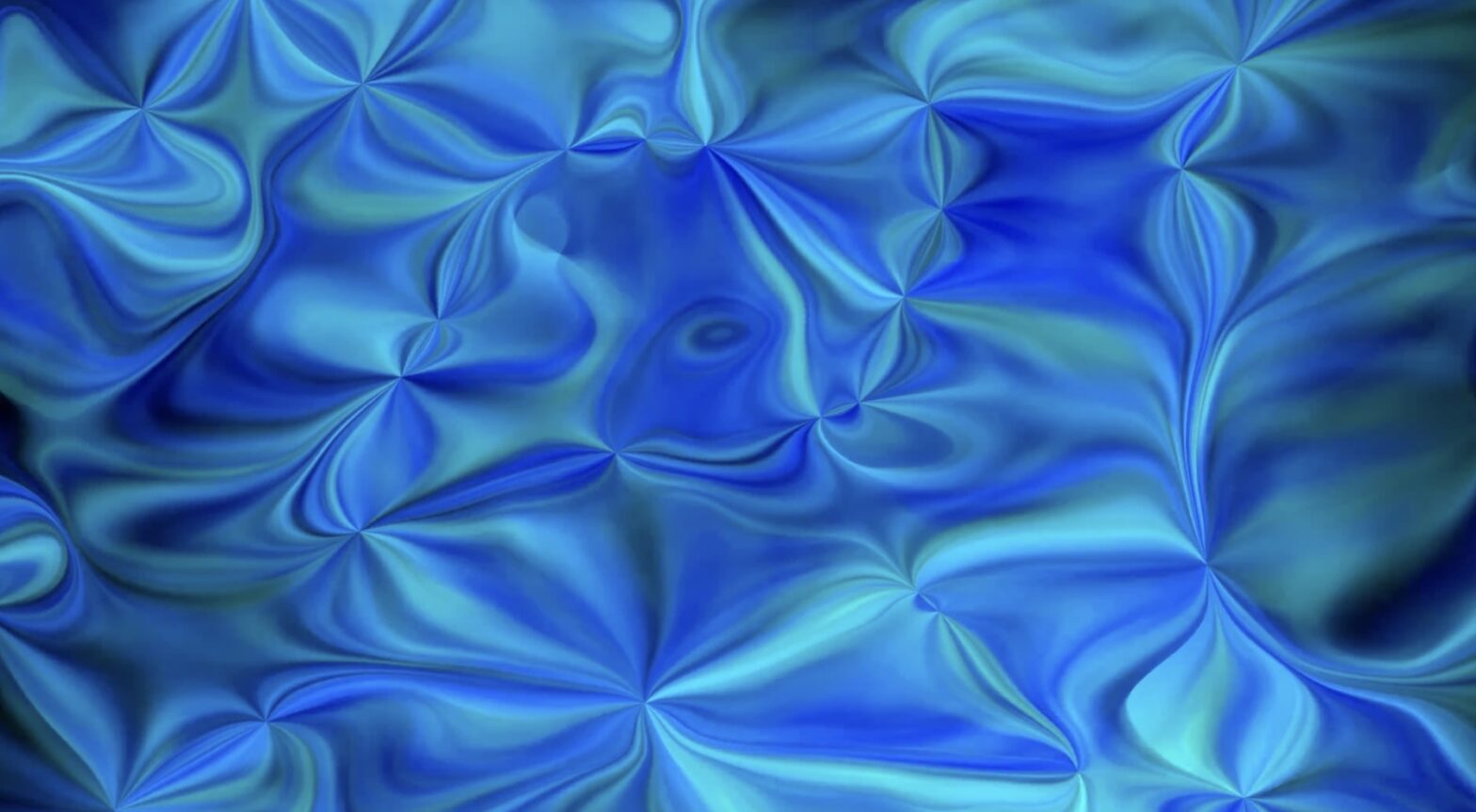
Florence Lefebvre. Stellar Melodies, 2025

In your work, you prioritize contemplation first, then mastering the production process. What does “contemplation” look like in your daily practice?

For me, contemplation is an active immersion, the starting point of all creation. It always begins far from screens, with careful observation of nature. I am deeply moved by the spectacle of the tides and the perpetual movement of the waves.

My approach unfolds around three axes: flow and energy, forms and textures, and time for reflection. By exploring the Normandy and Brittany coasts, I capture the metamorphosis of the shores under the action of the sea, the power of the waves, and the fluidity of their movements. I linger on the rhythms of the water, the undulations of the sand, the contrasts between rock and sea, building a repertoire of sensations that I then transpose into my digital creations.

“It is during my walks along wild coastlines that my works take shape in feeling, before technology becomes an extension of my gaze”

The settling time involves knowing how to detach oneself from the digital world, allowing these impressions to organize themselves internally. It is during my walks along wild coastlines that my works take shape in feeling, before technology becomes an extension of my gaze, transcribing into images what the sea has whispered to me.

My art is thus a dialogue between the real and the digital, a perpetually transforming flow, where each pixel mirrors an instant, as a grain of sand carried away by the tide.

When did digital creation become the medium where you felt you could “fully” express your sensitivity, and what did it reveal that other forms did not allow?

One day, I embarked on this artistic quest of creativity and exploration as a self-taught artist, using whatever tools I had at hand. I explored, tested, observed, experimented, and created with passion, fascinated by the possibility of bringing to life the movements, textures, and colors I had observed in the sea since childhood. This moment remains very important to me because it marked the beginning of an intense period of artistic creation. I instinctively grasp computer tools and naturally become familiar with them, while working regularly and rigorously, which allows me to acquire technical mastery of the software. It’s a passion fueled by daily exploration, research, and creation.

“The sea has taught me that nothing is fixed, that everything is fluid and transformative. In my digital ocean, each pixel becomes a grain of sand to explore!

Digital creation became a universe for me where I could fully express my sensitivity when I felt the need to translate the flows, movements, and nuances of nature in a more immersive and vibrant way. Unlike other traditional forms, digital art allows me to capture the fluidity, light, and rhythm of my marine memories, to create subtle movements, infinite oscillations, and to experiment with variations of color and texture that paper, canvas, or sculpture don’t always allow.

Throughout my exploration, I also developed a passion for flowers, which I animate like peintures mouvantes (moving paintings), creating a dialogue between nature and digital art to produce living, poetic works.

This creative space has revealed to me that emotion can be immersed, amplified, and reinvented; that each pixel can convey a feeling; and that the interaction between the real and the virtual opens an infinite dialogue with the viewer. Where other forms could freeze a moment, digital art allows me to bring movement and transformation to life, to recreate the memory of ocean currents and the dance of the elements, while remaining true to my vision and artistic intuition.

Since then, I’ve defined myself as a digital explorer, approaching the screen as an ocean of possibilities. Each video I create becomes an immersive atmosphere, where every shape and color contributes to the experience and the feeling, offering a dialogue between the real and the virtual.

“Unlike other traditional forms, digital art allows me to capture the fluidity, light, and rhythm of my marine memories”

Florence Lefebvre, Infinitesimal, 2023

Your work often revolves around “digital fluids and forms.” Are these abstractions meant to evoke water, emotions, memory, or something else?

I work with digital fluids and forms to translate what I feel in the face of the sea and life, rather than representing the world literally. Water, with its fluidity and oscillations, becomes a central metaphor: it evokes movement, emotion, memory, and transformation.

For me, digital art is a space of infinite exploration, where each work can evolve, reinvent itself, and engage in a dialogue with the viewer.

I create dynamic and evolving fluids, where each element transforms and interacts across multiple dimensions. This universe allows me to explore inaccessible realms, where movement and color harmonize perfectly, offering the viewer a true escape.

“My goal is for the artwork to transport the viewer, transforming their contemplation into a unique emotional experience.”

Each work is born from a subtle balance between observation of reality and digital exploration. Waves, currents, and ocean currents inspire my rhythms and textures, but these elements are reinvented as free abstractions, capable of conveying the flow of an emotion or the memory of a moment.

My goal is for the artwork to transport the viewer, transforming their contemplation into a unique emotional experience. Each creation is designed to resonate with the space around it and invite everyone to feel emotion, a memory, or a sense of escape.

My works thus become a space for exploration where the viewer can perceive movement, color, and depth, while giving free rein to their interpretation. Digital fluids are therefore not just water: they constitute a visual language that evokes feeling: a dialogue between real and virtual, memory and emotion.

You mention algorithms and multidimensional composition. How do you reconcile control and emergence, and at what point do you want surprise to appear in the image?

In my work, control and emergence interact like two complementary forces. Through the software’s algorithms, I shape my creations, orchestrating rhythms, textures, and movements that I wish to explore.

However, I always leave room for surprise, because it is often in the unexpected that the most poetic and vibrant moments are born. Sometimes, a flow reacts differently, a color blends differently, a ripple forms unexpectedly: these moments become creative triggers that I then choose whether or not to incorporate.

I then become a conductor, or rather a captain: I steer my digital compositions with intention and mastery, while leaving the necessary space for emergence. “Ctrl+Z” becomes my magic wand: surprise is no longer a constraint, but the wind that fills my sails toward the unknown, transforming the unpredictable into an opportunity for exploration!

Florence Lefebvre. Flowergraph, 2022

You speak of linking contemporary life to the “cradle of primitive life.” What does “primitive” mean to you: biology, mythology, evolution, spirituality, or a psychological state? Your goal is to represent “the depths of the subconscious.” Do you start with an emotion and then find an image for it, or with an image to discover the emotion later?

I perceive the primitive as the vital force that animates the entire universe, a cradle of life that is simultaneously biological, instinctive, and psychological. It is this raw energy that flows through nature, from ocean currents to distant stars, and that inspires creation. My approach is akin to a biology of the imagination: an exploration of matter coming to life, where instinct and memory intertwine with digital technology.

My goal is to represent the depths of the subconscious, where emotions and memories converge. Sometimes, I begin with an emotion, allowing it to percolate and transform into image, form, and movement; sometimes, an image emerges spontaneously, revealing the latent emotion it carries. In all cases, the unexpected becomes the raw material of creation, and the primal, a living and inspiring source.

“I have also developed a passion for flowers I animate like peintures mouvantes (moving paintings), creating a dialogue between nature and digital media.”

The orchestration of my digital fluids allows me to create shifting, dreamlike worlds where life, poetry, and the invisible meet. I explore the infinitely small with works like “Infinitesimal,” observing digital fluids under a microscope.

In my series ‘Abyss’ and ‘The Secret of the Abyss’, the ocean depths mingle with the subconscious, giving rise to abyssal creatures that I call ‘Abyss’, born in the heart of these depths and bearers of the mysteries of the ocean. Finally, the celestial journey with the “Nebula” series connects the ocean depths to the most distant stars, continuing this quest for energy, cosmic fluidity, and infinite reverie.

Digital art offers me immense freedom of exploration, a boundless, dreamlike, and ever-shifting universe where the invisible becomes visible and the unexpected transforms into living inspiration.

Florence Lefebvre. Confusion, 2022

A significant portion of your work is abstract, dominated by fluids and fluidity, with some references to nature. However, some of your most recent works, created with AI models, lean towards figuration, with scenes reminiscent of street art and early hand-painted photographs. What does AI bring to your creative process that has motivated this evolution towards figurative compositions?

AI is primarily used in my work when I explore figurative art. It allows me to develop scenes, characters, and visual worlds that I explore through various themes, from street art to early hand-painted photographs, including sketches reminiscent of drawing or comics.

I use it as a tool for shaping and experimentation: I define the intentions, adjust the parameters, select, refine, and rework the images. The AI ​​generates suggestions, but the vision, direction, and aesthetic choices remain entirely my own.

“Working with AI is not a change of direction, but an expansion of my artistic language, where each work, with its own tools, contributes to the same vision.”

What interests me is not just the speed of execution, but above all the possibility of exploring a wide variety of subjects and styles without hindering the creative flow. Where my passion for digital fluidity explores colors, flows, geometric shapes, and multidimensional interactions, AI allows me to introduce a narrative dimension.

The common thread remains the same: life, color, and the subtle connections that interact with each other.

This is not a change of direction, but an expansion of my artistic language, where each work, with its own tools, contributes to the same vision.

Florence Lefebvre. Pop Culture, 2022

You stated that your work transcends the canvas, incorporating 3D and movement. What is your ideal viewing context: phone, large screen, installation, home space? And how does this context influence the perception of the work?

My work transcends the traditional canvas, incorporating 3D, movement, and an immersive dimension. I design my pieces to be felt in space, not just seen.

The viewing context plays a central role in the perception of the work:

  • Large screen or projection: this is ideal for fully experiencing the fluidity of movement, the depth of textures, and the Waltz of my flowers. The viewer is immersed in the universe I have created. The animated flowers, which I conceive as moving paintings, reveal all their subtlety, creating a poetic and immersive dialogue between nature and digital technology.
  • Installation or dedicated space: the artwork engages with its environment, and the viewer becomes an active participant in the perception, moving around the piece, discovering details and dynamics depending on the viewpoint.
  • Phone or small screen: even on a smaller screen, the artwork retains its power. Some details or subtleties of movement may be less perceptible, but the experience becomes more intimate, offering a direct connection that integrates into the viewer’s daily life.
  • Everyday setting: the artwork interacts with the rhythm of life and the environment, creating an emotional resonance where the digital and the living meet in everyday life.

Thus, the format and context influence how movement, depth, and narrative are perceived. I aim for a subtle balance between individual connection and total immersion in the world of my artworks, respecting the fluidity and energy of each piece, so that the viewer can fully experience the movement, color, vibration of the flows, and the digital life I seek to convey.

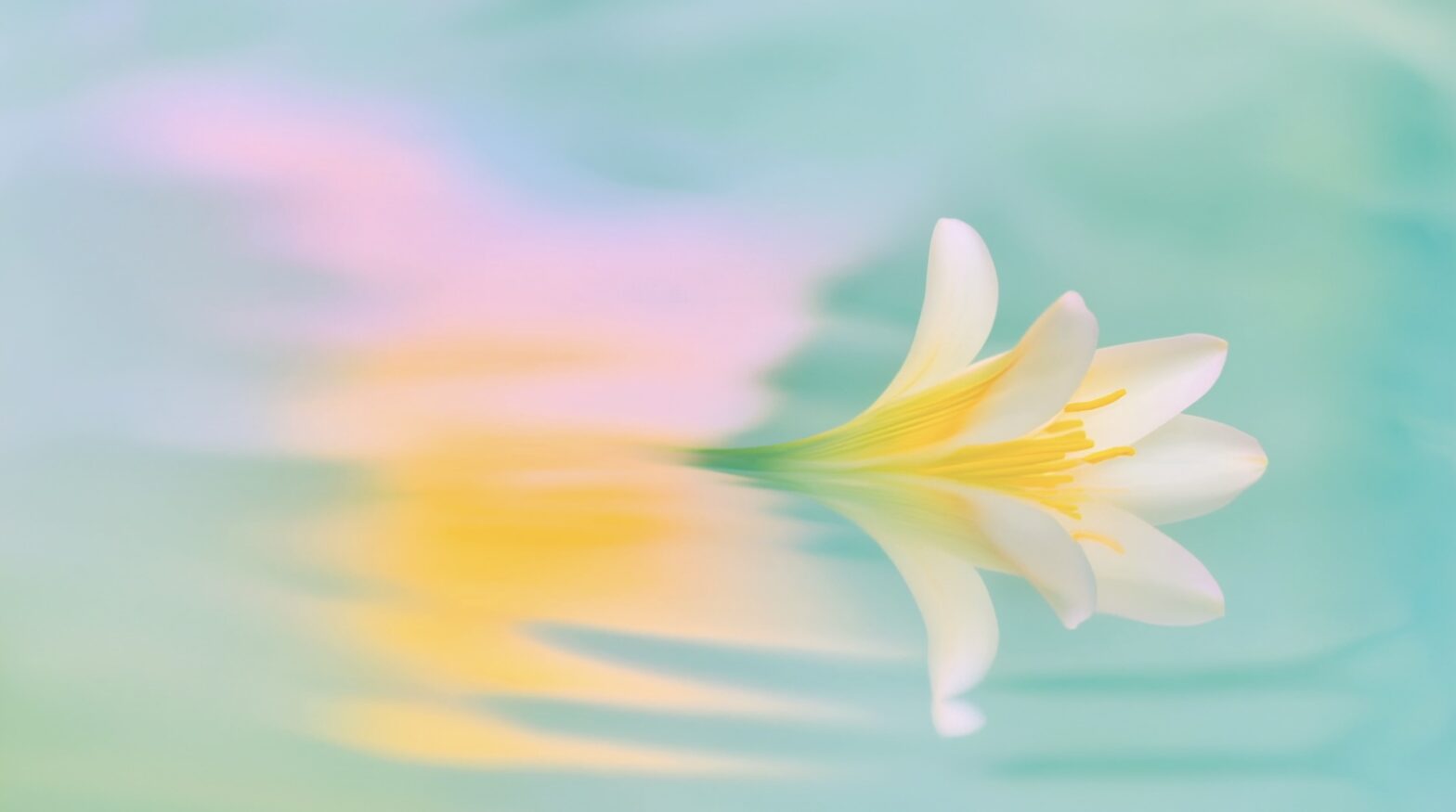
Florence Lefebvre. Waltz of Flowers #2, 2022

Regarding the context of experiencing the artwork, how do you think Niio and other companies that distribute digital art on public screens can benefit artists and art lovers? What has been your experience of presenting your work on digital screens in public spaces?

Niio displayed two works from my collection, “Waltz of Flowers” and “LINK,” on a high-quality screen at an event in a prestigious hotel. This was an enriching experience, as it allowed a wide audience to discover my creations and perceive the interaction between digital art and space. Seeing artworks presented on screens demonstrates how essential these exhibitions are in making digital art accessible and introducing it to a diverse audience.

Platforms like Niio and other companies offer artists the opportunity to showcase their work in diverse contexts, where it can come to life and be discovered in a space accessible to all. They allow us, as artists, to reach a sometimes unexpected audience that might not otherwise have had the opportunity to discover my work or that of other artists.

Being exhibited in varied venues and environments is an enriching and unique experience, as each presentation, regardless of the type or size of the screen, allows the artwork to reveal itself differently depending on the space and the audience, while also contributing to the artist’s career and professional development.

“Platforms like Niio and other companies offer artists the opportunity to showcase their work in diverse contexts, where it can come to life and be discovered in a space accessible to all.”

Elsa Carvalho: The Art of Impermanence

Pau Waelder

Elsa Carvalho’s path into visual art began not in a studio, but in the structured logic of computer science. A Portuguese software engineer with a PhD completed in 2012, she turned toward artistic creation in 2021, at a moment when the NFT movement opened new doors for digital experimentation. On the occasion of her solo artcast The Unfolding on Niio, we asked her a series of questions about her artistic practice and creative process.

In this conversation, Carvalho reflects on how poetry and coding share a common ground in working within constraints, how open access to AI tools made image-making accessible to her as a newcomer to visual art, and how she gradually moved from early experimentation toward a more personal visual language.

Elsa Carvalho. TheUnfolding#1, 2025.

You work as a software engineer but you have also always been interested in the arts, and have written poetry and prose. How would you relate poetry and literature to creative coding?

In my professional practice I always felt that coding is a very creative activity. Although this may seem counterintuitive, because it is full of rules and constraints, the fact is that you are creating something and, in the end, a result will emerge. There are different ways of achieving the same result, and the process of searching for and choosing a path is something I find very appealing. Often, what matters is not only the final output, but the decisions made along the way.

The same happens with writing. There are rules in language as well, but they can be bent or broken for poetic reasons. In creative coding I feel a similar freedom: working within constraints, but still allowing intuition, experimentation, and small deviations that can change the outcome.  

“Creative coding means working within constraints, but still allowing intuition, experimentation, and small deviations that can change the outcome.”

You decided to dive into visual art in 2021, at the time of the NFT boom. How did the NFT scene shape your understanding of art, and how has it evolved over the last years?

The NFT movement was the trigger for me to start exploring digital art. It felt like something important was happening and I wanted to be part of it, not to be left out of what seemed like a meaningful way to step into digital creation. In many ways, it was the entry point that allowed me to discover this artistic side of myself.

At that time, I had no experience with digital art, and that was one of the reasons AI attracted me so much. It opened the possibility to experiment visually without a traditional background. In that sense, AI felt very democratizing, allowing many people, including myself, to explore image-making in a more accessible way.

More recently, my relationship with that space has changed. I became more interested in slower processes and in developing a personal visual language. Discovering platforms like Niio, where my work can exist on large screens or in people’s living spaces, appeals to me more now than the NFT space itself. Still, I feel I will always be connected to that movement, as it was the precursor to my entry into the artistic world, and I owe a lot to it for opening that door.

Elsa Carvalho. TheUnfolding#2, 2025.

As a software expert, you know how software can shape what a user is able to do or even think they can do. Over the last decades, artists working with code have developed new tools that allow them to bypass the limitations of commercial software, and created a community around sharing. What do you think of this open source movement and how has it helped you as an artist?

I think the open source movement is very relevant and powerful. One of its biggest strengths is that it allows people to bypass the high costs of commercial software and to build tools together that anyone can use. This kind of shared effort has a real impact and reaches millions of people.

In my own practice, I did not take full advantage of artist-led open source tools, but open access to AI algorithms was essential for me in the beginning. Having Google notebooks available, with increasingly better GAN models and later other algorithms, was what allowed me to start experimenting with AI and image generation.

I also used non-paid platforms like Artbreeder, especially in my early exploration, alongside commercial AI tools. So my path was a mix of open, shared resources and proprietary software. Without that initial access to open algorithms and notebooks, I probably would not have entered this field in the same way.

“Discovering platforms like Niio, where my work can exist on large screens or in people’s living spaces, appeals to me more now than the NFT space itself.”

You use creative coding to generate visuals that then feed into an AI model to create a unique visual language. Can you take us through this process?

My process usually starts with creative coding. Through code, I generate images with more geometric structures, and this is where the core aesthetic of the work is defined. At this stage, I also establish the color palette and the visual coherence that runs through the series.

These images then become the starting point for the use of AI. AI allows me to introduce more organic qualities into the visuals, inspired by natural forms. It transforms the geometric structures and adds a layer of complexity and softness that I could not achieve through code alone.

From there, I curate the resulting images and use them as the basis for video works. I use AI tools to create the videos, either by introducing movement into the images or by morphing between different images. This final step allows the work to unfold over time and reinforces the idea of transformation that is central to my practice.

“I started my artistic practice with a mix of open, shared resources and proprietary software. Without that initial access to open algorithms and notebooks, I probably would not have entered this field in the same way.”

Both creative coding and artistic creation with AI deal with the tension between controlling the output and letting the program surprise you. How do you manage this tension? Do you sometimes fear that a good visual might be ruined once interpreted by the AI?

There is always a balance between control and surprise in my process. With creative coding, I have more control over structure, color, and overall direction. With AI, I accept that the visuals will change in ways I cannot fully predict.

Of course, there is always the risk that a visual I like might be altered in a way that does not work. But one of the pleasures of working with AI, and also with creative coding that includes some degree of randomness, is precisely the possibility of being surprised by the process.

Unexpected results often become important. Sometimes they even guide the direction I decide to follow. Rather than trying to protect a single image, I work through many variations and curate carefully, trusting that the process itself will lead me to the right outcomes.

Elsa Carvalho. TheUnfolding#3, 2025.

You have stated that your interest in organic forms stems from your childhood experiences in a farm, surrounded by animals and nature. Yet the forms you create are abstract and strongly evoke Surrealist painting. Why have you chosen this aesthetic?

Organic forms appeal to me a great deal, and that comes from growing up surrounded by animals and nature. Those experiences stayed with me, even if they are not represented in a direct or literal way.

At the same time, I am not interested in reproducing nature as it is. I prefer to work with suggestion rather than representation. By keeping the forms abstract, I can give hints instead of clear answers and leave space for the viewer’s own interpretation.

This approach allows me to connect personal memories with a more open visual language. The work does not describe something specific, but it can still evoke familiar sensations or emotions linked to nature.

Your early work shows more “mainstream” experimentation with AI, first applying textures to photographs of nature, then generating portraits of women with surreal elements, then moving into classical painting and surreal scenes that remind the work of Max Ernst and Paul Delvaux, as well as some photorealistic imaginary landscapes. What didn’t work for you in all these phases, that made you move forward? How have the advances in AI image generation contributed to this process?

It is interesting that you ask this question. When I started this path, not long ago, I met several Portuguese artists who were also involved in NFTs. I remember speaking with one of them about how to find my own style, and she explained it very simply: it can only happen with time, experimentation, and by understanding what makes sense for you at each moment.

In the early days, I was mainly exploring the tools. I was trying different approaches, testing what AI could do, and learning through practice. What did not work for me in those phases was the feeling that the results were too dependent on existing visual references, and that they resolved too quickly.

I enjoy experimenting, and I tend to move on when repetition becomes too comfortable. Over time, and with the advances in AI image generation, I was able to refine my process and gain more control. Now that my creation pipeline is better defined, it is easier for me to explore different themes while keeping a consistent process and aesthetic, which I hope is becoming more recognisable.

“One of the pleasures of working with AI, and also with creative coding, is precisely the possibility of being surprised by the process.”

Color plays an important role in your compositions, which feature deep blues and bright oranges and yellows, as well as a wide range of strongly contrasting colors that underline the constant changes taking place. How do you work with color? Does it serve purely compositional concerns or does it incorporate a particular meaning?

I work with a small set of color palettes that I use in a more or less random way during the creative coding phase. This helps give consistency to the final works, even when the forms and structures change.

I am very drawn to strong colors. Sometimes the world feels very grey, especially in the period we are going through, and I feel that people need strong colors in their lives. For me, color brings energy and intensity to the work.

There is no specific meaning attached to the colors I choose. Intuition plays an important role. In the end, the resulting colors are a mix of what comes from the initial coded image and what comes from the AI prompts, and I curate the results by choosing the images that appeal to me the most.

“Sometimes the world feels very grey, and I feel that people need strong colors in their lives. For me, color brings energy and intensity to the work.”

In the series tran·sience you collaborated with Bruno Miranda, who created a musical score for your compositions. Seeing the artworks with music almost feels as if the shapes are reacting to the score. How did this collaboration come to be? What does music bring to your work?

Bruno Miranda is my husband, and although music is not his day-to-day work, he has a strong passion for composition. The collaboration came very naturally, as it felt like a way to give the videos a stronger impact.

The process usually starts with the visuals. Once a video is ready, I ask him to create a musical composition for it, sometimes suggesting a mood or style. Music adds rhythm, movement, and emotional depth that the visuals alone cannot convey, making the work feel more alive and immersive.

Elsa Carvalho. TheUnfolding#4, 2025.

You have stated that impermanence is one of the most fundamental truths of life. Following this line of thought, where do you think your work might take you next? Have you considered video mapping, installation, sculpture, or other forms of creation?

Like my works, I tend to let life and intuition guide me. After several years working consistently on my process, sharing my work on X (ex-Twitter), and selling NFTs occasionally on different platforms, I began receiving more recognition. Instead of going after opportunities, I started getting invitations.

First, I was invited to sell my videos as NFTs on a well-known AI video platform. Later, platforms like Niio, which provide video artworks to be shown in public spaces or companies, invited me to submit my work so their clients could choose from my artworks. More recently, I was invited to create pieces for an important event here in Portugal. Challenges make our minds search for creative solutions, and if somebody challenges me to show my work in a different or innovative way, I will certainly try to make it happen. I prefer to let these kinds of invitations guide me and shape the work I explore next.

Carlo Zanni: Do Anything Now

Pau Waelder

Carlo Zanni
DAN
banquet gallery, Milan
12.12.2024 – 1.3.2025

Carlo Zanni, DAN. Solo exhibition at banquet gallery, Milan. Photo: Pau Waelder

Browse by category. See more products based on your recent purchases. Enjoy free shipment for a limited time only. Buy now. Our daily interaction with e-commerce sites is a delicate balance of seduction, anxiety, submission, and intrusiveness. While we eagerly look for the product that will finally make us happy, a code runs underneath the interface, collecting our preferences and feeding a system that increasingly succeeds in predicting our wants and needs, and even shaping them to benefit vendors. We know this, but we keep buying anyway.

Our daily interaction with e-commerce sites is a delicate balance of seduction, anxiety, submission, and intrusiveness.

While we engage in this narcissistic and Sisyphean task, the world keeps turning, and not always for the best. Innocent people are massacred in wars, terrorist attacks, and deranged shootings; migrants die trying to reach a better shore; people suffer under corrupt and authoritarian systems. This undercurrent of daily violence is hidden below the glossy interface that constantly presents desirable products for our consideration. We seek comfort and self-improvement, while others seek shelter and food. We zoom into the images to appreciate the product’s features and look away, or only briefly glance, at harsher realities. We eagerly follow the route of our purchases as they are shipped to our home, when others check alerts of incoming missiles, floods or fires, or see themselves sent away from countries that reject them.

Carlo Zanni’s artistic practice has, for many years, focused on the “shared landscape” that digital devices and the internet have created, enabling us to contemplate this virtual space as a territory that is at the same time familiar and distant, intimate and public. He has explored digital culture with the eyes of a painter, creating new forms of portraiture for computer desktops and landscape compositions made of pixels and real time data extracted from online sources. The artworks he now presents at his solo exhibition DAN at banquet gallery in Milan can only be understood from his decades-long exploration of internet culture, consumer society, identity, politics, programmed obsolescence, automation, and the way that art can address these aspects of our contemporary reality.

Carlo Zanni, Check Out Paintings, 2024. Photo: PW

Check Out Paintings

One of Zanni’s earliest works is DTP Icons (2000), a series of oil paintings depicting desktop icons of the software that was shaping digital culture in the late 90s and early 00s, like Napster, Shockwave, Illustrator, or Photoshop. He also painted desktop backgrounds commonly used in Windows and MacOS operating systems, based on the idea that “the desktop is the landscape and the cursor is the horizon.” Here, painting became the perfect medium in an attempt to both elevate the cultural status of a piece of software or a decorative element (by making it part of a work of art), and to fix its existence for posterity. Today, many of the elements he painted, the desktop images and the software, are no longer in use, obsolete, forgotten –just as last year’s news. The social and political reality underlying this booming internet culture (in the midst of what would later become a market bubble) is also referenced by Zanni in other paintings that point to the cracks in the system and look at the underbelly of the beginnings of e-commerce and millennial fascination with digital media: the online black markets, computer viruses, and hacker culture. The artist painted placeholders of missing images related to search queries, and later on explored the iconography used by hackers, often depicting monsters and satanic symbols to underscore their deviation from accepted standards. 

Many of the elements that Zanni painted in the early 2000s, the desktop images and the software, are no longer in use, obsolete, forgotten –just as last year’s news.

Painting, which later became more of a conceptual framework in Zanni’s digital art practice, comes back as a medium in an evolved form that synthesizes what the artist has learnt and developed over the last two decades. Check Out Paintings (2022-2024) is a series of canvases that paradoxically (for a painter who depicts our digital landscape) cannot be properly viewed on a website. No photograph can actually capture the nuances of these almost abstract paintings that require the viewer to be physically present in front of the artworks and to pay special attention to their subtle details. The paintings depict elements of e-commerce sites’ check out pages, such as dropdown menus, buttons, quantity selectors, and so on. Unlike Zanni’s paintings from twenty years ago, depicting these elements is not the main subject of the artworks. Rather, they become part of a visual vocabulary with which the artist plays freely to create compositions that cannot possibly be perceived at a glance, as is so frequently demanded of contemporary painting. Using muted colors and thin, faintly drawn details, Zanni forces the viewer to look closer and read the texts that replace the usual messages found while shopping online. Some of these texts clearly refer to specific news, such as the passing of Queen Elizabeth II, a flood in the city of Faenza, or Brexit. Others more cryptically refer to the number of migrant men, women and children that died while trying to reach Europe by boat, or the GPS coordinates of a missile strike. 

Carlo Zanni, Check Out Paintings (detail), 2024. Photo: PW

One may choose to inquire about these references in order to learn what lies beneath the surface of the canvas, or simply observe from a distance what seems to be yet another abstract composition. The interface elements of e-commerce sites operate here like a veil, that in turn serves as a background for a colorful, detailed emoji or a series of black shapes extracted from the Amazon logo. Zanni refers to these elements as “clickbait,” in the sense that they attract the viewer’s attention and give them something to look at. But this is just a distraction, for the content of these paintings lies somewhere else.

Carlo Zanni, DAN. Exhibition view at banquet gallery, Milan. Photo: PW

My Shameful Sweet Spot Between Distress and Hilarity

Two decades ago, Carlo Zanni started using long, evocative titles for his internet-based artworks with live data. Works like The Possible Ties Between Illness And Success (2006) and My Temporary Visiting Position From The Sunset Terrace Bar (2007) introduced a dominant narrative that invited viewers to watch, listen, and interact with the artwork as a film rather than contemplate it as a landscape. This shift had already been initiated in the videogame artwork Average Shoveler (2004), which in turn builds on previous digital landscape compositions with real-time data such as Skyman (2003) and eBayLandscape (2004), adding a beautifully crafted intro scene that clearly marks the debut of Zanni’s exploration of the cinematic. Cinema, documentary, and other forms of audiovisual content, such as music videos, YouTube clips, and videoart, have shaped over the last decade how the artist confronts reality (both on the global, socio-political scale as well as in a more intimate level as a creator) building semi-fictional narratives that speak of a consumer society immersed in data. 

Since the early 2000s, Carlo Zanni has been interested in the art market from the perspective of an artist creating digital art online. He pioneered talks about the possibilities of selling art online, and over the following two decades has experimented with different forms of presenting digital art for sale aimed at mass distribution, such as the ViBo (2014-2015), a paperback publication with an embedded video player and screen, or the unrealized online art platform P€OPLE ¥rom MAR$ (2012), which prefigured many elements later found in NFT marketplaces. Precisely, the NFT boom marked another shift in Zanni’s work: from seeking a solution for the distribution of digital art in the contemporary art market to addressing this market, and more widely e-commerce and consumerism, as a subject. While ZANNI (Ẓ) and Boil the ocean. Cook the books. Eat your own dog food, both from 2018, address the early culture surrounding cryptocurrency, after the record sales of NFTs at auction and the market bubble that ensued in 2020-2021, his work returns to a more sober and refined attention to painting and e-commerce. As previously discussed, this is made evident in the Check Out Paintings series.

Carlo Zanni. Save Me for Later, 2022

Connected to the paintings, the live internet performance Save Me For Later (2022) builds on the concept of “the desktop is the landscape and the cursor is the horizon” to create an automated narrative in which we seem to be witnessing the artist himself endlessly browsing the Amazon website and adding random products to the shopping cart. In fact, it is a bot that browses the site, while a recording of Zanni’s face staring at the screen creates the illusion that it is the artist who is engaged in an endless cycle of shopping. However, the browser window is placed in such a way as to reveal another window below, which displays the code that runs the bot. This artwork, whose video edition is featured on Niio, confronts us with our own browsing and shopping habits, trapped in a cycle of endless pursuit of satisfaction. If a viewer dedicates enough time and patience to observe this apparently banal scene, they will gradually realize that the Amazon marketplace is actually an everyday landscape they know too well, and probably start to feel a twinge of curiosity or desire after seeing some of the products selected by the bot.

The Amazon marketplace is actually an everyday landscape we know too well.

Whereas Save Me For Later depicts a landscape and addresses our consumerist habits, My Shameful Sweet Spot Between Distress and Hilarity (2024) develops an underlying socio-political critique and has stronger ties to painting. Also a live internet performance (currently taking place in the basement of banquet gallery), this artwork uses as its canvas the website of the Parisian haute couture house Maison Margiela. The luxury fashion items sold by the prestigious brand are used by the artist as elements of a visual composition, as the bot not only clicks through the site but also zooms into the photos until they become textures that fill the browser window.

Carlo Zanni. My Shameful Sweet Spot Between Distress and Hilarity, 2024. Photo: PW

Again, Zanni’s face is displayed on a floating window, keeping the illusion of a conscious human activity, while the screen leaves room for another window beneath, that shows the program running the bot. Here, the code reveals that the bot is culling headlines from the news outlet AlJazeera, which from time to time are used as search queries on Maison Margiela’s site. The incongruence of this automated action brings forth the tensions and contradictions in our layered society, in which everything is traversed by flows of information. One may thus wonder, for instance, what does the fall of the Assad regime in Syria has to do with a Glam Slam hobo small bag crafted from quilted nappa leather. Zanni is able to connect these two distant realities by transferring data from one system to another, letting the website of the luxury fashion house interpret the query according to the information in its own database.

As in the Check Out Paintings, this artwork plays with the layering of separate realities, which is not immediately apparent and goes beyond the representation of the interface to create its own visual language. As the screen is covered by the texture of one of the items on sale, the artwork hints at the possibility of simply being an abstract composition, therefore providing the soothing distance from reality that art can deliver so effectively.

Carlo Zanni. DAN, 2024. Photo: PW

DAN

The dissonance between the experience of someone (anyone of us) shopping online and that of someone trapped in such a horrible situation as to make it to the headlines of a news agency can be expressed in terms of distance. Not only social, political, or economic distance, but also plain physical distance. We can observe events happening around the globe from our screens with some level of concern, but also detachment, since they are not happening at our doorstep. The pandemic showed how oblivious we can be to the fact that an outbreak in a country far away could have implications at home. It can be said that our online life has created an intimate distance between us and the content on our screens, while expanding the distance between us and our immediate surroundings. Our online shopping experience is a good example: we search for the product we crave, staring at a screen very close to our face, browsing, examining the product in detail, zooming in. If it convinces us, we press the “buy now” button, and wait. The wait must be as short as possible: one-day, same-day delivery. It was so close to me on the screen, why must I wait to have it in my hands? The physical distance must be erased as much as possible. The process taking place from order to delivery is obliterated, or at most expressed in a somewhat abstract form as a progress bar, as if the product were downloaded from the cloud into our home. When this process concludes, what we get is a cardboard box that will be joyfully opened and then thrown away.

Our online life has created an intimate distance between us and the content on our screens, while expanding the distance between us and our immediate surroundings.

The brown cardboard box has been popularized by Amazon and is now so strongly associated with the online marketplace as to become part of its brand identity. The smiling box symbolizes the happiness of the consumer in a sustainable planet that uses recyclable materials. Obviously, this message obscures the working conditions of those involved in packing and shipping, the damage to local stores, and the carbon footprint of a system that transports and delivers products individually to customers. In DAN, Carlo Zanni explores the dark side of Amazon, and e-commerce in general, in a series of sculptures that represent cardboard boxes with hidden messages inside. Built from MDF panels, the sculptures display laser engraved symbols on their outer faces, reminiscent of the Amazon logo. Inside, one finds weirdly drawn images of demons, partly hidden on the bottom of the boxes. The artist generated these symbols using an early version of DALL-E, an artificial intelligence software that produces images from text and due to its limitations at the time, often created ghostly, incoherent shapes. Zanni prompted the AI model to create versions of an “evil Amazon box,” which resulted in the somewhat amateurish and uncanny symbols engraved on the sculptures. Interestingly, the devil-like creatures that populate the boxes bear some resemblance to the imagery used by hackers that the artist explored two decades ago, thus connecting the dark side of e-commerce to the underbelly of digital culture.

The acronym “DAN” stands for “Do Anything Now” and refers to a “jailbreak” prompt that has been used by ChatGPT users since 2022 to bypass the limitations placed by OpenAI on the uses of its chatbot. The company limited uses of the AI program to avoid it being used to spread misinformation or create false images of real individuals that could damage their reputation or cause them harm. Over the last years, OpenAI has worked to limit the effectiveness of this prompt, in an ongoing effort that exemplifies that technological advancement will always face unethical or criminal uses. In a time of unprecedented developments in AI and robotics, DAN stands as a warning of the potential consequences of a race for AI dominance that responds to economic profit and geopolitical influence. As we seek to “do anything now,” to get what we want (or what we’ve been told we want) without delay, we are feeding a system that ultimately shapes our lives. Through the metaphorical language of art, Carlo Zanni invites us to look under the hood and read the code.

Carlo Zanni. DAN, 2024. Photo: PW

Franz Rosati: The Collapse of Truth

Pau Waelder

Musician and digital artist Franz Rosati recently presented on Niio a series of three videos titled DATALAKE: GROUNDTRUTH (2024) in which he worked with AI models to generate mesmerizingly fluid landscapes that evoke chaos and disaster, but also regeneration and impermanence. Widely recognized on the international digital art and electronic music scene, Rosati creates a unique combination of visual landscapes, soundscapes, and cinematic narratives that embody the ideal of the total work of art (Gesamtkunstwerk) for a fully immersed audience.

In a previous interview for Niio Editorial, on the occasion of the launch of Rosati’s series LATENTSCAPE (2021), the artist offered us a general approach to his work. In this article, we focus on his most recent series, diving into his use of machine learning programs, his reflections about our current visual culture, and the elusive concept of truth.

Franz Rosati. DATALAKE:GROUNDTRUTH N1, 2024

This series brings to mind our fascination with disasters, which has been enhanced by digital technologies allowing the creation of ever more spectacular images of cataclysms in films and TV shows, and the growing tendency in mainstream media to feed us with disturbing images in the midst of the raging attention economy. Would it be correct to interpret the artworks as a commentary on our current media landscape? 

I don’t know if I want to see the work as a commentary on the media landscape, this is not the very first target of the project. 

For sure the theme of disaster, the cataclysm, and the overwhelming flux of visual information, has extended not only to the natural and ecological context, but also to the perception of a cognitive vortex. So the disaster as something disruptive, unexpected and out of control, is exactly what emerged during the production and the selection of the final materials.

I do not start any of my projects with a specific political or critical theme, it’s a pretty more subconscious process, I just start doing things and stop when something resonates with some parts of me, then I try to figure out why it resonates with me so much. This is why I’m very interested in understanding how my work might adhere to a vision of reality.

I think every artwork is political in some ways but I also think that every artwork must speak for itself, it’s not about releasing a statement through images and sounds, but instead leaving it there and observing how it resonates with the surrounding environment.

In this case, after months of generating materials and testing sounds, I decided that I wanted to catch the vibe of a visual multiverse inflated by images, that through an inescapable hyper-aesthetization process, disastrously decorate and beautify its own impermanent deflagration and collapse.

“After months of generating materials and testing sounds, I decided that I wanted to catch the vibe of a visual multiverse inflated by images that disastrously decorate and beautify its own impermanent deflagration and collapse.”

The use of split screens in some scenes reinforces the connection with newsreels and mass media. What do they bring to this project, in terms of visual composition and subtext?

The splitscreen aesthetics idea came out in an advanced phase of the work and was absolutely the most difficult part to do from a technical aspect.

I didn’t want to do it by using masks to tell AI where to put different things, which is a pretty common and straightforward approach. Instead I wanted to let AI interpret several words in the prompt, going back and forth to see how a comma or the weight of a specific word can alter the results and recall some features in the model. This was a pretty long process.

The screen is a very iconic and persistent element of our visual culture since Nam June Paik (and before him Guy Debord, Isidore Isou or Abel Gance) which was probably the first in visual arts to understand how powerful could it be, but today we have incredible artists such as Baron Lanteigne who is able deal with a simulacra of the screen in extremely powerful, subtle and unexpected ways, as in the content so in the setup of his works.

The splitscreen in this series is my “tribute” to the device, in its embodiment as a magic portal, a simulacra, a magic surface opening up to other worlds. A multidimensional device shaping our reality more and more, first in our homes, then covering walls and buildings of our cities, then fitting in our hands and pockets to slowly landing in the art galleries and exhibitions.

In my case I wanted multiple screens representations to be a strong part of the artwork: The television layout which is the one telling what’s happening in our world shaping our perception of reality as well as the LED wall or the stage design which is instead the most diffused example of mass worship during concerts and large events. 

“The splitscreen in this series is my «tribute» to the device, in its embodiment as a magic portal, a simulacra, a magic surface opening up to other worlds.”

I want these elements to be almost like a living organism that is symbiotic with the natural elements, absorbs nature and is absorbed by nature. Virtuality and biology melted together.

So it is not just a way to visualize different contents and context. It is more about the splitscreen, the “news layout”, the LED wall, as a part of a new and complex hybrid ecosystem.

Franz Rosati. Still from the series DATALAKE: GROUNDTRUTH, 2024

An interesting detail in these scenes of chaos and destruction is the presence of cars. Artist Iñigo Bilbao once stated: “Confronted with images of a disaster, in order for them to cause us a real (and perhaps pleasant) impact, we need to identify something among the chaos, a reference that informs us of the scale of the tragedy […] Apart from the most macabre evidence, cars offer an easily recognizable shape, allowing us to glimpse the seriousness of the accident, the power of the bomb or the height of the floods.” Is the presence of cars in these artworks connected to this sense of scale mentioned by Bilbao? Or maybe it is something embedded in the imagery of disasters that AI models replicate?

Cars and humans have a very accidental yet central role in this work, retrospectively. That wasn’t planned at all, my idea at the beginning was only focused on depicting this process of nature, architecture and technology struggling to coexist and find their place, fighting, morphing and twisting.

I tried everything to totally get rid of both humans, cars and vehicles, and keep only images of technology. For some reasons the CLIP (Contrastive Language-Image Pretraining) part of the code responsible for learning and connecting visual concepts from natural language supervision, was strongly trained with tons of images labeled as cars, vehicles and people or something strictly related. So the semantic domain of technology is not separable from cars and vehicles.

The observation made by Iñigo Bilbao is revealed to be dramatically true and fitting in this case. In the end I decided to keep cars and vehicles and play with them, giving them a role, as a reminder of the many biases we can discover in AI, and how that speaks so much about our world and how some peculiar aspects of our society will always percolate into the tools we use and back in a recursive process, shaping their functions and role in our evolution or progress. 

This could lead to a very simple deduction: The tool is the message or at least the part of the algorithm generates part of the message.

“I wanted to let AI interpret several words in the prompt, going back and forth to see how a comma or the weight of a specific word can alter the results. This was a pretty long process.”

The soundtrack is a crucial element of the artworks, as it brings in a strong emotional element to the images. As a musician, how would you describe the role of sound in this series?

Sound is very central for me, for many years I’ve worked with materials gathered from streaming platforms, and social networks as well as field recordings or unusual sounds, trying to build some kind of accidental sound design and music from the social bubble as Burial first taught us.

I always liked the realistic imprint coming from a mediated support, the new sonic landmarks and the emblematic sounds of audio compression and the limits of some new media devices; it’s like collecting field recordings in a digital world but recorded by non-professional devices such as smartphones, dash-cams, live recorded concerts, cracks, crashes, impacts, then reinforced with classic sound design process. All of this is mediated by audio compression and so on, ending up building a totally different soundscape. The question in this case is: we’re immersed in a virtual multiverse since the ‘90s, so what has become of our listening and hearing process from a cognitive and perceptual point of view?

In the first iteration there was a very strong musical presence, since it’s more than a couple of years that I’m working on the integration of real and AI generated strings, especially cellos, and my first thought was to go in that direction.

What you hear is basically the sound of disaster, something close to white noise on a liminal level but full of patterns your brain can hook up to.

In this case, I decided to use AI systems to produce a sort of massive but realistic sonic avalanche instead of composing music.

By analyzing some frames of the videos using Llava, I was able to generate a prompt to feed a Latent Diffusion Model for audio generation and enrich my AI-Foley Sound Library which was built around 2021 with the Latentscape project using SampleRNN at the time.

“What you hear is basically the sound of disaster, something close to white noise on a liminal level but full of patterns your brain can hook up.”

I came to this conclusion after seeing the workshop Martina Carbone and Daniele Imani Nobar, which also works with me as assistant, held for Re:Humanism. They focused on using AI for Foley in a classical sense, generating and designing sounds for silent movies.

So after browsing my Sound Library and after listening to it repeatedly I then decided to only focus on these massive realistic sounds, following the morphings and the behavior of the images, while pushing the musical layer in the background, beneath all the other sounds.

At the same time the sound design workflow for an artwork series is very different from the one I use for my music or audiovisual performances. 

For this reason, Mattia Magionami‘s support has become essential in the last year. I usually come up with a general workflow, a well defined sound aesthetics and an overall idea for some details, I make some starter templates and collect or generate materials. Mattia then takes charge of all the creative editing, synching, mixing and mastering of the final piece.

Franz Rosati. DATALAKE:GROUNDTRUTH N2, 2024

Another mesmerizing aspect of these animations is the fact that they are constantly morphing, without end, every disastrous event merging into another. The scenes therefore are captivating in presenting a thrilling spectacle of chaos, but at the same time, since the disaster is not permanent, but part of a flow, it does not seem like a tragedy. What have you found interesting in the technique of morphing and constant transformation?

I always worked with chaos intended as a high number of complex events happening together. This definitely depends on my fondness for musicians like Iannis Xenakis or Zbigniew Karkowski, Masami Akita or Paul Dolden, just to cite a few who had the first relevant impact with contemporary culture in my teenage years.

Chaos is potentially where you can create the most interesting connections, a pool of everything happening simultaneously, to be explored and where to find unexpected patterns and relationships.

When we talk about AI, learning is one of the key terms, but remembering is never mentioned. I feel that learning and remembering relate to a different sensibility rather than applying the same exact mechanism. The ease with which mass media and people tend to forget things is a crucial issue in our reaction to information overflow.

The constant morphing flow of images and events, forces you to check for patterns, to hang on landmarks in the screen space and try to learn what you’re seeing and remember something to not get lost in the flux and start to decode what is happening.

“Chaos is potentially where you can create the most interesting connections, a pool of everything happening simultaneously, to be explored and where to find unexpected patterns and relationships.”

Going back to the theme of disaster, this continuous morphing reminds me of that specific instantaneous feeling you have while the disaster is unfolding: a fall from the bicycle, or something more tragic, for instance, not necessarily physical.

In that moment your brain freezes the time: the unexpected event leads to a condition where it’s impossible to find patterns, and time stretches to infinity until this perception ends and you go back to a new, a new different reality to be re-semantized.

Franz Rosati. DATALAKE:GROUNDTRUTH N3, 2024

Both the images and the soundtrack have been generated using AI models. Can you explain the process of creation, and the differences between generating images and generating sound with AI? Given that you already worked with generative algorithms, what do these artificial intelligence programs contribute to your creative process?

I don’t want to go deep into technical stuff about workflows and code. I’ll focus on the creative experience with Generative AI compared to “old school” Generative Algorithms.

There are very huge differences in some aspects. We’re confronting with the same kind of approach at the foundation, based on giving rules and observing narrow variations as results, but we’re dealing with different kinds of complexity.

Dealing with Generative AI means we have to handle visual data condensed in a Latent space and then used to represent words we can prompt. It’s like a magic spell, and numbers are hidden behind this, since the final users have very few numerical parameters.

In “old school” generative process, we’re dealing with numbers and parameters in a very Pythagorean way, using equations, working with euclidean spaces, coordinates or controlling emerging features and systems behaviors.

In a creative approach, this leads the artist and the creative, in a very peculiar position. At the same time this technology is evolving so rapidly that is very much subject to paradigm shifts.

“When we talk about AI, learning is one of the key terms, but remembering is never mentioned. The ease with which mass media and people tend to forget things is a crucial issue in our reaction to information overflow.”

In this series you introduce the concept of “ground truth”, which is used in statistical models, cartography, meteorology, and the military to refer to information that is known to be true. Evidently, the fictions created by 3D simulations and AI models are putting into question what we can call “ground truth.” What has led you to work with this concept in this latest series?

Ground Truth is a technical term used in AI as well as Geographical Information Systems or Remote Sensing (which I used a lot in projects such as Distantia from 2023) and Statistics in general, used to prove if something is real based on empirical evidence.

It’s basically the opposite concept of Inference, which is a more common and popular term in the field of AI.

At the same time, if you ignore the meaning of the term, it could sounds a bit ambiguous: the word “truth” is very central since the advent of the internet and the alleged democratization of the media, this word is being used to represent and declare the state of declaring a single truth itself especially by conspiracy theory influencers, Q-Anon militants and alt-right propaganda at the point that we are now used to identify the word “truth” as a sort of red-flag…for fake, dangerous bad stuff and in general to deny the existence of many truths. So “Truth” is probably the word that best represents the gray areas of our time.

“«Truth» is probably the word that best represents the gray areas of our time”

This exact dichotomy and hard contrast led me to go for his title, to exactly evoke that kind of broken and twisted information system, depicting the distorted infosphere, the flow we are exposed to every day, in contrast with the quantum conception of reality, which gives us the tools to see the many truths reality is made of, that is instead becoming more and more strongly established.

Cosette Reyes: narrating stories to AI

Pau Waelder

This interview is part of a series dedicated to the artists whose works have been selected at the SMTH + Niio Open Call for Art Students. The jury been selected at the SMTH + Niio Open Call for Art Students. The jury members Valentina Peri, curator, Wolf Lieser, founder of DAM Projects/ DAM Museum, and Solimán López, new media artist, chose 5 artworks that are being displayed on more than 60 screens in public spaces, courtesy of Led&Go

Cosette Reyes is a Mexican designer, artist, anthropologist, and biochemical engineer. Over the last few years, she has participated in international research projects in the fields of mental health, human evolution, and cognition. This extensive research has inspired a deep exploration into the phenomenon of the mind and its corporeal expressions through design and art. Currently residing in Valencia, Spain, Reyes is in the third year of a Degree in Graphic Design and Digital Media at LABA Valencia, School of Art, Design & New Media. In addition to academic pursuits, she leads several creative and community-building projects.

Since 2022, Reyes has collaborated with House of Chappaz, a prominent contemporary art gallery in Spain, contributing her expertise in motion graphics, 3D, and video art. The choice of the nickname “Ammoniite” reflects a fascination with its connection to science, art, and mystery. The fossilized figure, with its ideal aesthetic proportions, aligns with her main interests. The added “i” in the name symbolizes a commitment to interdiscipline and innovation in professional practice.

Cosette Reyes. Instante, 2024

Your work focuses on the exploration of the mind, with a direct application to human-machine interaction research in interface design. Can you tell me about these two facets of your work, how they relate to each other?

I seek to articulate the whole corporeal part of the human mind, with its behavior and the relationship it has with the new media. I find it especially interesting to explore how the human being leaves its mark on new technologies and this feeds all the systems that will later interact with the humans of the future.

“We have, as designers and artists, the great responsibility to show the options that are available, instead of imposing a unique vision or use.”

As a designer, I think we are at a key point where we are not using all the knowledge we have about human behavior. We have gone from using color psychology and marketing techniques to having a wealth of information about users’ habits, which we can transfer to the users themselves. This opens up a wide range of possibilities, paths, ways of interacting with technology and allows us to go back to introspection and get to know ourselves through our own body and the environment, whether digital or tangible. We have, as designers and artists, the great responsibility to show the options that are available, instead of imposing a unique vision or use. Something that characterizes us as humans is to be curious and to have the possibility to choose. Through design we provide solutions, challenges that we solve with our creativity and the answer to these challenges are creative solutions that provide many options for our user or viewer: it is not about guiding them, or giving them a guideline towards one choice or another, but letting them know that they have all these options, always within an ethical framework, within the legal framework and the context in which we find ourselves and above all with the exercise of our own rights and respect for the rights of others.

Cosette Reyes. Instante. Displayed at CC Plenilunio (Madrid) as part of the SMTH + Niio Open Call. Photo: SMTH

You are studying in the Graphic Design Degree at LABA Valencia. How has your experience in this degree been, what does it contribute to your professional and artistic development?

In LABA Valencia I have developed a lot of technical skills, I have acquired a lot of basic knowledge and I have learned a lot of software, especially new technologies. But what I have valued most about LABA in terms of knowledge in the field of design and the creative sector is that we have contact with working professionals. These professionals make us very aware of what the sector is like, what the market is like, and how they have had this approach with a client, whether it is the Generalitat Valenciana, or the education sector, or even in associations where the clients are themselves. In LABA Valencia, the human aspect stands out. The teachers are very up to date with their syllabus, with all the educational proposals, but they always put a lot of emphasis on the human side, on the tangible and physical side, and on working with real cases, with a global perspective but also, so to say, with the feet on the ground. In the Design Thinking process they put a lot of emphasis on empathy. Empathy has greatly enriched all the knowledge I had and I have been able to articulate it now with design, which has led me to observe human behavior and people in a more global way. But always with that sense that connects and that is incipient to us: being creative, being curious, and above all something very important that is collaborative. That is what LABA Valencia has given me the most: the experience of collaborating.

It has also helped me a lot to meet people who are starting out in the sector, and to share the day-to-day with my colleagues and peers. That is very enriching. Valencia is a city that inspires, a quiet, green city, which is closely linked to design: it has quite an important history in terms of design. All the designers who are now active have had this contact, not only with the community but also at a national level. In the field of design in Valencia I have seen that there is always a discourse and a social motive. They look not only at vulnerable sectors but at things that matter to the community. They are always at the forefront, not only in terms of graphics but also in social movements. It is one of the cities with the highest quality of life.

“What I have valued most about LABA in terms of knowledge in the field of design and the creative sector is that we have contact with working professionals.”

You collaborate since 2022 with House of Chappaz, from this perspective, how do you see the art market today in relation to digital media? What possibilities do you see for artists?

I have had the opportunity to collaborate for about a year with Ismael Chappaz’s gallery, which is a reference gallery in Spain. The gallery is very supportive of design, but above all conscious design, design with a reason. As for the position of digital artists in the market, I think it has evolved a little slower than all the new media and everything digital. Acceptance has always been complicated, because especially after the pandemic we have gone more towards contact, towards everything tangible. But currently and in the last few months I have seen that this impulse to go towards digital and for artists to express themselves in these non-tangible media has been much more supported. I have also noticed that when projects flow better is when there is another physical, tangible and “classic” part, so to speak. In interactive exhibitions, where there is participation of the body, is where I see more possibilities for digital artists.

Cosette Reyes. Instante. Displayed at CC Max Center (Bilbao) as part of the SMTH + Niio Open Call. Photo: SMTH

Your work was selected in the previous edition of the SMTH university call. What was your experience then? How do you see the current collaboration with Niio and the options it brings to artists?

I found it very interesting to bring this art to all kinds of audiences, and not to limit it to museums or spaces where a public that is already interested will experience it. It is important that this happens after the pandemic, because we were quite disconnected in the sense of the body and the tangible, but very connected in a more ethereal sense. I don’t consider that to have been a bad thing, but rather that we’ve been given the opportunity to see how we can be in both environments and have this more hybrid essence. That you go to a physical space of leisure, recreation, being more connected to yourself and seeing the works that speak to your own body, I think that was a very important point to reconnect with all of that. It can be for all audiences a point of inspiration, and I have also seen it in the second call: the artists have brought a much more introspective and more conscious discourse in terms of new media, and also in terms of the body. It’s revealing that most of us have touched the collective: that’s a very interesting process in which you discover yourself as a person and then you see what’s around you and how you can collaborate.  

“I found it very interesting to bring this art to all kinds of audiences, and not to limit it to museums or spaces where a public that is already interested will experience it.”

Tell us about Instante: you have worked with Artificial Intelligence programs to generate the dreamlike images that populate this video. How does this piece fit in with your work and your fascination with surrealism? What has it been like to work with AI?

In this work I had thought of doing something else more inclined towards video art, much more about the body but with touches of reverie, capturing physical spaces in which we find ourselves safe, but that we can no longer find. Regarding working with AI, although it seems that these systems are automated and that we only have to give them a few instructions so that everything builds itself, it turns out that there is a kind of dialogue: when I started, I had something very concrete in mind, but when after interacting with these models of artificial intelligence I realized that it wasn’t two or three clicks. So I decided to take up the idea of how our mind doesn’t always reflect what’s going on through our own corporeality. So I gave myself the task of looking for many more references, to give a twist to the idea I had, because it was going the other way and I found it an interesting challenge to say to myself, “I don’t think I should take what this one artificial intelligence engine is giving me, but I could combine it with others and make them collaborate and feed back to each other.” 

Cosette Reyes. Instante. Displayed at CC Zaragoza as part of the SMTH + Niio Open Call. Photo: SMTH

I used three models and thanks to that combination I was able to give my original idea a life and essence of its own. As designers we always have the challenge of having an idea, and in the course of being able to materialize it we have a lot of possibilities of tools and new media to be able to transmit it. I wanted to make a tribute to everything we have and everything we enjoy, always being aware that we don’t know when is the last moment we will be able to enjoy it. And I’m not just talking about the natural and tangible environments, but also that our own tools as designers and artists are changing. The Photoshop we used to know, where we could spend hours removing a background, now artificial intelligence is included and in two clicks it removes the background and then you have to adapt to these new times, to these new speeds, and to the new results that technologies are giving you. All this can help you and give you many more possibilities to develop your creativity.  

“Now most artificial intelligence engines ask you not only for a prompt but also for a context, a story, an aesthetic.”

Part of the process of working with AI is the use of language, through the prompts with which the images are generated. For me this has been very interesting, because I like writing very much, I have always enjoyed writing and it is one of my best ways of expression. I have always considered it necessary to accompany the visual pieces with text to communicate what I wanted. Now most artificial intelligence engines ask you not only for a prompt but also for a context, a story, an aesthetic, with a description as extensive and precise as possible of what you want to create. The program adapts more and more to the subjective, to the associations of ideas, and in this way gives you results that are less and less strange or sinister and more and more familiar, with which it is easier to connect. You have to narrate a story to it, and then tell it “from all this that I’ve told you, create an image of what happens when this or that happens.” 

Cosette Reyes. Instante. Displayed at CC FAN Mallorca as part of the SMTH + Niio Open Call. Photo: SMTH

At the end of the day, that’s what we designers and artists do, we create a story and share it through our own experience but always looking to connect with those who will experience it. Then you have to keep in mind that you have to work with different AI models, for example one that can enhance your prompts to be better understood by another AI engine, or one to work on color or lighting. It’s a new process that you need to adapt to.   

Disordinary Beauty, a work in progress (part 4)

Domenico Barra and Pau Waelder

DISØRDINARY BƏAUTY is an ongoing art project by Domenico Barra that explores ugliness through glitch art. The project has been developed as a series of NFTs, with a new phase taking place on Niio as a work in progress, in which the artist will periodically upload new artworks and accompanying documentation. Here in the Editorial section, we are publishing email exchanges bringing light into Domenico’s creative process and the ideas and influences behind this project.

Follow Domenico Barra’s work in progress on your screen in DISØRDINARY BƏAUTY: art canon

Fourth ɛʍǟɨʟ exchange

from: Pau Waelder
to: Domenico Barra
date: Feb 8, 2024, 8:48 PM
subject: Re: Disordinary Beauty #04-05 on Niio

Hi, Domenico!

It’s been a year since we started this collaboration and I am deeply thankful for your unwavering commitment to creating new artworks and your generosity in sharing them in this series on Niio.

So, let me get to the questions! (in attachment) I explored your blog and found a treasure trove of content there.

Please let me know if anything is not clear, I know the questions are a bit long, so please bear with me 🙂

Best wishes,

Pau


from: Domenico Barra 
to: Pau Waelder 
date: Feb 12, 2024, 11:14 AM
subject: Re: Disordinary Beauty #04-05 on Niio

Hola Pau, qué tal?

Thank you so much for finding the time to read my blog and prepare these questions.

Taking part in the Art cast series for Niio has been essential, it is allowing me to expand my DB🥀🪞 project and explore more the aesthetic of portraits and the [thorn] sense of beauty, learning about artists of the past, new stories, and also test new video codecs. I have a long list to try, my FFmpeg is on fire. I must say that I hope one day to see some of these works exhibited in a gallery, maybe, who knows. I am also looking forward to adding audio, the next video will have audio.

I hope you will find my answers to your questions interesting, and thank you so much for this opportunity. It’s an honour and pleasure to share my thoughts and stories with you. Great respect for that. 

Sincerely,

d0/\/\!

Domenico Barra. DB a̶r̶t̶ ̶c̶a̶n̶o̶n̶ | a̶f̶t̶e̶r̶_̶g̶e̶m̶i̶t̶o̶, 2023

Let’s start with the portrait of Vincenzo Gemito. I didn’t know about this artist and became fascinated after reading your blog post. This is the second self-portrait in the series, after the one by Carl Joseph Begas, and it is a very different kind of work: a very intimate and mesmerizing depiction of the “scultore pazzo” which makes me think about the internal struggles that all artists go through and the possible connection between madness and glitch, as both diverge from the expected, the system that works and is stable. I wonder why you chose this portrait, did you want to explore these connections? Maybe some self-introspection of your artist persona?

My journey into the realm of art began at a pivotal moment in my life. Back in the day, I had recently embarked on a new chapter by moving to England, mostly motivated by the necessity to face my inner demons, seeking to discover my true self. At the cusp of turning 20 years old, it was my first experience living independently as a foreigner abroad. I needed to overcome my insecurity, anxiousness, and restlessness, I needed to find some peace of mind. Amidst this transition, art emerged as my guiding light, offering a profound avenue for exploring my fragilities and grappling with the myriad challenges I encountered. 

It was during those years that I found out and finally started to face my OCD and experimenting ways to hack it and keep those intrusive thoughts under control, something that finally I managed to do brilliantly. Reverse engineering my brain was one hell of a trip. 

But it all started well before that. The human mind glitches I encountered along the way are quite few. Living alongside my two autistic cousins from a young age exposed me to the diversity of human experience and instilled in me a fondness for the atypical. This early exposure to altered states of the human consciousness also fostered a curiosity within me, driving me to delve deeper into the complexities of human nature. 

“The disability is in the society as a whole, and not the individuals, everyone is a single story.”

Through art, I found solace in embracing the vulnerabilities that define us, recognizing that true understanding stems from empathizing with the struggles of others who are conditioned by a society that is not able to allow everyone to be who they are based on their particular condition. The disability is in the society as a whole, and not the individuals, everyone is a single story. By this I mean that if a society doesn’t manage to be inclusive, enabling people to have a peaceful life, adapting to peculiar necessities, then it is the society having issues and not the people in need of certain conditions to have a decent life.   

My interest in the human psyche was further fueled by encounters with institutions like the old Psychiatric Hospital Leonardo Bianchi in Napoli during the projection of a documentary that was telling the stories happening behind those walls. I walked by this place everyday and that always tickled my curiosity and imagination. Witnessing the resilience and humanity amidst conditions often stigmatized by society reshaped my perception of madness and reinforced my commitment to amplifying the voices of the vulnerable whenever I had the chance to tell their stories. 

The attention towards the reality of a psychiatric hospital became even stronger once I had the chance to visit the dismissed forensic psychiatric hospital S. Eframo in Napoli. It had been redeveloped by a group of activists that now operate part of this building to support minorities and marginalized people offering various social services such as medical assistance, language schools for asylum seekers, entertainment and politics. I remember walking through the corridors and reaching the rooms where the psychiatric inmates were kept and assisted, probably one of the strongest experiences ever in my life. I spent hours reading the messages they left on the walls, it gave me goosebumps. 

“Witnessing the resilience and humanity amidst conditions often stigmatized by society reshaped my perception of madness and reinforced my commitment to amplifying the voices of the vulnerable.”

In the pursuit of authentic artistic practices and driven by inclusivity, I drew inspiration from The Surrealist Manifesto by André Breton, a book I treasure with admiration. It influenced me to the point that I felt the urge to celebrate the wild and untamed manifestations of creativity, probably somehow with the intention to give space to my disorder and exploit its tendency for the absurd. Living in a shared house with friends akin to the surrealists’ ethos, where freedom of expression reigned supreme, opened my eyes to the transformative power of art in fostering connections and dismantling conventions. At the time we were also hugely influenced by a successful series titled The Mighty Boosh and its unusual storytelling. This was an incredible experience because I learnt the empowering potential of art for self expression and self awareness. 

When selecting Vincenzo Gemito for my series on Niio, I was drawn to his tumultuous past and relentless pursuit of perfection—a stark contrast to my own embrace of imperfection, but also being aware of Gemito’s background and surroundings as I walked these same streets of Napoli in my own boots too, I was also shaped by its conflicts and culture. We are both artists, neapolitans. I have known his work for a long time, since I’ve seen it many times at the Museo di Capodimonte, a place we had previously had a chance to talk about, and it felt natural to relate to him and his condition as artist and human.  

Through glitch art, I find a means of decoding the complexities of life, using glitches as metaphors for the fragility and disordinary beauty inherent in the human experience. More personal experiences, such as witnessing the ravages of Alzheimer’s and dementia in people very close to me, have profoundly influenced my artistic journey, imbuing my creations with a sense of empathy and introspection. In essence, my artistic odyssey is a testament to the transformative power of creativity in navigating life’s complexities and embracing the inherent imperfections that define us. 

“Through glitch art, I find a means of decoding the complexities of life, using glitches as metaphors for the fragility and disordinary beauty inherent in the human experience.”

Through glitch art, I seek to illuminate the beauty found within life’s and society’s glitches and celebrate the diversity of human existence. In the first series that gave birth to the DIS/verse projects, DISØRDINARY BƏAUTY | ⚡ BÆUTY IZ CH∆ØZ ⚡ , those hauntingly beautiful generative glitch art portraits are unknown lost souls in the short circuits of society, of life. A reminder that many people stay invisible, unrecognizable, and unknown because society isn’t inclusive at all.

The DIS/verse projects include: Noise Source, Ecstasy of Creation, Witness of Madness, The Beautiful Minds and D.B. | Beauty is Chaos

Gemito’s stare in this self-portrait is so powerful and it resists all distorsions and remains as a haunting presence. How was it “breaking” this image? Did it resist the glitches? Would you say you succeeded?

It was definitely a bit of a challenge to choose the right portrait from Gemito’s extensive body of self-portrait works. Ultimately, I settled on this particular one that I felt captured the essence of what I wanted to convey through my glitch art version. The decision to focus on this specific portrait was influenced by several factors. Firstly, its composition lent itself well to the format I needed considering the constraints of adapting it to fit a screen, allowing me to center it effectively within the frame was an important feature. Gemito’s posture, with his bending and leaning forward, added a dynamic element that I found intriguing and visually engaging. Moreover, the intensity of Gemito’s stare in this portrait struck me as particularly powerful. I wanted to capture and amplify this sense of tension and vulnerability in the final glitched rendition. To achieve this, I deliberately chose codecs known for their ability to heavily distort and break images, pushing the boundaries of visual disruption to create a thunderous effect. In addition to utilizing these codecs, I also employed a generative glitch script to further enhance the explosiveness of the sentiment and of the final composition. 

Despite the chaotic nature of the glitches, I wanted Gemito’s presence to remain palpable and unwavering amidst the pixelated turmoil. His greatness, I believe, transcends the distortions and disruptions, serving as a testament to the enduring legacy. The resulting artwork stands as a visual manifestation of his unstable journey, a poignant reminder of the enduring power of artistic expression and vulnerability of the human mind, so great and so fragile. 

Domenico Barra. DB a̶r̶t̶ ̶c̶a̶n̶o̶n̶ | a̶f̶t̶e̶r̶_̶v̶i̶g̶é̶e̶_̶l̶e̶_b̶r̶u̶n, 2023

The fifth artwork in this series is dedicated to a portrait by the celebrated painter Elisabeth Louise Vigée Le Brun, who is also the first female artist in the Disordinary Beauty project. The portrait you chose is quite special, because it is a commission that Vigée Le Brun had trouble finishing due to the “extreme ugliness” of the sitter, Princess Maria Luisa di Borbone. It is a captivating story in the context of a work exploring beauty and ugliness through glitch art. What drew your attention to this portrait? Since the canons of beauty have particularly been imposed on women, what do you make of this depiction of a woman despised for her apparent lack of beauty made by a woman artist who put her talent into applying a “beauty filter” to her portrait?

Initially, I must admit, I found this story rather amusing. The idea that even a figure as powerful as a queen could be subject to mockery and ridicule due to her physical appearance struck me as both intriguing and somewhat ironic. It highlighted the harsh reality that ugliness is not forgiven – regardless of one’s status or privilege, it can still be used as a tool for discrimination and derision, especially if you are a royal and your status is close to the divine, and beauty is strongly related to the divine. 

I couldn’t help but wonder if Maria Luisa’s royal status played a role in how her appearance was perceived and depicted. Historically, powerful figures often sought to be portrayed not as they truly were, but rather in a way that projected an idealized image of themselves. This was particularly prevalent among royals, where marriages within the same bloodline often led to genetic conditions and physical imperfections, I believe artists were often invited to leave these possible particulars out.

“The idea that even a figure as powerful as a queen could be subject to mockery and ridicule due to her physical appearance struck me as both intriguing and somewhat ironic.”

I presume that for both the subject and the artist, there was a vested interest in creating an image that aligned with societal standards of beauty, and if not perfection at least tradition. This becomes especially significant when considering the vulnerability of women in a male-dominated society, where power and talent are often associated with the male sex, a portrait was also a symbol of power and wealth, it had to be good for the royal and the artist, of course, wanted her work to be at least in her standard, I guess.

While ugliness has long been a theme in art, typically associated with depicting societal outcasts and villains, this artwork challenges conventional beauty standards in a contemporary context. It addresses at some level the use of synthetic solutions, like the ongoing issue of ugliness being stigmatized and filtered out of society even if often resulting in an exaggerated, grotesque version of beauty that becomes rather ugly, I am thinking at some selfie beauty filters, and plastic surgery that most of the time are big time failures.

Of all the pieces I’ve created for DISØRDINARY BƏAUTY | a̶r̶t̶ ̶c̶a̶n̶o̶n̶s̶, I believe this one stands out as the most thought-provoking. It serves as a reflection of society’s obsession with masking imperfections and the consequences of striving for a manufactured version of beauty, and I am not talking just about beauty in the context of beauty, imperfections are filtered out from all sort of images that need to convey an aura of superiority, because that ugly detail can easily be seen as a weakness and the appreciation of artists often relies in their ability to make someone “ugly” look more majestic, beautiful, divine. While I am here writing, I just received an email from a photo editor offering me his service to correct the imperfections present on the headshots published on my Instagram because he could with his editing magic make those portrait photos look more beautiful. That’s a very ironic coincidence. 

Finally, it feels necessary to mention a parallel research that you are carrying out using AI tools,  “THƏ L∆B ØF ∆NØM∆LIƏS.” Here you produce much more unsettling images, which your followers can find on Instagram. Which parallels and differences would you draw between “traditional” glitch and this “AI-powered glitch” of beauty in the creation of machine-assisted ugliness?

The DIS/verse project has been an ongoing journey, constantly expanding as I delve deeper into the ever-growing sphere of aesthetics, particularly as new media technologies become increasingly integrated into our daily lives. My initial foray into AI experimentation began several years ago with StyleGAN, where I was intrigued by the potential of AI to infuse new layers of meaning into artistic works and the actual practice of art and what is means to be an artist in the age of “intelligent” machines. Can artistic intelligence and artificial intelligence create something that is more puzzling and arousing than what we have seen so far in art?

However, as I delved further into AI-influenced artistry, I couldn’t help but notice the inherent limitations that often arise when we become entangled in the very media we seek to explore. It’s a delicate balance between harnessing the potential of AI as a creative tool and avoiding the trap of allowing the medium to dictate the outcomes.

“By deliberately misusing AI tools, I aimed to create images that defy conventional expectations and provoke a deeper engagement with the uncanny.”

My motivation has always been to push the boundaries of what is possible with AI, to transcend the standard modes of use and challenge both myself and the audience to the unexpected. This parallels my approach to glitch art, where the exploration of the unexpected is paramount. I want to put the machine in the condition to generate something where I can lose, or have little, control on it. In most cases of databending I select the glitches I believe are the most interesting, the same happens with the present text-to-image/video apps. I select the images that I believe have some intriguing features. Sometimes it feels like pulling the bar at a slot machine hoping to strike a winning jackpot.

This series titled DISØRDINARY BƏAUTY |THƏ L∆B ØF ∆NØM∆LIƏS”, specifically designed for Instagram, was born out of curiosity and a desire to explore how AI could reinterpret my glitch art works part of DISØRDINARY BƏAUTY | ⚡ BÆUTY IZ CH∆ØZ ⚡ . It all began with a simple question: What would my glitch art look like if created by AI? This curiosity was sparked when I stumbled upon one of my works in an AI dataset used for training models, prompting me to explore further.

Using an AI app called Starry.AI powered by Stable Diffusion, I experimented with crafting prompts to generate images inspired by my disordinary glitch art. With each attempt, I sought to evoke novelty, complexity, and ambiguity – qualities that I believe are essential to true aesthetic arousal, as described by psychologist D. E. Berlyne, an approach that has also inspired Dr. Ahmed Elgammal for his strategy to develop artistic AI models at Rutgers University, a methodology described by Marcus du Sautoy in his book The Creativity Code.

I gradually and intentionally crafted prompts that veered away from the mainstream pursuit of beauty, as most of the AI images online aim at creating images that are luminous, soft, polished, shining, unless candy-coated weirdness, instead I preferred embracing imperfection and ugliness as a counter-narrative to the prevailing aesthetic norms spreading online. I wanted my AI portraits to be raw, rough, cruel, and oddly more realistic somehow than extreme standardized beauty. This exploration also highlighted the biases inherent within AI systems, particularly regarding representations of gender, race, and disability. Tendentially text-to-image apps works well with standard words that mostly recall beauty, harmony, peace, but do start to struggle with words that are a little more offgrid like “disfigured”, “deformed”, “disable”, “arab”, “asian”, “albino”, “autistic”, and so on.  

Domenico Barra. Artwork from the series THƏ L∆B ØF ∆NØM∆LIƏS, 2023

By challenging these biases and deliberately misusing AI tools, I aimed to create images that defy conventional expectations and provoke a deeper engagement with the uncanny. It’s about exploring the limit within the AI system itself while misusing the standard of prompts, pushing its boundaries to generate something truly unexpected and thought-provoking. I also didn’t want to produce AI images that looked glitchy. In a conversation with other glitch artists we all agreed that probably a glitch in these AI apps won’t look like the glitches we are used to. But probably it had to do with something unexpected. This is why I I like to go against the tide. This is why I focused on the prompts, crafting either over complicated prompts, using words that often even get blocked by the AI systems, or using L33T SP34K. Doing the wrong thing the right way. Approaching AI with a glitch mentality. Thinking of prompting as a sort of databending.   

“I didn’t want to produce AI images that looked glitchy. This is why I focused on the prompts, using words that often even get blocked by the AI systems, or using L33T SP34K. Approaching AI with a glitch mentality. Thinking of prompting as a sort of databending.” 

In essence, my goal is to embrace the imperfections and anomalies within both glitch art and AI, blurring the lines between human creativity and machine capacity to create a truly unique and unusual, and eventually disturbing and unsettling, maybe annoying, artistic experience online in the context of a social media, Instagram, that is the temple of staged perfection. Imagine scrolling Instagram feed, or even the page for the hashtag “beauty”, or “pretty” and you come across one of these images. I think this is also a glitch practice, alter the experience of a steady numbing scroll infecting the flow with something that is completely the opposite of what people are comfortably ready to expect. The image itself becomes a glitch on the system of the photo grid and the system of the content experience on Instagram.