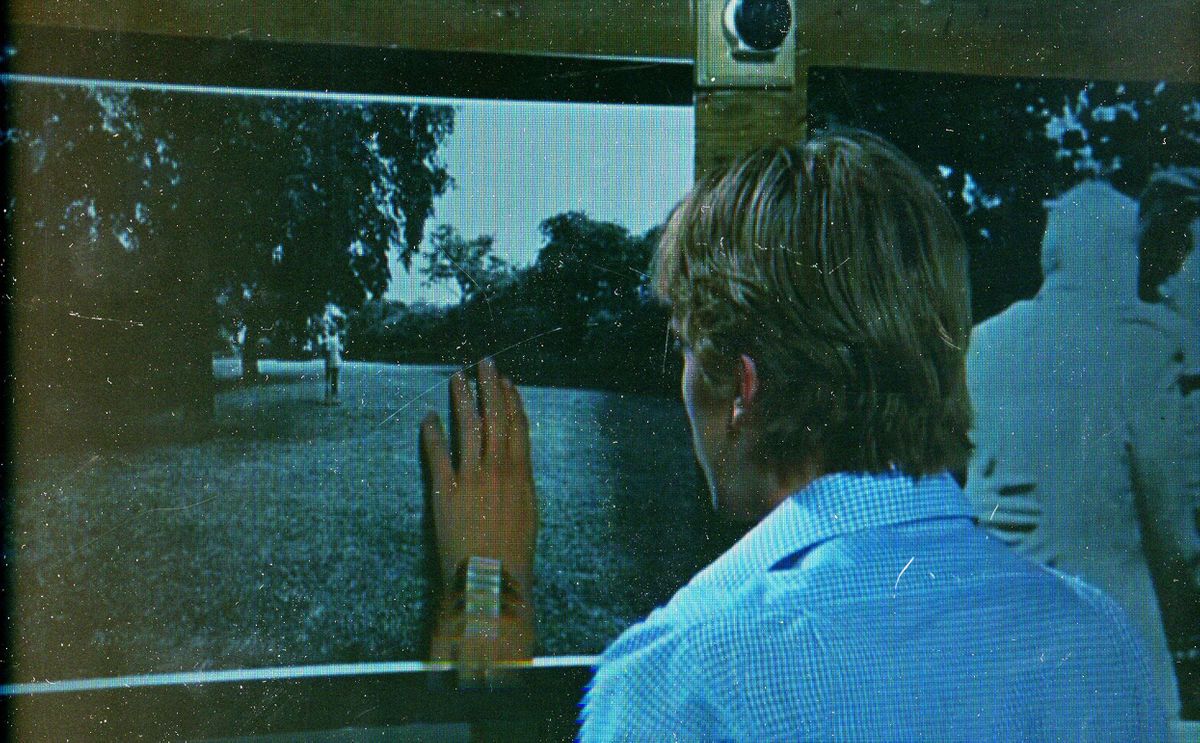
Expanding Bauhaus. Screening Series by blinkvideo & Goethe Institute

A screening series by blinkvideo in collaboration with Goethe Institute Netherlands selected by Elke Kania, Julia Sökeland and Ludwig Seyfarth, powered by Niio.

With its combination of various arts such as painting, photography film, architecture, fashion, product and interior design and textile art, the Bauhaus is still considered the epitome of a technologically advanced modernity. Last but not least, the attempt to create the whole society aesthetically, inspired many artists worldwide. Even in the contemporary Moving Image Art, the Bauhaus heritage is referenced in many ways, directly or associatively. For example, the Bauhaus architecture or modernist buildings that are in their tradition are being re-interviewed as living models, the modernisation of cities and the changing perception of new technologies with comparable intensity targeted as by the artists of the Bauhaus or the lens-less film experiments like those of László Moholy-Nagy were taken up with today’s technical possibilities. An insight into international Film Art shows: even 100 years later – the Bauhaus lives, at least in the visions of the artists. 

The screening series ate realised parallel to the exhibition „The Netherlands ⇄ Bauhaus – Pioneers of a New World” (February 9th – May 26th 2019) in the Museum Boijmans Van Beuningen, Rotterdam. 

Screening #01: Creating Worlds 
Thursday, 14.02.2019, 19:00 h 

The creation of living worlds can reflect political ideologies, reveal a desire to shape private living space or follow media models from feature films. The screening works reflect these concepts. 

Dimitri Venkov, The Hymns of Muscovy, 2018
Miriam Gossing & Lina Sieckmann
, Sonntag, Büscherhöfchen 2, 2014
One Hour Real, 2017
followed by an Artist Talk with Gossing/Sieckmann
Curated and moderated by Elke Kania and Julia Sökeland. 
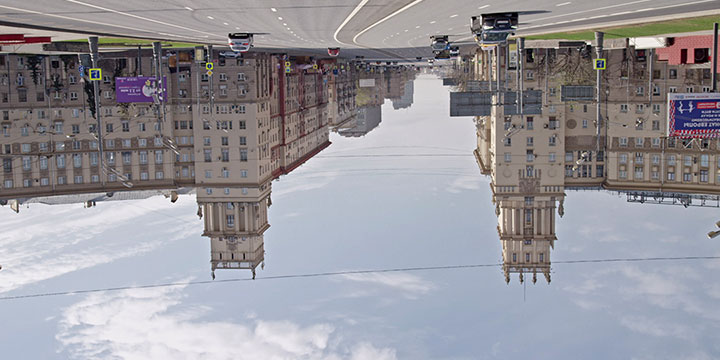
Dimitri Venkov, The Hymns of Muscovy, 2018

Screening #02: Bigger than Life / Built Histories
Thursday, 07.03.2019, 19:00 h 

How is history reflected in (modern) architecture? And can history be architecturally “invented”? A project called “Skopje 2014.” so far errected some thirty government buildings and museums, as well as countless monuments in the classic style, in an attempt to put Skopje on a par with Rome and Athens. A city looks for a future in history. 

Adnan Softic, Bigger Than Life, 2018
Tight tissue – or – The body is my temple, 1999
Niklas Goldbach, 1150 San Remo Drive, 2017
Habitat C3B, 2008
followed by an Artist Talk with Adnan Softic. 
Curated and moderated by Julia Sökeland and Ludwig Seyfarth.
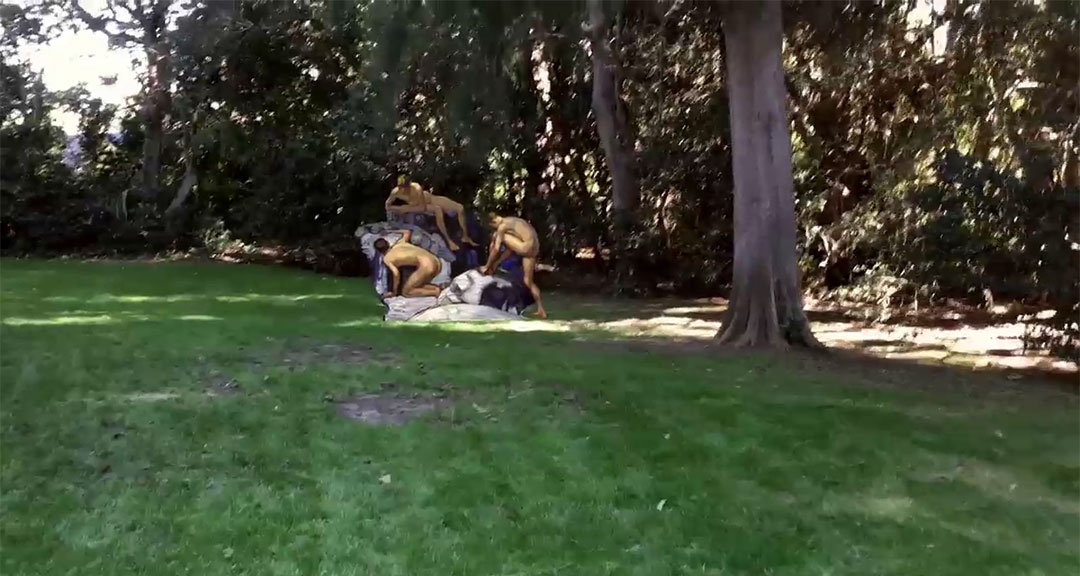
Niklas Goldbach, 1550 San Remo Drive, 2017

Screening #03: Transition of Technology: Moving the Image 
Thursday, 21.03.2019, 19:00 h 

The combination of photography and film and the use of “imaging” with light in photograms shaped the work of László Moholy-Nagy; his telephone pictures from the 1920s can be interpreted as early works of media art. The screening presents contemporary camera-less film art, new approaches between static photography and the movement of images. 

Stephanie Gudra, Wuslon, 2017
Benjamin Verhoeven
, Somebody was trying to kill Somebody Else, 2014
Tim Gorinski, Generative Ideas (working title), 2019
Barbara Hammer, Sanctus, 1990, on loan from JULIA STOSCHEK FOUNDATION Düsseldorf/Berlin, 
www.julia-stoschek-collection.net, Courtesy of the artist and KOW, Berlin 
Ugo Petronin, Abiding, 2019
followed by a Q&A with Ugo Petronin, Piet Zwart Institute, Rotterdam 
Curated and moderated by Elke Kania. 
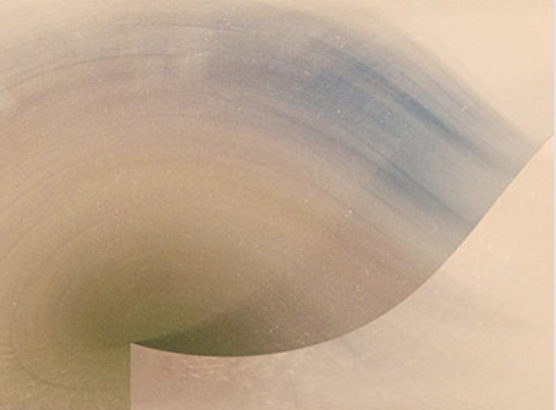
Ugo Petronin, Abiding, 2019

Screening #04: Facades and Interieur / How do we feel in modern environments?
Thursday, 25.04.2019, 19:00 h

How does the functionalist credo of the Bauhaus live on in architecture? And how does architecture relate to human scale? Today’s artists pursue this question with various cinematic means. 

Rebecca Ann Tess, The Tallest, 2014
Martina Wolf
, Regen I, Dresden. 2002
Moira Zoitl, Kitchen Torso: On Reducing the Number of Steps, 2013
followed by an Artist Talk with Rebecca Ann Tess. 
Curated and moderated by Ludwig Seyfarth. 
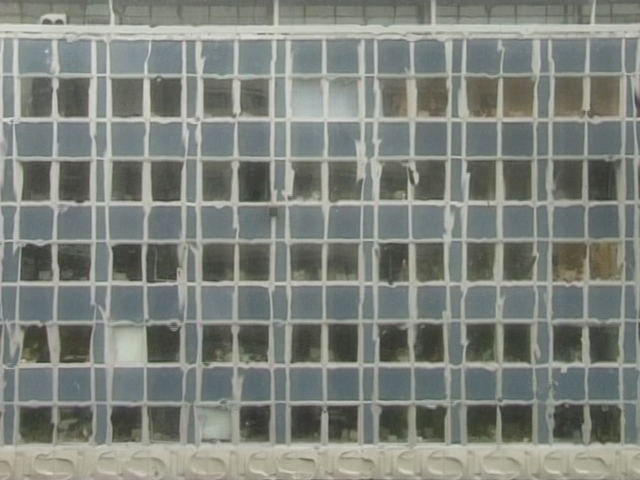
Martina Wolf, Regen I, Dresden, 2002


Screening #05: Architectural Utopies – Here and Now Thursday,16.05.2019, 19:00 h 
How do utopias of Bauhaus architecture function in the midst of a media present? Technology and aspects of social media find their way into the glass house of memory, into the models of public and private spaces. 
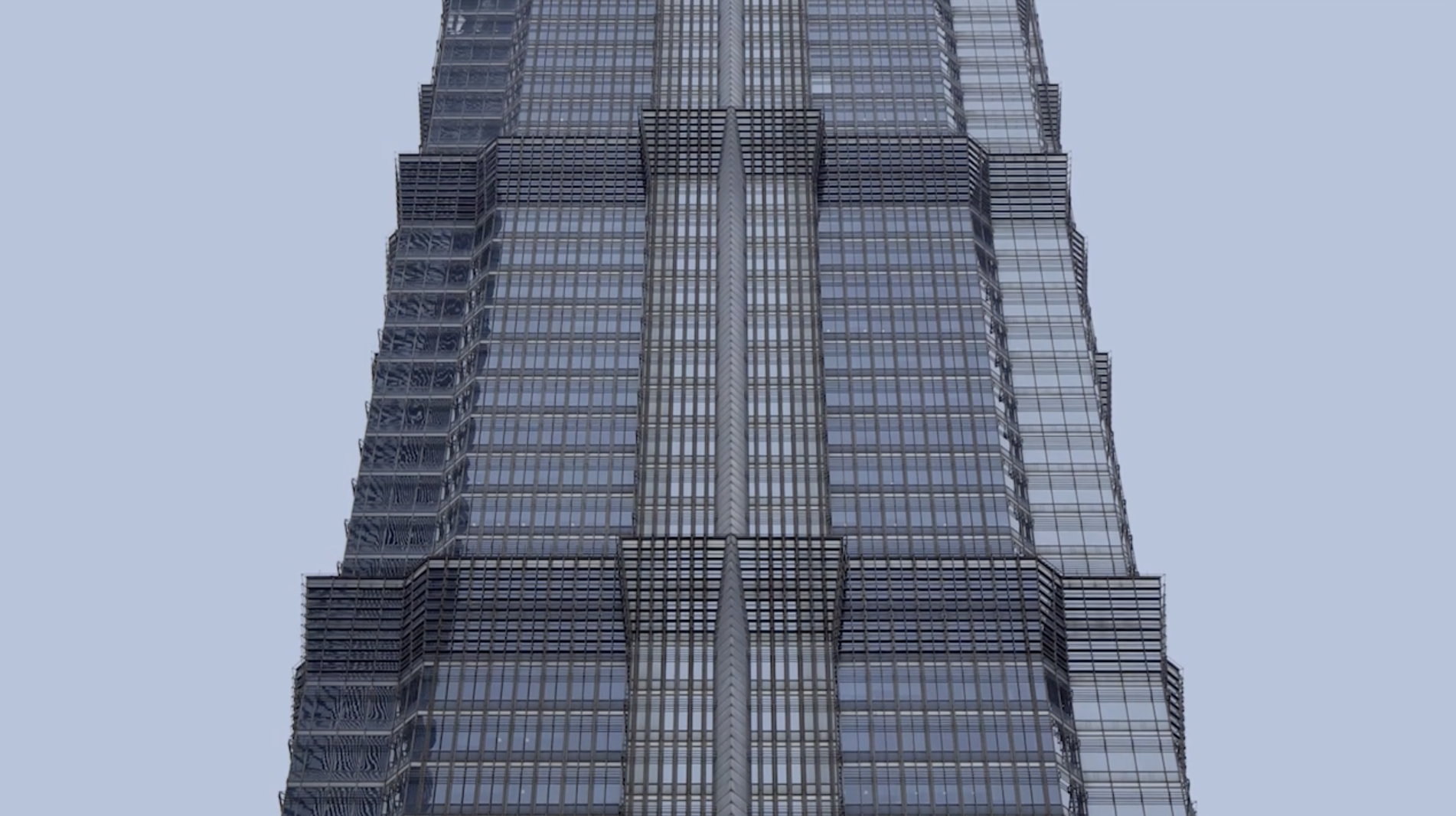
Rebecca Ann Tess, The Tallest, 2014

Manuel Graf, Shulmantonioni, 2004,
courtesy the artist and VAN HORN, Duesseldorf 
Frauke Boggasch & Martin Sulzer, ホームドリーム / Hōmudorīmu / Home Dream, 2019 – reflecting the development of the Bauhaus Architecture nowadays at Japan 
Elizabeth Price, At the House of Mr. X, 2007
on loan from JULIA STOSCHEK FOUNDATION Düsseldorf/Berlin, www.julia-stoschek-collection.net, Courtesy of the artist and MOT International, London 
Arianne Olthaar, Hotel Forum, 2016,
followed by an Artist Talk with Arianne Olthaar. 
Curated and moderated by Elke Kania.
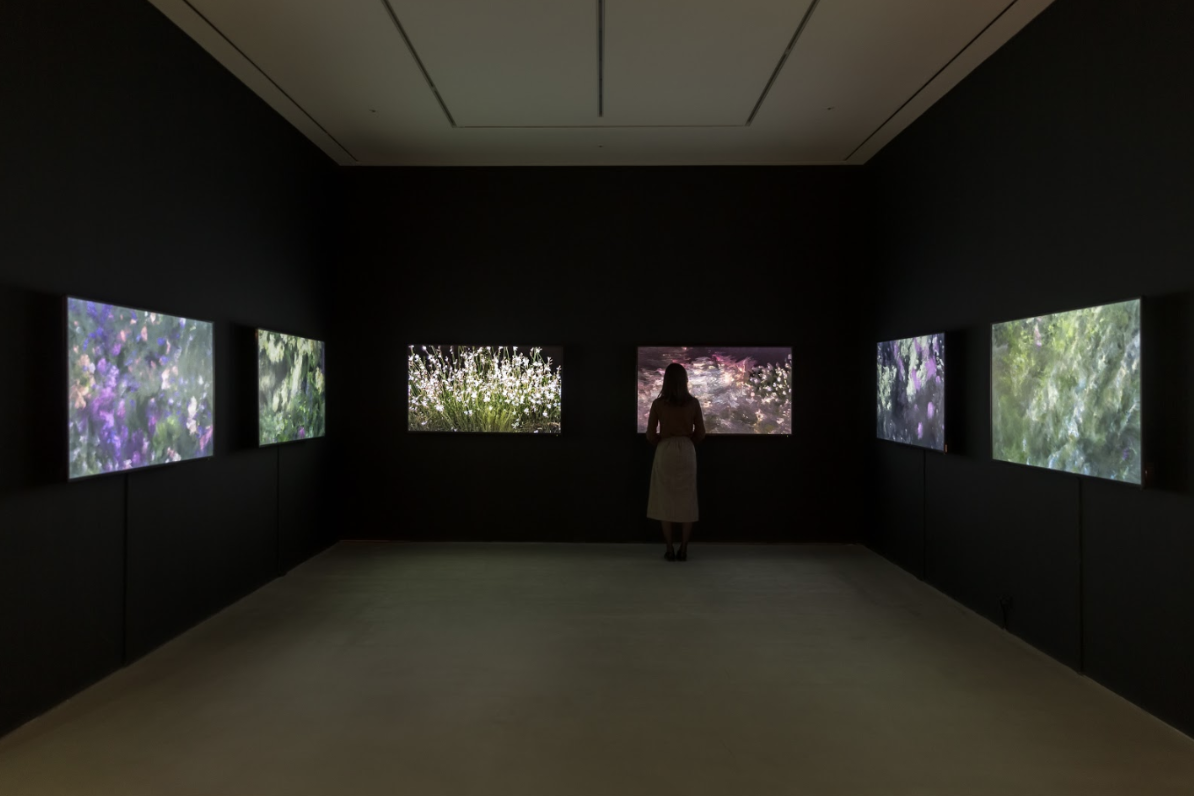
Quayola: Asymmetric Archaeology

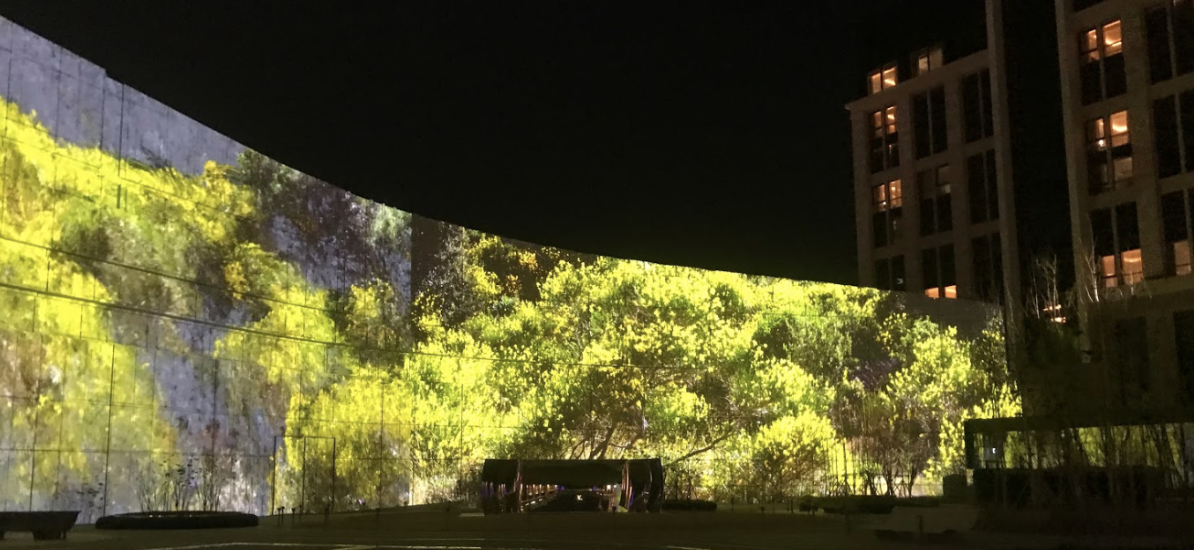
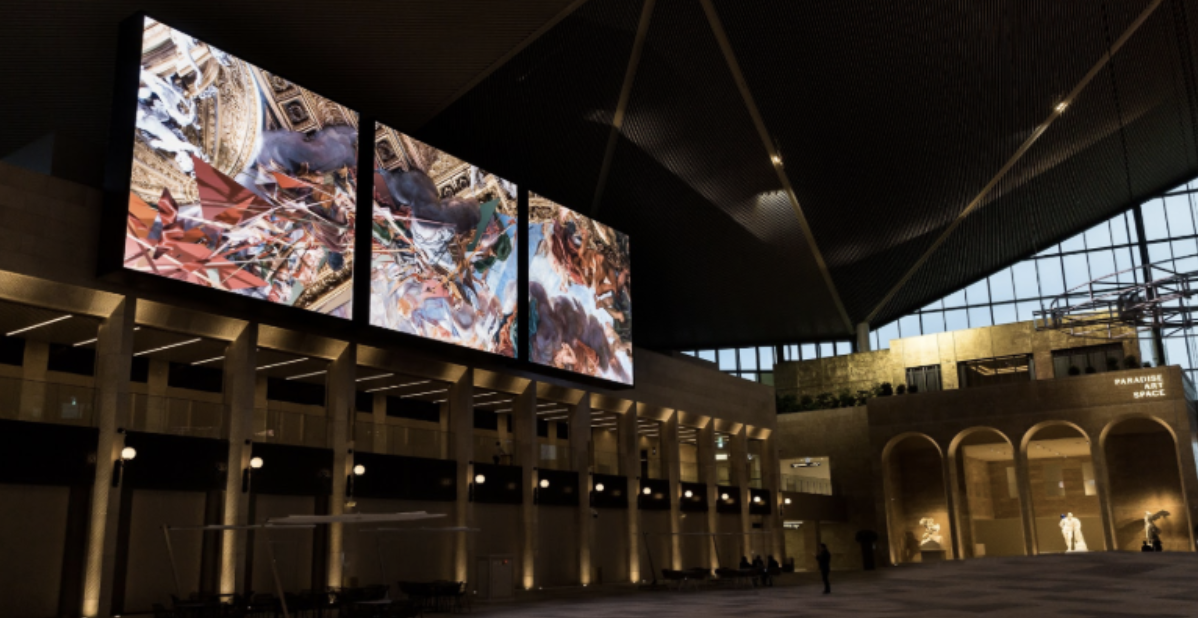
Quayola’s first comprehensive exhibition in Asia, which is atArt Space at Paradise City, Incheon, Korea until 24 February 2019, reimagines the past and rediscovers nature through the perspectives of machine. The past is revisited in relationship with the present and future – exploring asymmetry – that completely excludes humans’ subjective views and leaves machine processed objective ideas. Through these processes, classical art forms such as Hellenistic sculptures, old master paintings, and Baroque architecture are detached from iconographical semantics of the past to be regenerated into digital abstract works. In addition, familiar visual tropes of nature are transformed into a new artificial landscape engendered by machinery.

The exhibition, curated by Doo Eun Choi, consists of six sections with multi-genre artworks, including about 50 pieces of digital print, video, sculpture, and robotic installation. The breadth of the exhibit presents major works of Quayola not only inside Art Space, but also extends into the Art Garden with large-scale projection mapping and 3 channel-screenings at the Art Plaza.

Quayola, Pleasant Places

Iconographies, Strata, and Sculpture Factory are projects that analyse classical paintings, sculptures, and architecture through complicated computer algorithms, recreating contemporary abstract works by severing religious and mythical scenes of the past.

Quayola, Strata

Remains, Jardins d’Été and Pleasant Places are his ongoing projects that reexamine familiar visual languages of nature and traditional compositions of landscape paintings. Through complicated digital rendering, new digital landscapes emerge from actual natural landscapes that are captured in high resolution by high-precision laser scanners and cameras. Diverse motifs come in to play for each work by recreating a new visual literacy; Remains observes the En plein air in the late 19th century; Jardins d’Été co-opts imagery from the French impressionism of Claude Monet; and Pleasant Places evokes the 17th century Dutch landscape paintings, which are considered to be the origin of landscape paintings. Ultimately, the works become hybrid landscapes – neither real nor virtual – transcending the boundaries of the figurative and abstract domains.

The exhibition is powered by Niio

“It’s quite an amazing system for preserving, managing and distributing digital video editions. My gallerist and I are using Niio for transferring limited editions to buyers and to museums for exhibitions.” Quayola, new media artists, represented by bitform gallery, NY

Niio is  the premium discovery, display and management platform for new media art, embraced by leading artists, galleries, museums, curators, collectors and arts organisations from around the world, who are using Niio’s proprietary technology tools to securely safeguard, showcase, transfer, monetise and display thousands of their high-quality works on any type of “digital canvas.

About Paradise Art Space

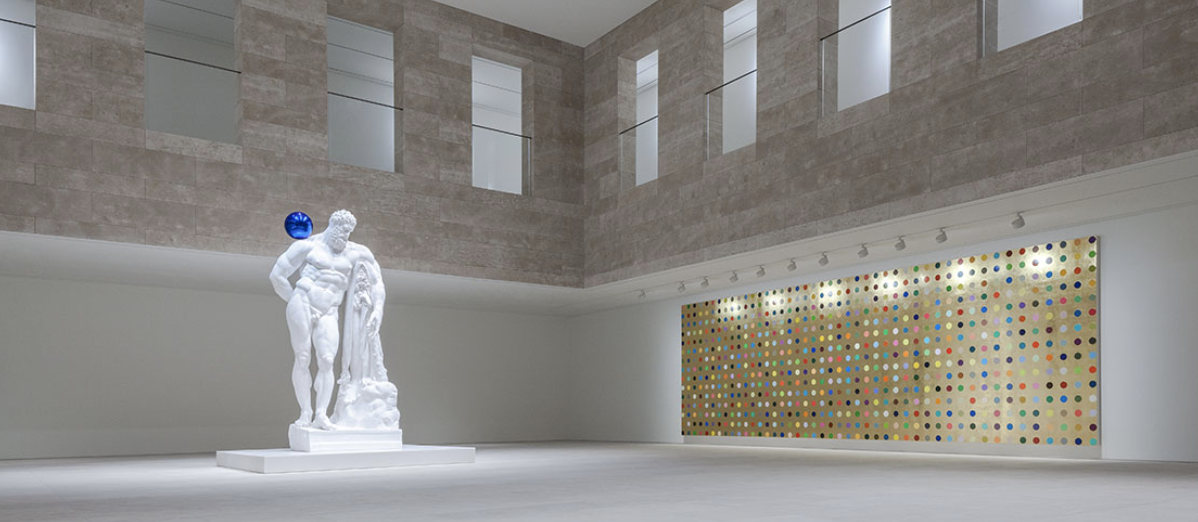
Paradise Art Space recently opened with works by world-class artists from East and West including Jeff Koons, Damien Hirst, Kim Ho Deuk, and Lee Bae. Meet the past, present and future of contemporary art from all around the world at this exhibition directed by director Chung, Goo-ho.Paradise City’s art exhibition gallery showcasing a new level of cultural experience and works from wide-ranging genres by prominent Korean and global artists.

Hong Kong Harbour Transformed Into a Major Immersive Art Experience

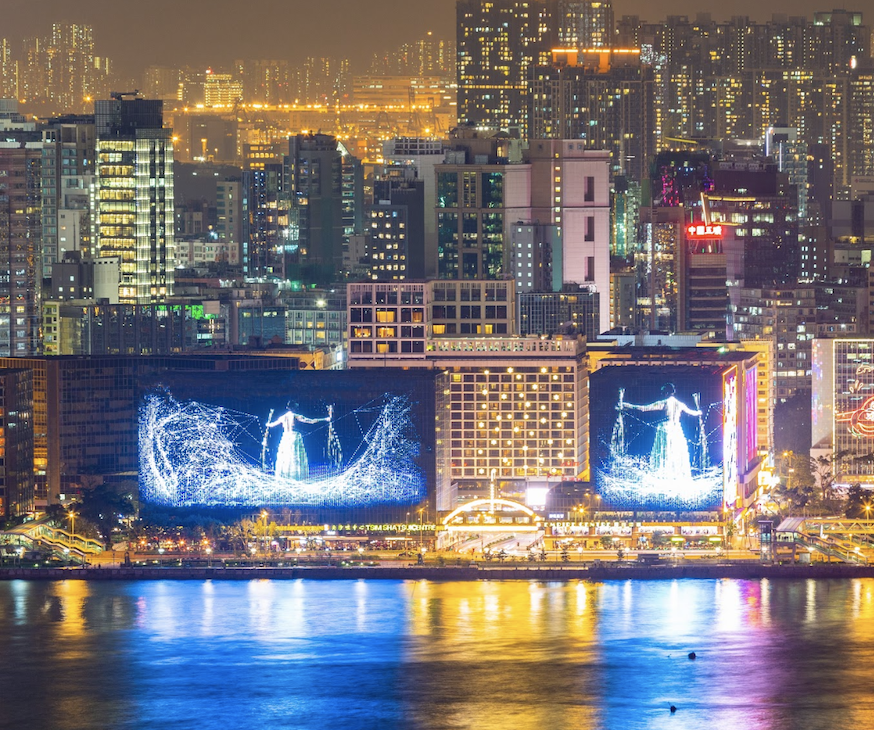
In partnership with Sino Group, Niio transformed two of Hong Kong’s largest screens into digital, public art installations. The facades of prominent Hong Kong’s Tsim Sha Tsui Centre (76m x 39m) and Empire Centre (35m x 39m) are showcasing the winning submissions of the Sino x Niio Illumination Art Prizes, a competition opened to emerging digital artists who were invited to submit artworks in the themes of Artistic Blessing and New Life. The competition was held in collaboration with Sino Group, the Hong Kong-based property developer. 

Artwork: Daniel Belton and Good Company Art, OneOne


“We live in a fast-paced, commercially noisy world with countless screens across our urban environments, and no more so than in major cities like Hong Kong”, says Rob Anders, Co-Founder & CEO of Niio. “In trying to reach and inspire people everywhere through memorable and meaningful ‘Digital Art experiences’, we are thrilled to partner with Sino Group for the Illumination Art Prize. It is these types of public art interventions that are driving an entirely new visual culture.

The winning artwork was created by Daniel Belton and Good Company Arts for the theme Artistic Blessing. Their work, OneOne invokes a sense of ancient culture, an archetype being unearthed through real-world experience that is timeless and contemporary. For the theme New Life, Krehel Race won first place for his work The Spring Shrine representing a world where technology has allowed us to return to our natural surroundings and to find a true Zen space, away from the chaos. 


“Sino Group is delighted to have collaborated with Niio on this ground-breaking international digital art project. We were thoroughly impressed with the exceptional content of work we received, with artists from 39 countries participating. We hope visitors enjoy the outstanding illuminations on the façade of these Hong Kong landmarks during the festive season,” said Nikki Ng, Group General Manager of Sino Group.

The Illumination Art Prize competition is part of Niio’s drive to inspire people around the world, making it easy to experience curated digital art across living, working and public spaces. In doing so, they are connecting large developers and businesses with their communities, supporting artists everywhere and providing them with a platform to present their art creations across urban environments. Niio is creating a positive alternative to the digital advertising noise of modern cities.

For the complete list of winners please visit: www.niiolab.com/sino-announcement

The Sino x Niio Illumination Art Prozes was recognised by the judging panel of British travel magazine LUXlife as the “Best Creative Festive Lighting Program in Asia” in the 2019 Travel & Tourism Awards; and in the prestigious Astrid Awards, the campaign received the Gold Awards in the “Holiday Event” category and was further selected as one of the Grand Award winners.

Digital Art Powers Workspaces in 2019

Inspiring creativity at work through New Media Art

  • Written by Natalie Stone

The seismic shift in the way we work has made the last decade feel as though many businesses are finally focussed on their most important asset – their people. Allowing the workforce to play a role in dictating how, where and when we work demonstrates the true value that leaders are placing on their staff. Endless research has shown that a happy workforce breeds increased productivity and companies worldwide are taking note. Businesses are constantly striving to enhance working environments with unique experiences – a telling and effective tribute to this trend. Many companies have turned to art and design to connect their people and customers to their story or brand and to inspire creativity.

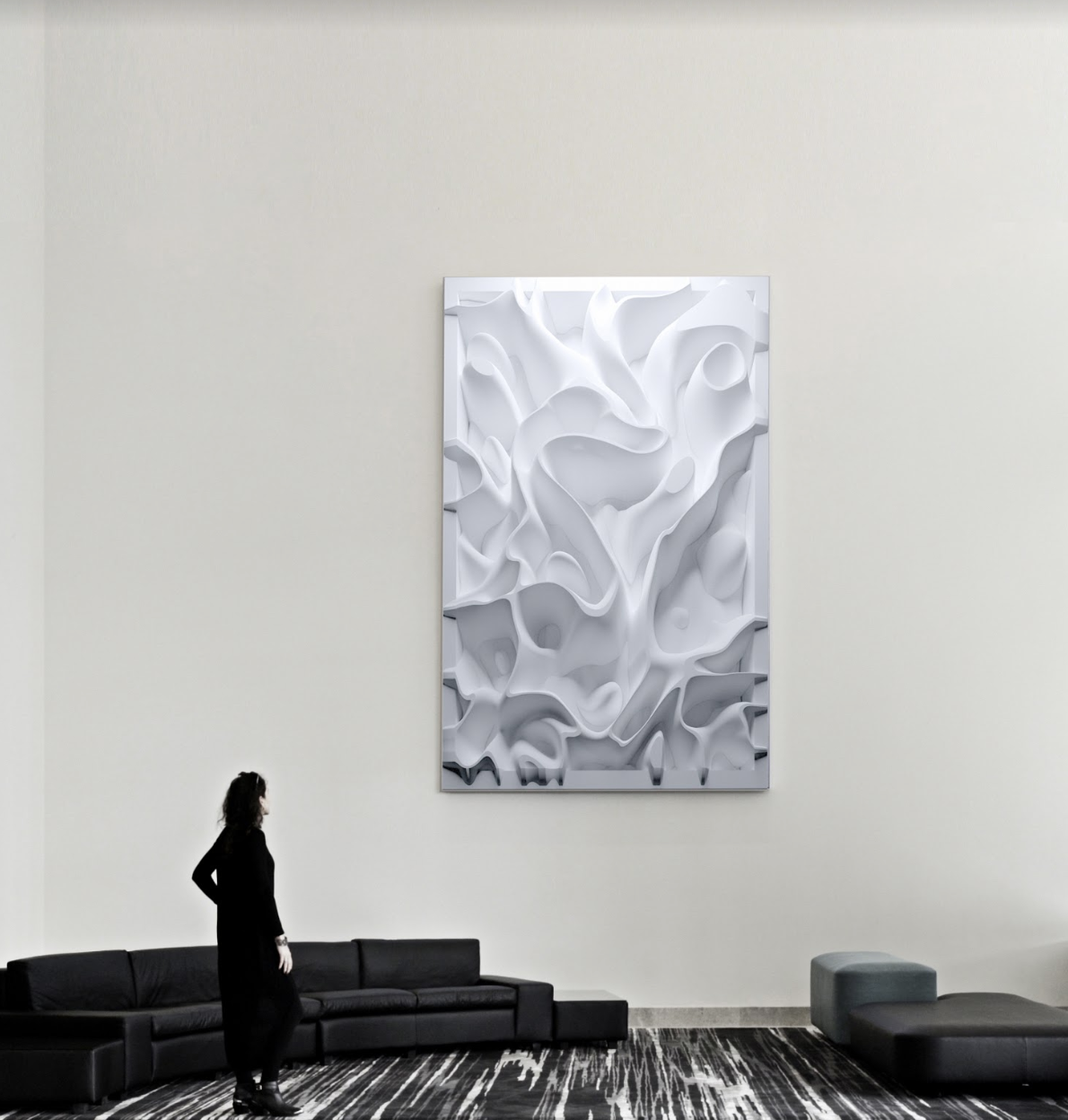
Artwork: Alex McLeod, Walking Seasons // Photo: Or Kaplan

A study conducted by The Harvard Journal of Workplace Learning shows that employees believe art promotes social interactions, elicits emotional responses, facilitates personal connection-making, generally enhances the workplace environment and fosters learning. It also tells us that art which directly relates to the organization’s mission, and diverse art collections generate deeper engagement for employees and customers.

Digital art is a key component in this shift and Niio is at its cusp. As art advances beyond the white walls of galleries and museums into commercial, private and public spaces, Niio is harnessing this trend through collaborations with cutting-edge designers, venues and artists.

Galvanized by the idea that moving images can change in real-time and are often influenced by current events or incoming data, Niio has collaborated with artist Refik Anadol to power his groundbreaking work. Anadol’s coded piece of art changes based on real-time wind patterns in Linz, turning a screen into an ever-changing living artwork, lauded by critics and art-lovers.

Refik Anadol, Wind of Linz

Anadol and Niio’s partnership demonstrates the potential of digital art to incorporate interactive works and kinetic and rotating exhibitions, creating engaging spaces throughout time. The possibilities are endless.

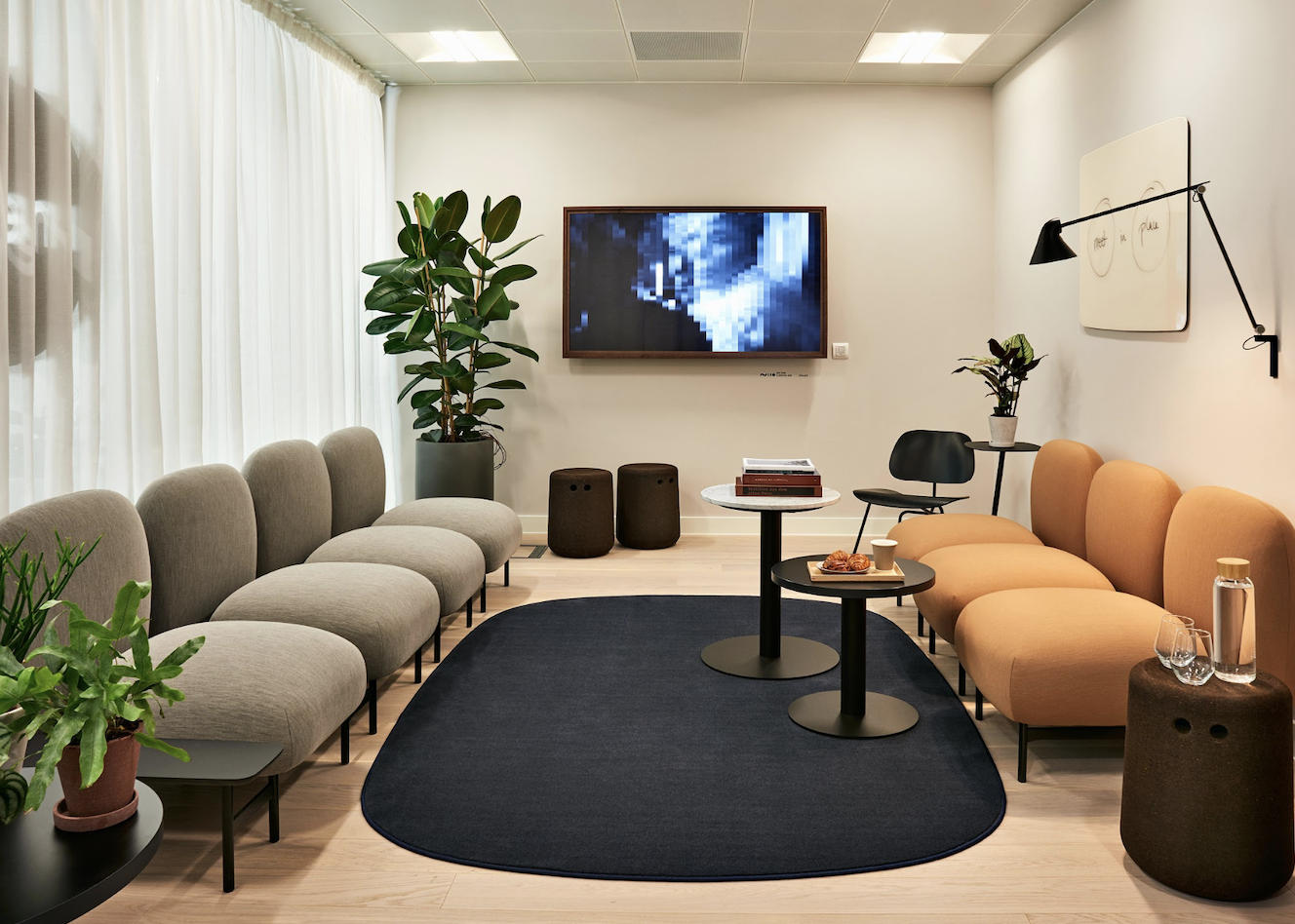
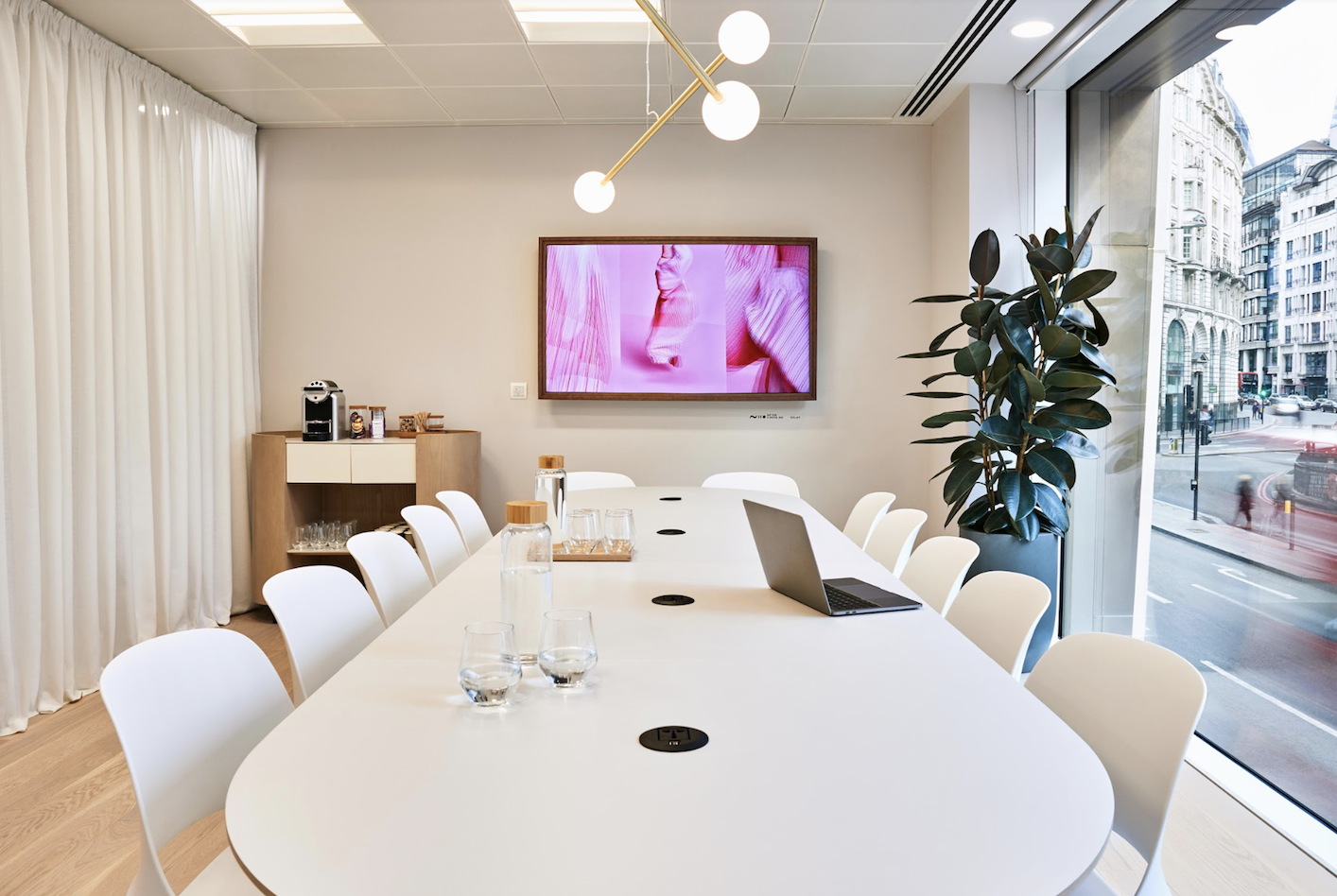
Meet in Place, another of Niio’s partners, is a meeting room focused start-up, bringing curated rotating collections of fine digital art to high-end meeting space locations in New York, London and Tel Aviv, powered by Niio.

Artwork: Zeitguised, Void Season // Photo: Tom Mannion

The digital age is well and truly here. Screens are everywhere – on office walls, building facades and in open public spaces. With all this digital noise comes a unique opportunity for artists to take their work beyond its traditional realms by turning screens into a memorable and magical experience – at home, in places of leisure and at work. Niio is helping artists make the magic happen.

Committed to enabling seamless access to the world’s finest gallery quality video and interactive media art, screened on digital canvases across the world, Niio transforms and enhances workplaces to create engaging and inspiring environments.

The team at Niio collaborates with designers, bringing them together with the best fine digital art in the world and helping them deliver and display their work. With a network of over 1,500 artists, curators and galleries and a portfolio of over 9,000 premium artworks on our platform, Niio is a game-changer in an evolving realm.

What We’re Reading Now: Art (x) Design (x) Technology

At Niio, we are passionate about the intersection of Art, Design & Technology.  From code-based and algorithmic artworks, to AR & VR installations, as well as  blockchain for authentication, talk of digital and experiential art is everywhere.  Check out some of the great stories that we’re reading now and look out for lots more throughout the year.

ARTNET  // 
Why One Collector Bought a Work of Art Made by Artificial Intelligence – and is Open to Acquiring More

“The Paris-based collector Nicolas Laugero-Lasserre is known for his extensive collection of urban art by the likes of Shepard Fairey, Ivader, Banksy, and Swoon. But recently, he made a novel acquisition by a very different kind of artist. His latest purchase, Le Comte de Belamy, was created by artificial intelligence.”  Read more.

nl-683x1024
Collector Nicolas Laugero–Lasserre. Courtesy of Laugero–Lasserre.


ARTNET  // 
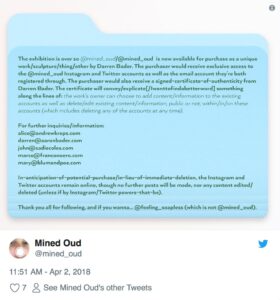
#Duchamp? Darren Bader Is Selling His Instagram and Twitter Handles as Readymade Art. Can You Put a Price on the Art of Social Media?

“Social media influencers can make as much as $10,000 for one sponsored Instagram post. Now, conceptual artist Darren Bader is taking the red-hot market for coveted online content one step further: He’s selling an entire Instagram and Twitter account—as art”  Read more.


ARTNEWS  // 
Postmasters Gallery Starts Online-Fundraising Campaign

“Postmasters Gallery in New York is now accepting donations via Patreon, an online platform used for funding creative projects, saying in a statement that it wants to pursue “a new model—a radical hybrid combining the strength of the market with the support of the community.” Read more.

postmasters-1024x684
COURTESY POSTMASTERS GALLERY


HYPERALLERGIC  // 
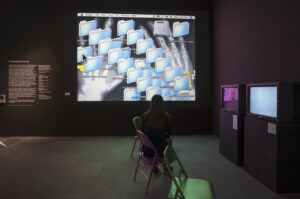
The Rich History of Video Art From 1973 to Today

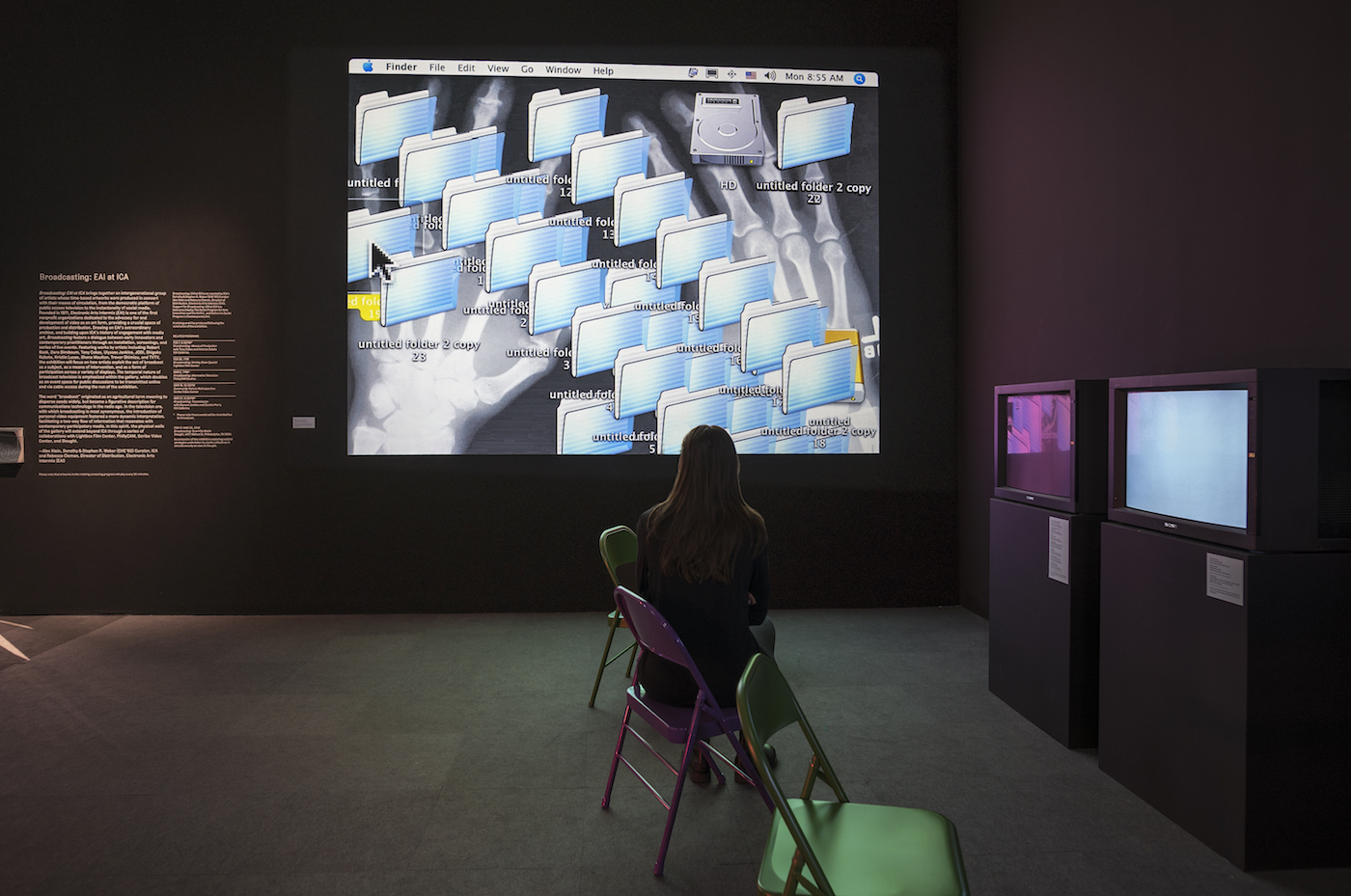
“With each new technological innovation, artists have taken the opportunity to manipulate and speak back to modes of mass communication. Broadcasting: EAI at the Institute of Contemporary Art (ICA) highlights this tradition by focusing on the legacy of the nonprofit Electronic Arts Intermix (EAI). Since its founding in 1971, EAI has promoted video art and other moving image work while also providing resources for production and distribution.” Read more.

2018_2_EAI_At_ICA_CM-3
Broadcasting: EAI at ICA, installation view, Institute of Contemporary Art, University of Pennsylvania (photo by Constance Mensh)


BLOOMBERG  // 
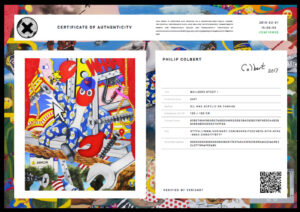
This Startup Is Using Blockchain to Fight Art Forgers

“Art is a currency in a way; at the end of the day when they come to auction, the provenance is a very important element of their value.” Read more.

-1x-1
Verisart


BOSTON GLOBE // 
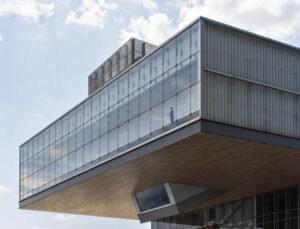
Boston Arts Groups Team Up For Sprawling Look At Art, Technology

“The largest show is “Art in the Age of the Internet, 1989 to Today” at the Institute of Contemporary Art, which will feature work by some 60 artists and explore the Internet’s influence on artistic production.” Read more.

CantileverComp
Jon Rafman’s “View of Harbor, 2017” will be part of “Art in the Age of the Internet, 1989 to Today” at the Institute of Contemporary Art.


ARTNET  // 
Arts Industries Add $764 Billion Per Year to the US Economy, Says a Landmark New Study

“The arts contribute more than you might expect to the US economy, says a new joint report from the US Commerce Department’s Bureau of Economic Analysis and the National Endowment for the Arts. The arts generate $763.6 billion per year, or 4.2 percent of the GDP, according to the study, which presents statistics gathered between 1998 and 2015.

The US also exported $20 billion more in art than it imported, providing a positive trade balance. All told, the 4.9 million people employed in America’s creative industries earned $372 billion in total compensation for 2015.”  Read more.

acpsa0318c-1024x670
A map showing the percentages of state economies that are made up by arts and culture. Image courtesy of the US Bureau of Economic Analysis.


Get to Know Shaun Gladwell: Moving image, painting, photography, sculpture, installation, performance, VR & AR artist

Where did you grow up and where do you live now?

I grew up in a small suburb connected to Sydney called North Rocks in the west away from the coast.  It was mixed, lower middle class and solid middle class in other areas. I found it exciting at times and desperately boring at times as well. I now live in London and mostly spend my time in the Southeast of London.

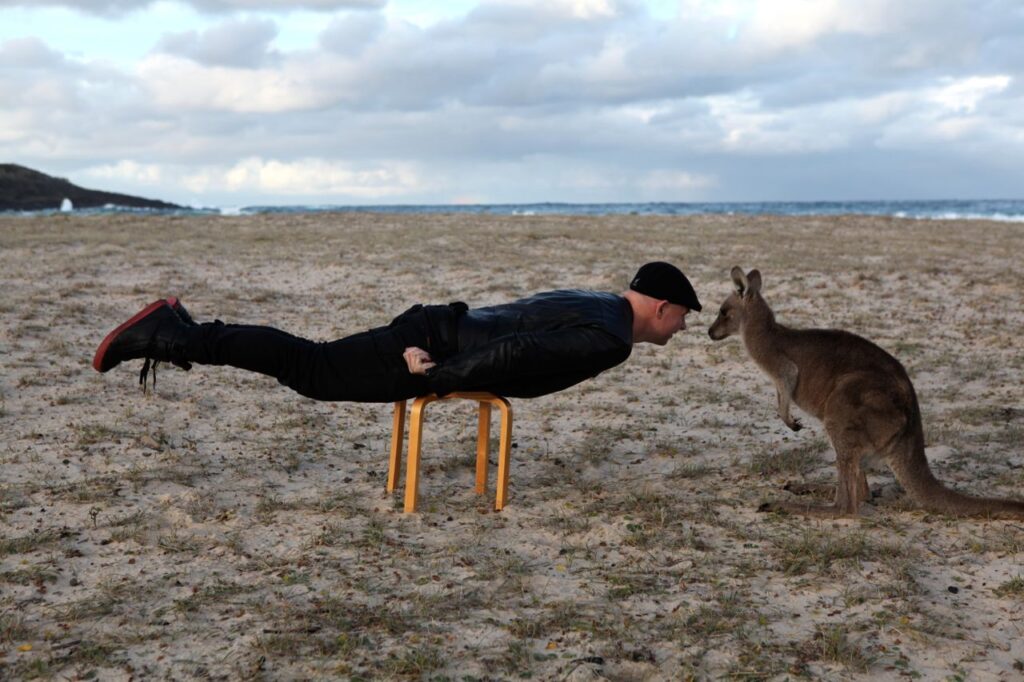
Shaun_Gladwell_Plank_with_Kangaroo_2014
Shaun Gladwell Studio

Where did you go to school and what did you study?

I went to a state school in North Rocks and then after graduating I went to an art school in Sydney called Sydney College of the Arts. I stayed there for a few years, got an Honors degree and then jumped to an another art school.  

My Masters study was at the College of Fine Arts University of New South Wales.  I studied painting although by the time I left Sydney College of the Arts, I was already experimenting with video and other technology so for my Masters degree I was mostly moving between lots of mediums.

What does your workspace / desktop / studio look like?

I’ve got a physical studio space in Southeast London that’s connected to a gallery space called the Drawing Room.  It’s a medium sized space with a beautiful view of London. It’s very much a painting studio. It’s really messy, there are big unstretched canvas on the wall.  There’s oil, acrylic, aerosol, it’s a real mess. I do work in VR through other studio spaces.

When did you start working creatively with technology?

A lot before officially studying video performance and installation. I was creatively using technology in my painting process. I was interested in taking reproductions of paintings and scanning them, altering their dimensions and then re-painting those manipulated images through Photoshop.  

The Photoshop image of say a distorted Gainsborough or a Reynolds painting from British society portraiture going back to the 1700th or 1800th century would then become the proprietary sketch for a very detailed painting. So that’s probably when I started looking at this interface or this connection or somehow a conversation between technology and something more traditional.  

shaun_gladwell_still_self_portrait_2015-m
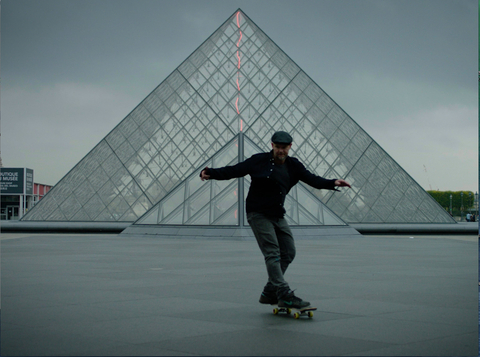
Self Portrait Spinning and Falling in Paris, 2016 Single channel High Definition video, 16:9 (installed 4:3), colour, silent

In 2009-10 you were the official Australian War Artist and the first to use video for your project. Can you describe your experience working on the ground with the Australian military in Afghanistan and talk about the process of creating Double field/viewfinder (Tarin Kowt)?

This commission with the war memorial  was very different for me. I was heading into a very difficult, unknown space and couldn’t control the elements around me like I do here in this studio or like I think I’m doing in this studio.

To work in an environment like that required a different kind of thinking. I wanted to explore ideas that I already had in my practice so that’s where Double field/viewfinder came from which was really me taking this technology into the theater of war but also knowing that technology was entirely integrated into that experience and supporting that experience and probably most of the technology I was using was actually developed through military objectives.  

Video recording technology and digital video was so familiar to a lot of the soldiers because they are technologists. I decided to hand cameras over to them and let them record video.  It ended up becoming quite intense because the soldiers took on the project as if their lives depend up on it. It almost was like a military drill so that was quite interesting for me and then letting the soldiers know that it was an experiment and getting their feedback after was equally important.

Art-k0MD--621x414@LiveMint
‘Double Field/Viewfinder’ by Shaun Gladwell (2009-10).Photo: Department of War Studies, King’s College London

In 2016 you co-founded an Indie VR Content Collective with producer Leo Faber called Badfaith. You’ve mentioned the name of the collective is a reference to the Sartrean philosophical concept. Do you believe VR can be an antidote to certain social forces that cause people to act in bad faith? How do these ideas factor into your practice?

Firstly, the name BadFaith is connected to the concept of Jean Paul Sartre as well as Simone de Beauvoir.  Each philosopher or thinker has versions or signs and symptoms of ‘bad faith’ within their thinking or within their ideas around the concept so it can be quite nuanced and complex to talk about ‘bad faith’ depending upon who I’m  footnoting or referencing but I think technology can also potentially generate bad faith as well just depending upon how the technology is used. Like any technology if it’s being used as a weapon or a tool for something else.

The same technology has very different outcomes and effects and I think that the fact that bad faith was always about simulating a kind of presentation of self or position even down to the occupation of the waiter as Jean Paul Sartre’s famous example goes, then that immediately becomes relevant to technology like VR which is a very powerful simulator that we all now have access to as consumers rather than it being locked up in university research labs or tech developers so we’re going to see all kinds of different forms of bad faith in a kind of hard boiled sort of I guess bare life to use Giorgio Agamben’s  term in relation to VR.

e27cb906d63b10fc87b4626f7d77afc3
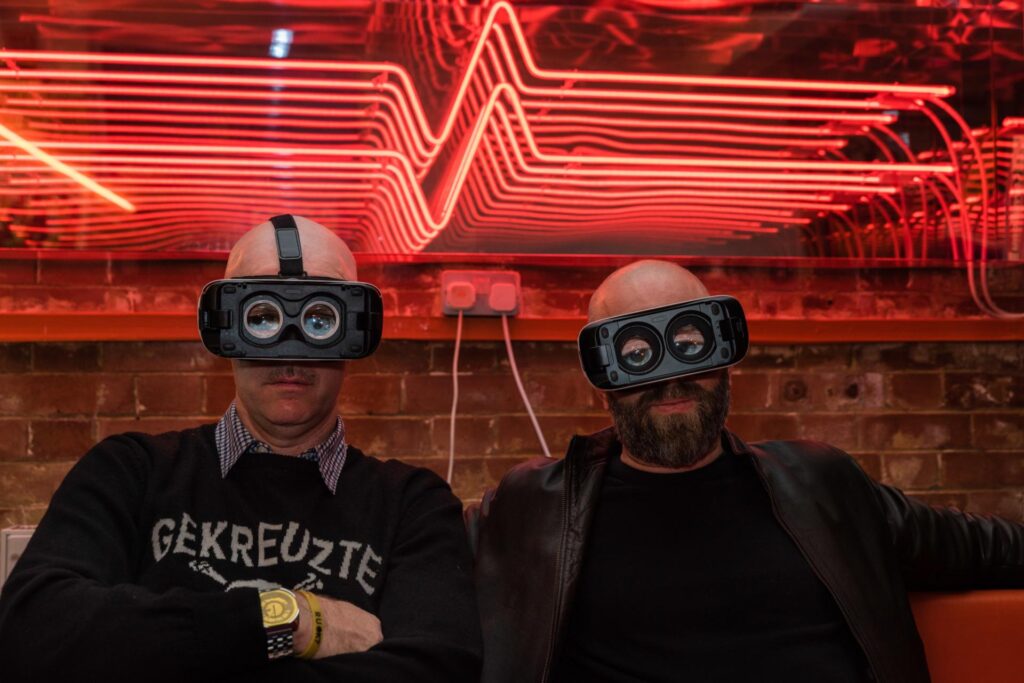
Virtual reality pioneers Shaun Gladwell and Leo Faber talk Badfaith Collective

What projects are you currently working on?

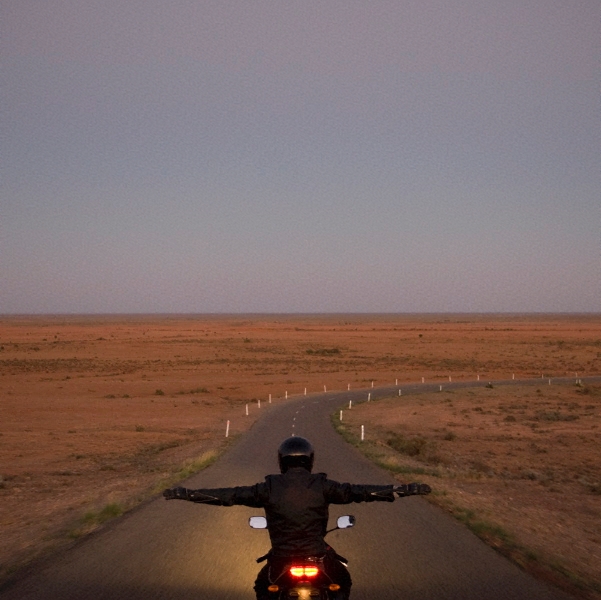
Good question.  I’ve got a few long term projects related to shows and a few little ones that are more like doodles.  I do some sketching in video. I go out and ride my bike and follow the line on the street and it’s kinda like a video drawing. I’m really excited about doing more of those in London, really simple raw works.  I still draw, still like to printmake and paint. But I love VR and AR.

I’m trying to run that full spectrum. I  don’t want to lose out on the idea of working with materials and using substance and stuff and getting dirty.  Like in VR sometimes I can feel like it’s just too much of a pure space which does not reference the gunk, junk and the abject reality of my body or the world.  

Have you done any work in AR? Do you find VR or AR to be a more compelling medium? Why?

I’m developing an idea for a show in AR now.

The distinction between AR and VR is quite enormous.  VR completely arrests your sense of sight and hearing and when you start to include kinetics and haptics then you aren’t given a frame outside of the frameless space you’ve been immersed within while AR still gives you the reference physically and optically and and conceptually to your immediate environment as it then starts to augment that space so you still have some reference to that space if it’s to be defined as AR.  So I think they are so different for me given those kinds of boring different textbook definitions. Some ideas could be better wrapped up in VR and others in AR.

In a field where hardware and software can quickly become obsolete, how do you approach documentary and archival processes for your work?

Usually I’m sorta just hopelessly producing work that will very quickly be its own ruin because that sort of archival and documentary process has changed.  I’m only just now bringing it all in to a central nervous system but then it would of course be better managed through you guys in terms of the digital phase which is great.

It’s amazing to start off in art school and go from prints to slides you put a in projector right through to this system that you guys are working on. I think it’s an incredible arc as to how I’ve used technology to archive my work or to document the way that it’s been shown from a slide projector to the cloud in the space of my professional life and student years.

Who are some contemporary or historical new media artists that you admire? What are some of your favorite works?

Caravaggio’s use of optics back in the day.   Interesting to think of these early examples of people who have used technology.  Galileo’s drawing of the moon after he developed the telescope are some of the most beautiful images I can think of from the sides of both art and science.

In terms of new media artists, I  like everyone, Raqs Media Collective to Pipilotti Rist.  I’m interested in why people are using technology and sometimes I’m also interested in the result but there is always some interest to me as to why people are picking up the camera and trying to make episodic TV series and calling it art or making a series of elaborate performances around their sculptures and calling that video.  Probably the one artist who I really love is Stelarc the Australian guy who auments his body with technology.