Valentina Ferrandes: Reshaping Icons

Niio Editorial

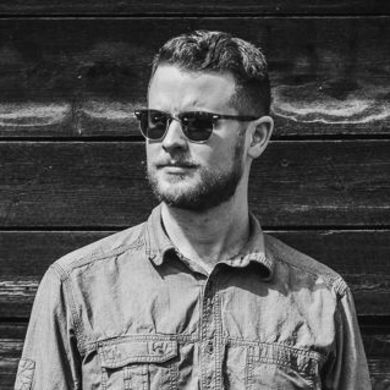
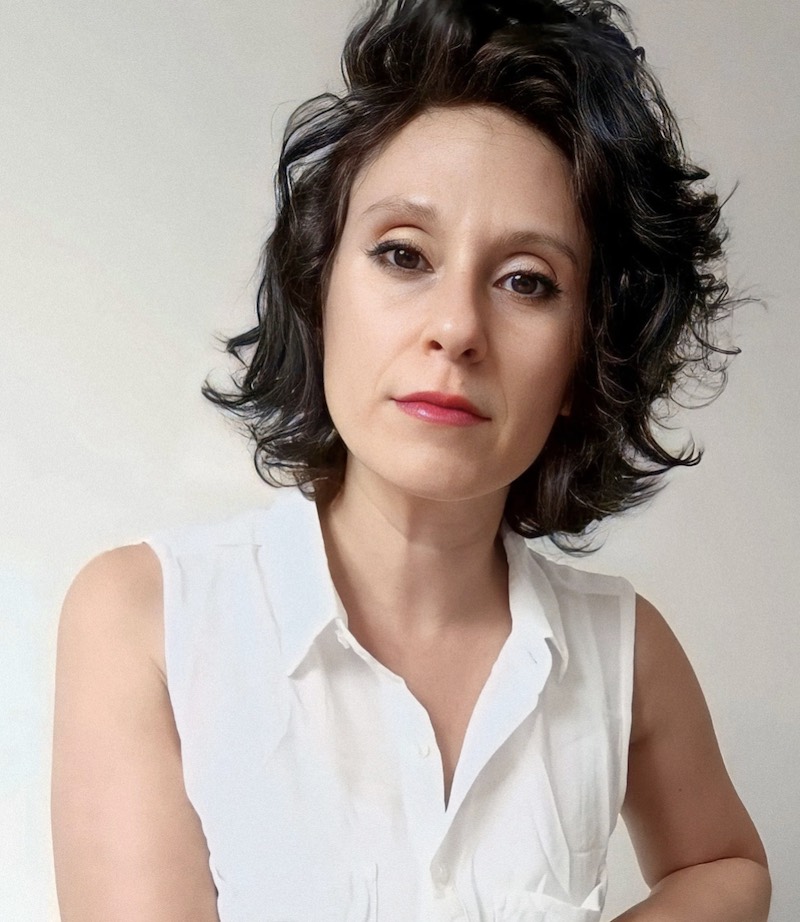
Valentina Ferrandes is an artist working across moving image, installation, and digital world-building, whose practice weaves together ecology, mythology, and the lived experience of place. Grounded in research and a documentary sensitivity to landscapes, archives, and historical traces, she shifted from filming toward constructing sensorial 3D environments, using scans, procedural tools, and real-time engines to let forms drift, fracture, and evolve. Classical sculpture and ancient narratives become both emotional anchors and critical material in her work: icons that carry through time, re-shaped through contemporary technologies into atmospheres of beauty and tension where political rupture can be felt indirectly through light, motion, and sound.

On the occasion of the launch of her solo artcast Metamorphoses: Myth, Body, and Code, we had a conversation about her work and creative process.

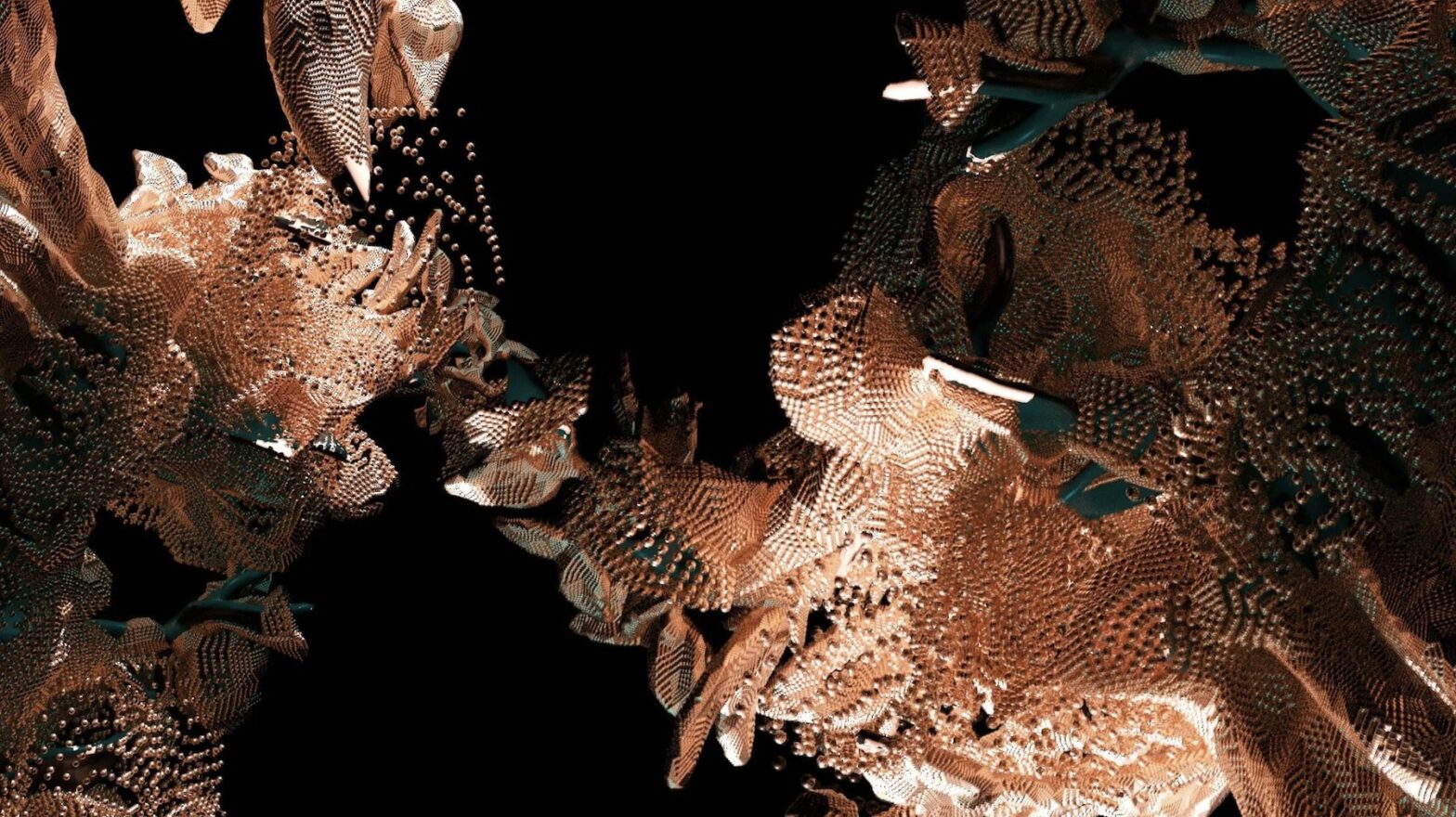
Valentina Ferrandes. Aurea, 2023

You describe your practice as connecting ecology, mythology, technology, and post-human imaginaries. When you start a new project, what drives it, the research, the story, or the technique you have chosen to produce it?

I normally start with research.

I’m interested in the way we live through environments and the stories that shape them. Myths, landscapes, architectures, archaeological traces. At first, these things appear separate; when you sit with them long enough, they begin to echo one another.

Only then do I choose the technique, the choice is never neutral.

Lately, I’ve been working with 3D motion, procedural tools, real-time engines, and 3D scans,  not to represent the world, but to build systems that can behave like it. Tools that allow things to drift, mutate, and occasionally slip out of control. Sometimes a project expands from a single shape, a scanned object from an archive, or material gathered through direct observation. That form becomes a world. Using game engines and procedural workflows, I stretch it, repeat it, let it evolve.

Ultimately, I’m trying to immerse the viewer in a mood, mostly driven by aesthetics, fragments of stories, and sensory tension, rather than by purely documentary logic.
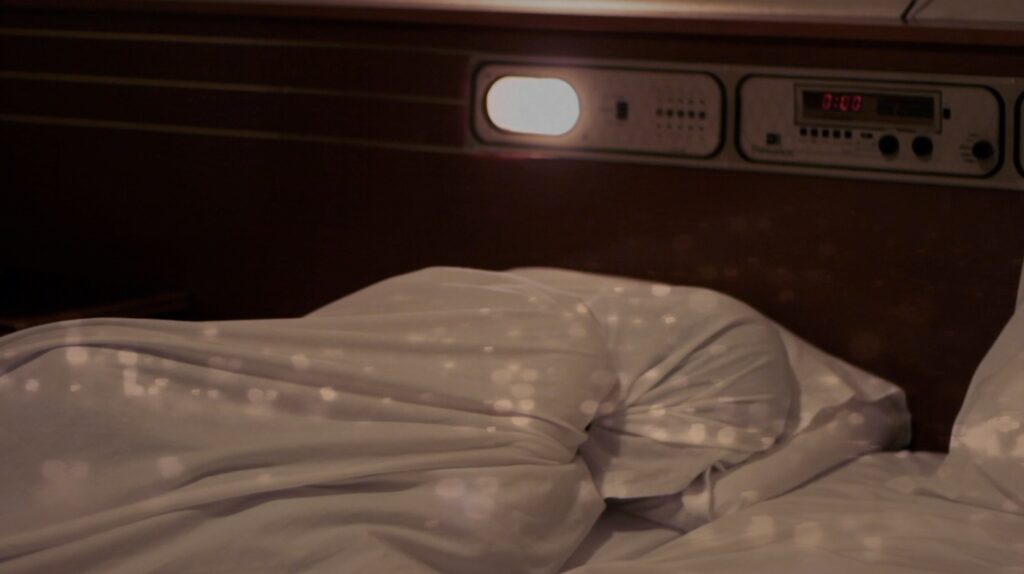
Valentina Ferrandes. Still from Travelogue, 2018

You made experimental documentaries for years, then moved into CGI and real-time worlds. What changed for you around 2020 that made 3D the right language?

Around 2018 I made a film called Travelogue. It was a visual diary of a journey I took to Izmir in Turkey and then to the island of Kos, shot in a documentary register a couple of years back, right at the height of the Mediterranean migratory crisis. It followed my previous work Other Than Our Sea, where I used montage to collapse fragments of Mediterranean mythology, classical literature, ethnographic film, archival material, and glimpses of contemporary newsreels of shipwrecks in the Mediterranean into layered visual narratives.

But shooting Travelogue felt tougher as it touched something much closer. My family has a history of forced migration. Although Italian citizens, my father’s family had long-standing ties to Libya and Tunisia. After decades of living in Libya, they were compelled to return to Italy as refugees in the late 1970s. That sense of loss, of having to abandon an entire world to rebuild another, was something I grew up with. Filming along the semi-illegal routes in Turkey and Greece that many migrants were taking toward Europe, witnessing those crossings and the weight they carried, made me realise that documentary language had reached its limit for me.

Depicting reality no longer felt feasible. I didn’t want to record crises anymore but construct worlds that could allude to moments of rupture, holding some emotional truth but without reproducing their images directly.  I needed a medium that could be more sensorial, more abstract, and more heartfelt than documentary realism.

I had no language for it, so I stopped making films for a while.

“Depicting reality no longer felt feasible. I didn’t want to record crises anymore but construct worlds that could allude to moments of rupture.”

Then, around 2020, I turned to 3D. I began experimenting with scanned classical sculptures that had shaped my imagination growing up in southern Italy, fragments of classicity that, for me, functioned as emotional anchors. They were beautiful, but also quietly critical: stabilising forms in times of uncertainty, grounding while still provoking thought and aspiration. At the same time, I was going through a period of personal losses. Working in 3D allowed me to move away from documentation and toward construction: creating works driven by form, light, and colour rather than evidence.  Real-time worlds and CGI offered that kind of a-political space, a way to build beauty and tension, and to think about crisis indirectly, through atmosphere, motion, light and colour.

From that point on, my work shifted toward 3D hybrid forms.

Valentina Ferrandes. Victory, 2020


“Victory” treats Nike of Samothrace as something that can be algorithmically decomposed and rebuilt. What does computation allow you to “see” in sculpture that a camera cannot?

A camera can only register what is visible. It freezes what is already there. Computational tools do something else: they open the parameters to make instability visible and let you play with latent forms. Even the most solid material, like marble, is in reality energy in motion, atoms vibrating, matter constantly becoming. We just can’t see it.

In Victory, computation allows me to see sculpture as movement rather than image. When the Nike of Samothrace is translated into a 3D motion system, it stops being a fixed surface and becomes a fluid field of forces, basic geometries, vectors, and polygons that can shift, fracture, and reassemble.

“Even the most solid material, like marble, is in reality energy in motion, atoms vibrating, matter constantly becoming.”

In the Athena works, you connect a local pre-Christian cult, the olive tree, and the long chain of copies from Greece to Roman times and beyond. What does that continuity mean to you inside a digital artwork today?

We often think of digital media as something entirely new, as if it belongs only to the future. For me, however, digital tools are a means of reshaping icons that are already deeply ingrained in our collective memory.

In the Athena works, bringing together a local pre-Christian cult, the olive tree, and the long chain of copies creates a sense of continuity rather than rupture. Using a hyper-contemporary medium to work with ancient mythology opens up a different timeline, one where past and present coexist instead of replacing one another.

Classical icons are solid, almost a-temporal structures, narratives that can be applied to any moment in history, much like religious icons. They carry ethical, emotional and symbolic lessons that can stay legible across centuries.

“For me, digital tools are a means of reshaping icons that are already deeply ingrained in our collective memory.”

At the same time, I want my works to remain open. A digital artwork can be interpreted in various ways, ranging from a purely aesthetic encounter driven by form, light and rhythm to a more layered and reflective interpretation, depending on the viewer’s sensitivity and cultural background.

Digital tools don’t need to reject this legacy in favour of futuristic expectations. They enable us to revisit these foundational forms, reshape them, and discover new meanings within them. 

Valentina Ferrandes. Daaphne, 2022

You revisit Apollo and Daphne in both “Daaphne” and “Aurea.” Why return to that myth now, and what feels ethically or emotionally at stake in reanimating it with AI and procedural CGI?

This myth, at its core, stages a clear opposition: Apollo as a rational, male-driven force, mathematical, controlling, and oppressive, and Daphne as a figure bound to nature, freedom, and transformation. The moment of rupture between them could not be more explicit and in my work, I used AI to push that rupture even further.
I worked with an AI writing tool trained on game narratives and powered by a rudimentary version of GPT-3, fed it the story of Daphne as written in Ovid’s Metamorphoses and asked it to imagine what this nymph might wake up as after a set time as a laurel tree.

The AI imagined Daphne re-emerging as a post-human, hybrid being, part human, part aquatic, drifting in an underwater world, without language or memory, completely disoriented. I loved that the story had a hallucinatory, almost comic tone, like a futuristic fiction gone off-track.

“Daphne’s transformation is survival, a reminder that neither nature nor the systems we create can ever be fully governed by pure rationality.”

From there, I worked with 3D motion to animate forms suggested by the AI’s text. The work became a meditation on rupture at multiple levels: between human and nature, between rationality and excess, and between control and unpredictability. AI, in this sense, operates like an alter ego, a parallel intelligence that accelerates extraction, mutation, and instability.

In that way, the myth of Apollo and Daphne can be uncannily contemporary as it speaks to an enduring conflict: nature versus culture, rational order versus metamorphosis.  Apollo’s loss of power in the face of nature, something fundamentally uncontrollable, mirrors our relationship with AI today. We are building a system that behaves like a subconscious, one that evolves beyond our control, driven by its own form of self-preservation.

Daphne’s transformation is survival, a reminder that neither nature nor the systems we create can ever be fully governed by pure rationality.
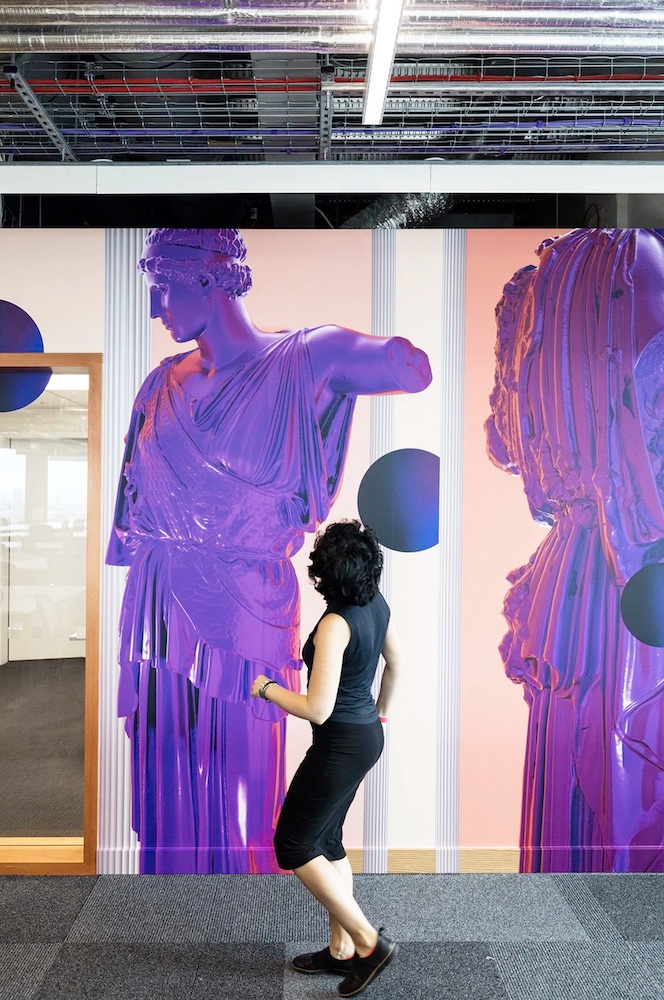
Valentina Ferrandes. Midday Muse, 2022. Site-specific installation, META London Headquarters.


A lot of your work sits between fiction and documentation. How do you decide what must remain “true” and where you allow speculation to take over?


Usually, I decide on a set of rules, fixed conditions and boundaries for a given project.
I tend to ground a new work in real elements, a place, a historical fact, a piece of storytelling, a dataset, a myth that already exists, a landscape I’ve walked through. It’s almost a forensic layer to start building upon. This documentary approach anchors the work to the world as it is, while I use fiction to open a door to how it might feel, how it might mutate, or how it could be remembered in the future.

The balance is intuitive more than anything. What remains “true” is the research spine and the ethical position. Form, narrative, and atmosphere can drift in fluid ways.

Valentina Ferrandes. The Beautiful One Has Come, 2021.

Sound shows up as a structural element in several projects. Do you think of sound as world-building, as evidence, or as emotion?

When I began working on Daaphne, it was 2022, and the war in Ukraine had just started. One of the first elements I used in my soundtrack was a Russian lullaby,  a song meant to put children to sleep, but sung as an eerie horror story. I layered it with voices of phone calls from Russian mothers trying to find out where their sons had disappeared on the battlefield.

These sounds were among the first field recordings to surface from the conflict. They weren’t yet shaped by long-form reporting or political framing. They were raw, deeply human, and I knew they would soon be buried under 24h news coverage. I wanted to hold onto them before they disappeared. I’m drawn to these small, fragile fragments of reality, pieces of evidence that are emotionally charged but not always fully legible. They speak of a specific moment in time, yet they slip away easily, like trying to remember a conversation heard in a dream just after waking.

Much of the sound material I work with also comes from evidence: archival recordings, field recordings I collect myself, binaural sound, fragments of voiceover. But it’s almost always assembled as a collage. Sound often becomes the backbone of my work but it does not demand that everything be decoded. If someone wants to sit with it and trace the details, that’s possible. If not, the surface remains open.
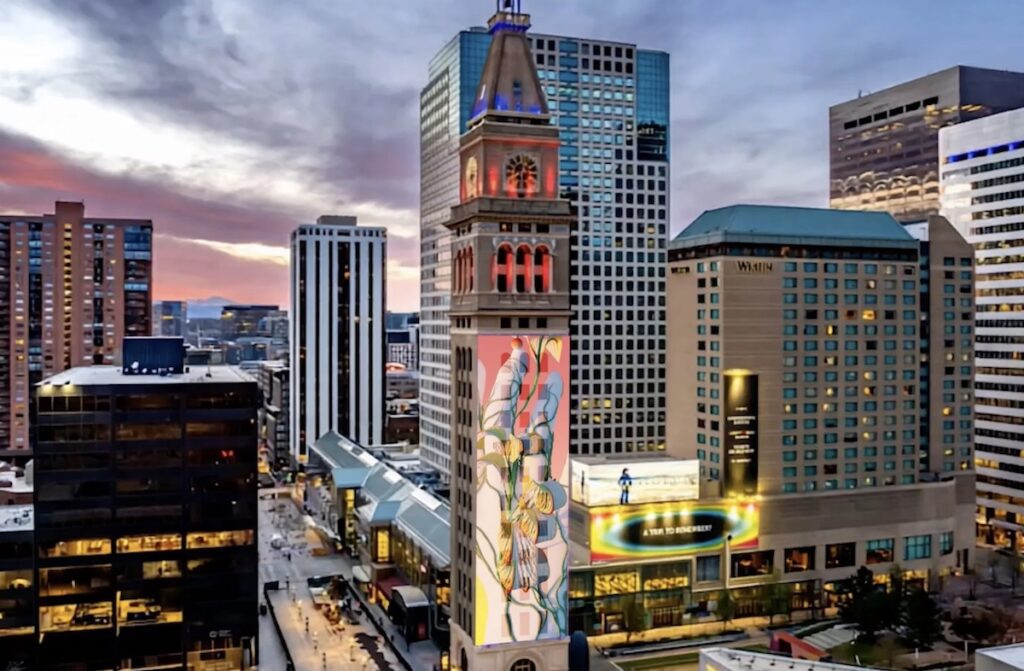
Valentina Ferrandes. Bloom, 2024. Site-specific 3D animation, Night Lights Denver

In “BLOOM,” classical iconography is projected onto a city landmark. What draws you to public architecture as a screen, and what do you want viewers to feel at that scale?

Public architecture is interesting because it operates at a scale where meaning turns physical. Facades, towers, and landmarks are symbols of power, progress, and permanence. Using them as screens immediately creates a shift in perception.

In BLOOM, projecting classical iconography onto a hypermodern skyline for Denver Night Lights meant staging a clash of meanings. On one side, you have contemporary architecture, on the other, a classical image that many viewers may never have encountered directly, unless they’ve visited the museum that houses it. That displacement is intentional.

“Classical iconography carries a quiet power because it transcends specific cultures to communicate through beauty rather than explanation.”

At that scale, the work isn’t meant to be fully legible. It’s meant to interrupt routine, to slow people down, and to create a brief moment of disconnection from the everyday flow of the city. Ultimately, to leave space for a  few minutes of awe.

Ultimately, classical iconography carries a quiet power because it transcends specific cultures and historical knowledge to communicate through beauty rather than explanation. When placed on an urban skyline like Denver’s, it opens up a small pocket of dreaming,  a moment of wonder appearing where it doesn’t quite belong.
Stuart Ward: on myths and systems of power

Interview by Pau Waelder

Canadian artist Stuart Ward has been inspired by ancient cultures since his childhood, and by a pragmatic approach to art making that had him incorporate digital tools into his traditional arts education. Living in Tokyo, he joined the live VJ scene in the mid 2000s and began collaborating with musicians, dancers, performers, and visual artists. Returning to Canada in 2010, he started an experiential design studio, working with internationally recognized brands such as Porsche, Cadillac, Lyft, TED, Asics, and Heineken.

His experience in both the traditional art world and the advertising and design fields shapes his perception of art as a form of creative expression that transcends boundaries and communicates with an audience on any possible context: not just in the white cube of the gallery or museum, but also on media façades, projections and screens in private and public spaces.

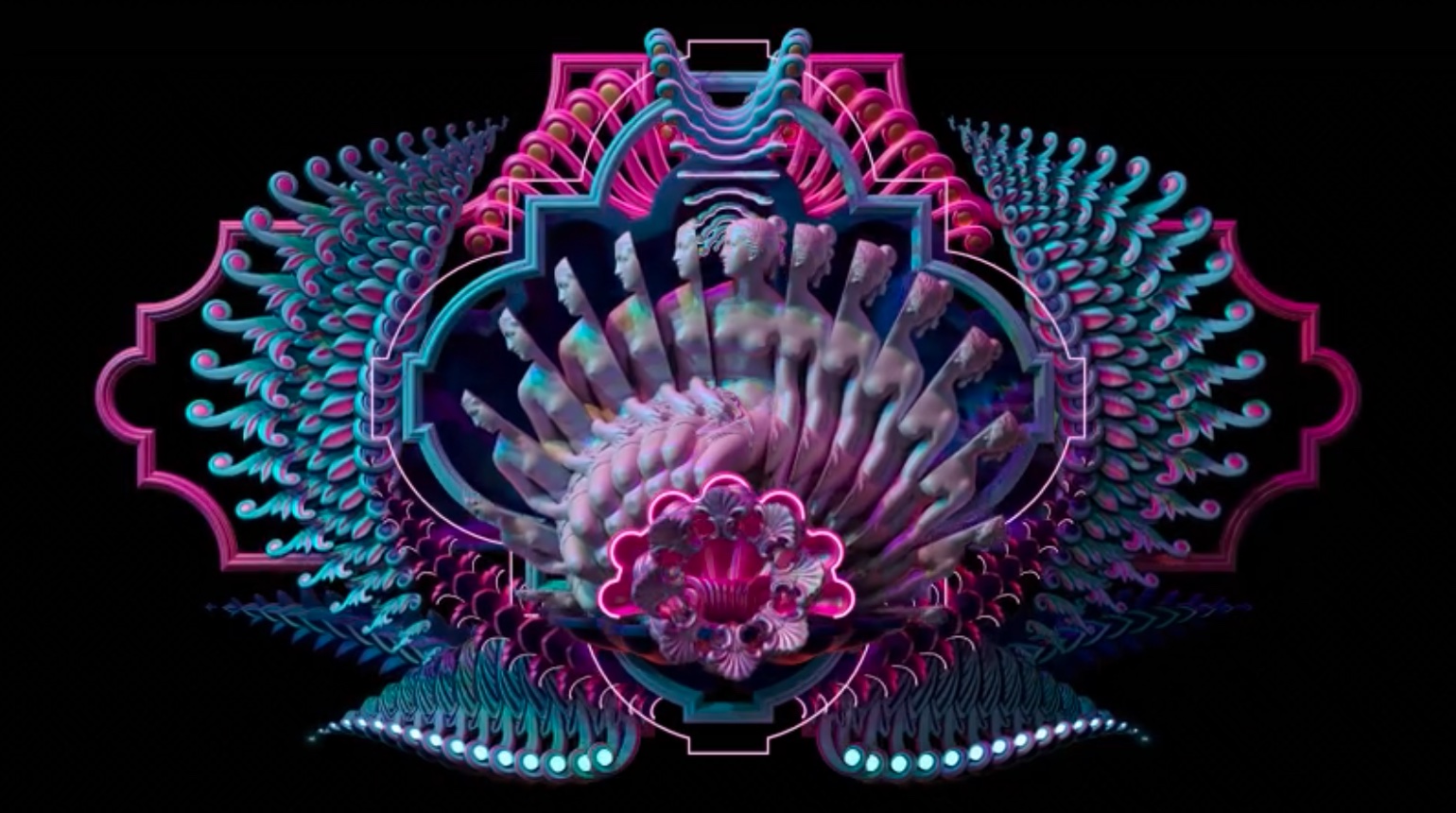
MUEO is the chosen name for his visual art persona and a creative project that references from Greek and Roman sculpture, Baroque architecture, treatises on visual perception, advertising, and the neon lights of the streets of Tokyo. On the occasion of his solo artcast Mueo – The Initiation, we talked about his work and the topics it explores. 

Take MUEO’s Neo-Baroque compositions to your screen

Stuart Ward, Venus, 2023

How would you describe the way Greek and Roman iconography, as well as that of other traditions, such as Buddhism for instance, is being incorporated into our contemporary culture, e.g. as a symbol of power or authority, or to express refinement? How does this apply to your work?

Greek and Roman architecture was adopted by several powerful nations and used as a symbol to perpetuate their power through association. Some of those nations ended up leaning more towards fascism, others went entirely that way. Cultural symbols have been permanently ruined in parts of the world. Architecture of power and dominance being built today has since shifted to the opposite end of the spectrum while simultaneously holding on to Greek and Roman forms. It’s almost as though the powerful are seizing both ends of the spectrum. There is a lot of nasty brutality in history, everywhere in the world. Learning about it is a great start to avoiding repeating it. 

Simultaneously, the possibility of greater expression has roots in freedom, so within the brutality of history, moments of divine inspiration have occurred, possibly through extended peace and periods of abundance. There is now more art being made than ever before, as humans have access to tools of creation like never before. The color blue used to be a symbol of immense wealth. Now we can buy it by the gallon.

“My work isn’t intended to be religious in its theme, but more to express the possibility of there being more to the universe than we can perceive with our senses.”

Buddhism is an interesting one. Their recruitment tools are more elegant and sophisticated, but they have recruitment. It is interesting to consider who they are appealing to. The aesthetics associated with Buddhism seem to also be universally associated with spirituality and lack the association of power and dominance that has been added to the spiritual or religious expressions of Europe. I’m paying attention to symbols in my work, as I recognize the power they carry.

Stuart Ward, Neptune, 2023

In your work we can see references to cycles of death and rebirth, and the connection between the divine and eternity, that are expressed in a visually attractive form. How would you say these concepts of constant changes and cycles speak to our consumption of cultural products, and of cultural trends?

I try to avoid politics before whisky, but there’s an idea by an awful political theorist that makes a lot of sense when removed from the rest of the context of his work. He said that people should express themselves by what they create, not by what they consume. I think most people’s creative expression comes through consumption. How they dress, the music they listen to, the food they eat. One thing that I’ve noticed that makes me uncomfortable is that sometimes after binging on a bunch of interesting and creative content on social media, I feel like I myself have been participatory in the creative process. This is far from accurate, but the feeling has existed, and I wonder if that non-productive creative moment is the reward for most people?

It might also be worth mentioning in the digital art scene, as NFTs emerged, everyone was so excited to break down the existing system and start anew, but within a few months, the existing systems had re-emerged, or the community was unknowingly asking for its return. Curators and critics reappeared. Blue Chip artists in the digital space became a thing. Now the digital scene is an established system waiting for its next interruption. 

“As NFTs emerged, everyone was so excited to break down the system and start anew, but within a few months, the existing systems had re-emerged. Now the digital scene is an established system waiting for its next interruption.”

You point out that you are interested in a Neo-Baroque aesthetic and in seeing what is possible to do with decorative forms when their material limitations have been removed. What drove your attention to these decorative forms in the beginning?

Where did these decorative forms emerge from? I know that some forms come from nature, like a dried acanthus leaf, or a fiddlehead fern, but the forms have evolved an almost musical quality. They so beautifully match the music of the era, wherein a form goes one way, and satisfyingly at just the right location, it spins and curls off in a different direction. We like music because it does what we expect, and we like it even more when it does what we didn’t expect, and subsequently brings us back around into what we expect again. Without the restriction of gravity or construction materials, what is the end evolution of those whirling swirling decorative forms? I think the mystery and curiosity to explore those questions drove me towards working with them in my art. That, and my early childhood home had several pieces of furniture with decorative swirls that I’d get lost in while playing, so there may be some deep memories of early childhood surfacing.

Stuart Ward, Artemis, 2023

In the artworks we see on Niio the elements of Baroque architecture create a frame around the main character, but in other works such as Ecstatic Angel and Transformation at the Gates of Eternity, which feature sculptures by Bernini, the architecture dwarfs the sculpture and becomes the main element in the composition. How do you conceive the balance between the two: sculpture and architecture, figure and frame?

Good question. I see them merging to become part of a singular experience where the architectural details and the sculptural details become a cohesive whole. This is part of the effort to explore the forms without physical limits. They can occupy similar values. Beyond that, in the Bernini piece for example, if it were to take a more dominant role in terms of scale in relation to the rest of the artwork, I’d feel a sense of unease. The sculpture is iconic and stands alone as an artwork. Is a great photograph of the sculpture also an artwork? Sure. I guess. But it runs dangerously close to losing its artness and becoming just a photograph. I feel similarly about a 3D rendering of a sculpture. Yes, I posed it in a scene. Yes, I organized a virtual camera, and created a lighting system, and a material system, but it’s still at the edge of art, in my valuation of things. Perhaps my system of values is more strict than others, but I felt like to make the artwork a deeper expression of my own work while simultaneously referring to the greatness of Bernini’s sculpture, the surrounding artwork needed to occupy more space visually and thematically.

“I’m a big fan of magenta. It’s my favourite color, despite not being a color on the electromagnetic spectrum.”

Your choice of colors is quite characteristic of a type of aesthetic that has become popular in NFT communities. Have you been inspired by other creators in these communities? What do the colors bring to these compositions in relation to the references to Greek and Roman sculpture, and Baroque architecture?

My artwork series from 2021 was more ‘classical’ in its color range, in comparison to Baroque artwork. In late 2021 I moved to Tokyo, again. The neon and lights of the big city had an influence on my aesthetic, and the works made in 2022 evolved to have luminous neon shapes and glowing effects. I think part of the purpose of it was to progress in the arms race against creative stagnation, and to challenge myself to express in a new aesthetic. 

To further discuss colour for a minute, I’m a big fan of magenta. It’s my favourite color, despite not being a color on the electromagnetic spectrum. I was working with a lighting expert several years ago planning some lighting projections for an event. They told me that using warm colours like orange, yellow, and pink will make the audience under the lights look healthy and the event will be more fun and better received, as opposed to an event lit with too much blue and green, making people look unhealthy. I think of that, and use magenta’s contrasting colors with consideration. 

Aqua/teal expands into the possibility of color. Before synthetic pigments arrived on the scene, some colours were rarely available for use. Despite the sky being blue, blue pigments were expensive and rare, as were purples, which is the reason for their association with royalty. The arrival of spring and the blooming of flowers in the pre-synthetic colour era meant that colours would be visible, having almost entirely disappeared to nearly everyone for the winter, the exception being the blue sky, always out of reach. Coincidentally, blue leds were the most difficult coloured lights to engineer: there were a few decades where led screens were yellow, orange, red and green. Now, the entire world can access as much colour as they want without restriction, but perhaps we have a deep memory of life before that unlimited access, and give brightly coloured things a sense of special attention. It could also be linked to an earlier structure of foraging for colourful fruits and berries. The concept is interesting to mentally explore.

“Social media has caused some harm. Artworks are becoming a response to the high speed social feedback rather than taking time to really work on an idea and iterate on the work.”

You speak of creating moments of elation and wonder with your artworks. Would you say that the use of a symmetrical composition, the cyclical movement of the different elements, and the rhythm of the animation are all intended to create a mesmerizing effect?

My work intends to express the possibility of there being more to the universe than we can perceive with our senses. This is generally objectively true in that right now we can’t sense the multitude of wifi and cellular signals flowing through our bodies. But further to that, more deeply universal questions about the possibility of a soul or spirit within, or a sense of divinity. I’m careful with how to express this, because my artwork isn’t intended to be religious in its theme, but more to express a possibility of ‘more’ through myth, pattern, motion, and the emotional response that those tools create. There are two fantastic books, The Oxford Compendium of Optical Illusions, and Vision and Art; The Biology of Seeing. They look into what is happening in the eye and the brain while observing images, and how optical illusions trick our visual sense. I’ve been exploring how to use this in art to express a sense of mystery.

Stuart Ward, Ecstatic Dance 2, 2023

In your opinion, how have social media and motion graphics influenced digital art creators?

Social media has caused some harm. As a result of the trend of Dailies, artists are rushing to create work quickly in order to get something new to share every day. In the process of trying to accomplish that, we end up making simpler things, and exploring creative ideas that we’ve already proven to be a social media hit. So the artwork becomes a response to the high speed social feedback rather than taking time to really work on an idea and iterate on the work. I know, because I fell into the same traps.

I must also confess that a short loop is better for me, because the render time is shorter, and the reward centers are activated sooner in the creative process. Some of my loops are only 4 seconds long, despite seeming much longer due to their seamless quality. As I’ve moved further away from the ‘dailies’ style work, I’m more and more comfortable with longer content where some parts loop quickly while others take more time to reach their looping conclusion. But this is still content under 30s long. 

Motion graphics add another tool to the artist’s creative capacity. The addition of motion to artworks adds to the capability of expression, but without proper media systems and hardware, it runs the risk of being forgotten, in favor of more physical media. It’s part of the reason why I’m excited to be working with NIIO: they facilitate the exhibition of motion enabled artwork in a progressive and intelligent way.

“I’m excited to be working with NIIO because they facilitate the exhibition of motion enabled artwork in a progressive and intelligent way.”

Your experience as a VJ and designer have surely taken you through different spheres of the visual arts, crossing the membrane between what is considered art and what is considered popular culture. What is your opinion on this separation? How can it be overcome in an age of art on screens and online distribution?

The barrier between art and pop culture has been largely broken down during my art career. Collaborating with a brand used to be considered ‘selling out’ and the only customers and revenue streams an artist should have was sales of art, and the non-art job that supported their practice in the likely event that it wasn’t sufficient. Now we see major artists collaborating with major brands, and it is seen as a part of ‘making it in the art world’. 

Stuart Ward, Nymph, 2023

Murakami and Arsham immediately come to mind when it comes to successful collaborations wherein the artist retains control over their image and artwork, while also merging in a beautiful way with well known global brands. Perhaps this process was facilitated by luxury brands supporting the arts, like Fondation Louis Vuitton. The art world seems to have shifted again as NFTs rocketed into the scene. The digital art space was moving so quickly that the old guard couldn’t keep up, and the gatekeepers were left behind. Eventually, in the chaos, a new order emerged, and some artists who were not considered ‘real artists’, but mere ‘digital creators’ found themselves on the inside of the gates, selling work at globally renowned, established art auction houses. The system has restructured.