Elsa Carvalho: The Art of Impermanence

Pau Waelder

Elsa Carvalho’s path into visual art began not in a studio, but in the structured logic of computer science. A Portuguese software engineer with a PhD completed in 2012, she turned toward artistic creation in 2021, at a moment when the NFT movement opened new doors for digital experimentation. On the occasion of her solo artcast The Unfolding on Niio, we asked her a series of questions about her artistic practice and creative process.

In this conversation, Carvalho reflects on how poetry and coding share a common ground in working within constraints, how open access to AI tools made image-making accessible to her as a newcomer to visual art, and how she gradually moved from early experimentation toward a more personal visual language.

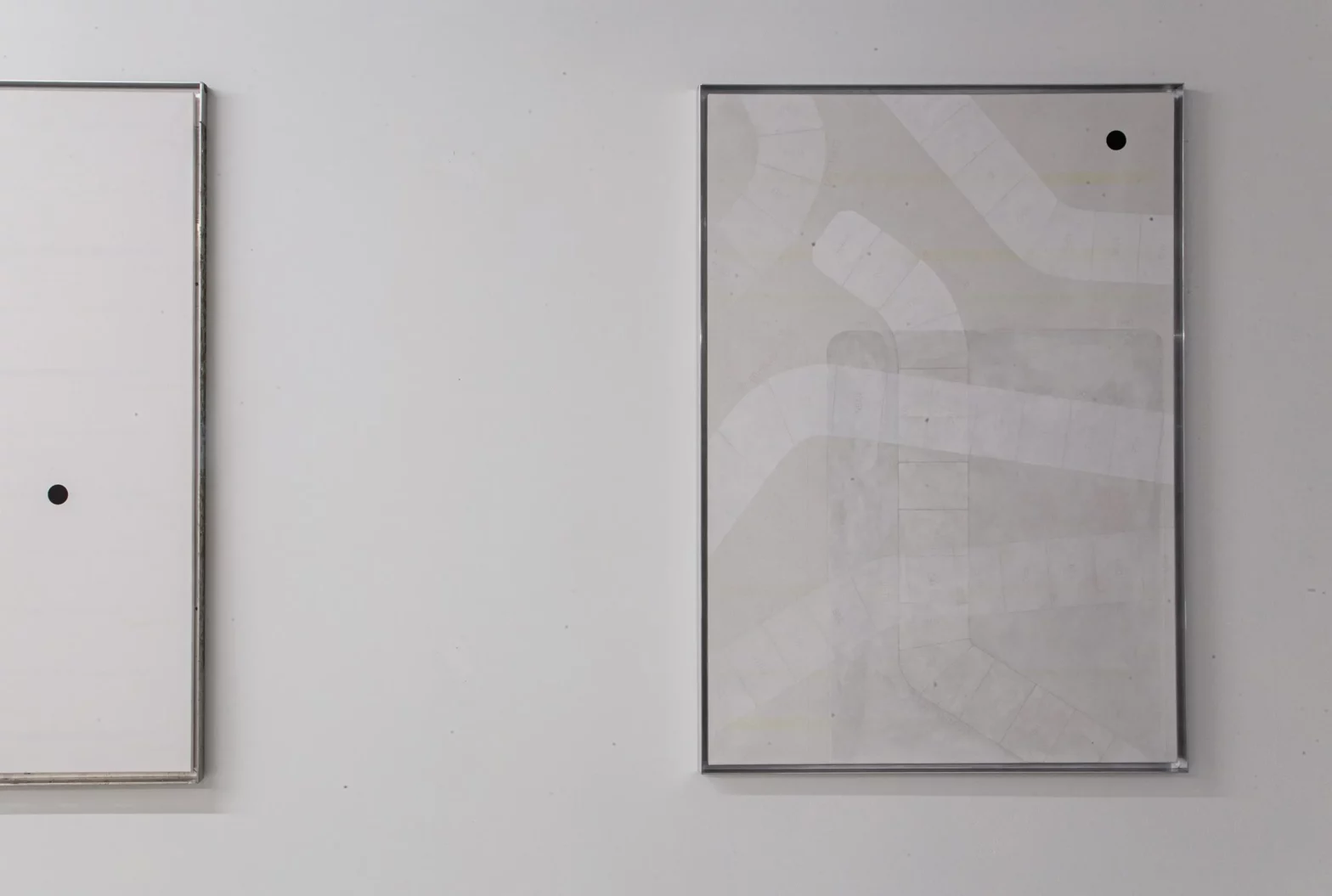
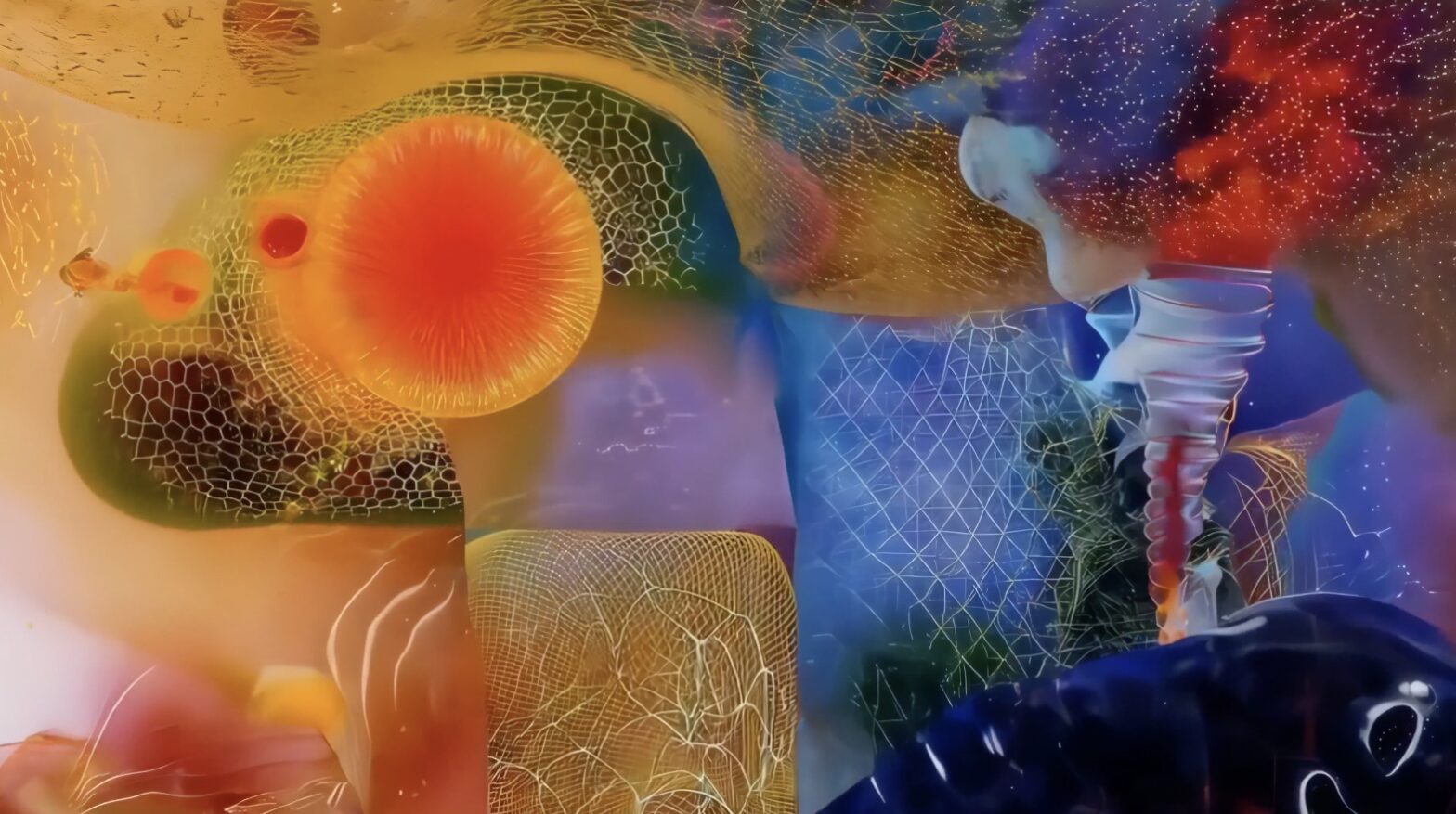
Elsa Carvalho. TheUnfolding#1, 2025.

You work as a software engineer but you have also always been interested in the arts, and have written poetry and prose. How would you relate poetry and literature to creative coding?

In my professional practice I always felt that coding is a very creative activity. Although this may seem counterintuitive, because it is full of rules and constraints, the fact is that you are creating something and, in the end, a result will emerge. There are different ways of achieving the same result, and the process of searching for and choosing a path is something I find very appealing. Often, what matters is not only the final output, but the decisions made along the way.

The same happens with writing. There are rules in language as well, but they can be bent or broken for poetic reasons. In creative coding I feel a similar freedom: working within constraints, but still allowing intuition, experimentation, and small deviations that can change the outcome.  

“Creative coding means working within constraints, but still allowing intuition, experimentation, and small deviations that can change the outcome.”

You decided to dive into visual art in 2021, at the time of the NFT boom. How did the NFT scene shape your understanding of art, and how has it evolved over the last years?

The NFT movement was the trigger for me to start exploring digital art. It felt like something important was happening and I wanted to be part of it, not to be left out of what seemed like a meaningful way to step into digital creation. In many ways, it was the entry point that allowed me to discover this artistic side of myself.

At that time, I had no experience with digital art, and that was one of the reasons AI attracted me so much. It opened the possibility to experiment visually without a traditional background. In that sense, AI felt very democratizing, allowing many people, including myself, to explore image-making in a more accessible way.

More recently, my relationship with that space has changed. I became more interested in slower processes and in developing a personal visual language. Discovering platforms like Niio, where my work can exist on large screens or in people’s living spaces, appeals to me more now than the NFT space itself. Still, I feel I will always be connected to that movement, as it was the precursor to my entry into the artistic world, and I owe a lot to it for opening that door.

Elsa Carvalho. TheUnfolding#2, 2025.

As a software expert, you know how software can shape what a user is able to do or even think they can do. Over the last decades, artists working with code have developed new tools that allow them to bypass the limitations of commercial software, and created a community around sharing. What do you think of this open source movement and how has it helped you as an artist?

I think the open source movement is very relevant and powerful. One of its biggest strengths is that it allows people to bypass the high costs of commercial software and to build tools together that anyone can use. This kind of shared effort has a real impact and reaches millions of people.

In my own practice, I did not take full advantage of artist-led open source tools, but open access to AI algorithms was essential for me in the beginning. Having Google notebooks available, with increasingly better GAN models and later other algorithms, was what allowed me to start experimenting with AI and image generation.

I also used non-paid platforms like Artbreeder, especially in my early exploration, alongside commercial AI tools. So my path was a mix of open, shared resources and proprietary software. Without that initial access to open algorithms and notebooks, I probably would not have entered this field in the same way.

“Discovering platforms like Niio, where my work can exist on large screens or in people’s living spaces, appeals to me more now than the NFT space itself.”

You use creative coding to generate visuals that then feed into an AI model to create a unique visual language. Can you take us through this process?

My process usually starts with creative coding. Through code, I generate images with more geometric structures, and this is where the core aesthetic of the work is defined. At this stage, I also establish the color palette and the visual coherence that runs through the series.

These images then become the starting point for the use of AI. AI allows me to introduce more organic qualities into the visuals, inspired by natural forms. It transforms the geometric structures and adds a layer of complexity and softness that I could not achieve through code alone.

From there, I curate the resulting images and use them as the basis for video works. I use AI tools to create the videos, either by introducing movement into the images or by morphing between different images. This final step allows the work to unfold over time and reinforces the idea of transformation that is central to my practice.

“I started my artistic practice with a mix of open, shared resources and proprietary software. Without that initial access to open algorithms and notebooks, I probably would not have entered this field in the same way.”

Both creative coding and artistic creation with AI deal with the tension between controlling the output and letting the program surprise you. How do you manage this tension? Do you sometimes fear that a good visual might be ruined once interpreted by the AI?

There is always a balance between control and surprise in my process. With creative coding, I have more control over structure, color, and overall direction. With AI, I accept that the visuals will change in ways I cannot fully predict.

Of course, there is always the risk that a visual I like might be altered in a way that does not work. But one of the pleasures of working with AI, and also with creative coding that includes some degree of randomness, is precisely the possibility of being surprised by the process.

Unexpected results often become important. Sometimes they even guide the direction I decide to follow. Rather than trying to protect a single image, I work through many variations and curate carefully, trusting that the process itself will lead me to the right outcomes.

Elsa Carvalho. TheUnfolding#3, 2025.

You have stated that your interest in organic forms stems from your childhood experiences in a farm, surrounded by animals and nature. Yet the forms you create are abstract and strongly evoke Surrealist painting. Why have you chosen this aesthetic?

Organic forms appeal to me a great deal, and that comes from growing up surrounded by animals and nature. Those experiences stayed with me, even if they are not represented in a direct or literal way.

At the same time, I am not interested in reproducing nature as it is. I prefer to work with suggestion rather than representation. By keeping the forms abstract, I can give hints instead of clear answers and leave space for the viewer’s own interpretation.

This approach allows me to connect personal memories with a more open visual language. The work does not describe something specific, but it can still evoke familiar sensations or emotions linked to nature.

Your early work shows more “mainstream” experimentation with AI, first applying textures to photographs of nature, then generating portraits of women with surreal elements, then moving into classical painting and surreal scenes that remind the work of Max Ernst and Paul Delvaux, as well as some photorealistic imaginary landscapes. What didn’t work for you in all these phases, that made you move forward? How have the advances in AI image generation contributed to this process?

It is interesting that you ask this question. When I started this path, not long ago, I met several Portuguese artists who were also involved in NFTs. I remember speaking with one of them about how to find my own style, and she explained it very simply: it can only happen with time, experimentation, and by understanding what makes sense for you at each moment.

In the early days, I was mainly exploring the tools. I was trying different approaches, testing what AI could do, and learning through practice. What did not work for me in those phases was the feeling that the results were too dependent on existing visual references, and that they resolved too quickly.

I enjoy experimenting, and I tend to move on when repetition becomes too comfortable. Over time, and with the advances in AI image generation, I was able to refine my process and gain more control. Now that my creation pipeline is better defined, it is easier for me to explore different themes while keeping a consistent process and aesthetic, which I hope is becoming more recognisable.

“One of the pleasures of working with AI, and also with creative coding, is precisely the possibility of being surprised by the process.”

Color plays an important role in your compositions, which feature deep blues and bright oranges and yellows, as well as a wide range of strongly contrasting colors that underline the constant changes taking place. How do you work with color? Does it serve purely compositional concerns or does it incorporate a particular meaning?

I work with a small set of color palettes that I use in a more or less random way during the creative coding phase. This helps give consistency to the final works, even when the forms and structures change.

I am very drawn to strong colors. Sometimes the world feels very grey, especially in the period we are going through, and I feel that people need strong colors in their lives. For me, color brings energy and intensity to the work.

There is no specific meaning attached to the colors I choose. Intuition plays an important role. In the end, the resulting colors are a mix of what comes from the initial coded image and what comes from the AI prompts, and I curate the results by choosing the images that appeal to me the most.

“Sometimes the world feels very grey, and I feel that people need strong colors in their lives. For me, color brings energy and intensity to the work.”

In the series tran·sience you collaborated with Bruno Miranda, who created a musical score for your compositions. Seeing the artworks with music almost feels as if the shapes are reacting to the score. How did this collaboration come to be? What does music bring to your work?

Bruno Miranda is my husband, and although music is not his day-to-day work, he has a strong passion for composition. The collaboration came very naturally, as it felt like a way to give the videos a stronger impact.

The process usually starts with the visuals. Once a video is ready, I ask him to create a musical composition for it, sometimes suggesting a mood or style. Music adds rhythm, movement, and emotional depth that the visuals alone cannot convey, making the work feel more alive and immersive.

Elsa Carvalho. TheUnfolding#4, 2025.

You have stated that impermanence is one of the most fundamental truths of life. Following this line of thought, where do you think your work might take you next? Have you considered video mapping, installation, sculpture, or other forms of creation?

Like my works, I tend to let life and intuition guide me. After several years working consistently on my process, sharing my work on X (ex-Twitter), and selling NFTs occasionally on different platforms, I began receiving more recognition. Instead of going after opportunities, I started getting invitations.

First, I was invited to sell my videos as NFTs on a well-known AI video platform. Later, platforms like Niio, which provide video artworks to be shown in public spaces or companies, invited me to submit my work so their clients could choose from my artworks. More recently, I was invited to create pieces for an important event here in Portugal. Challenges make our minds search for creative solutions, and if somebody challenges me to show my work in a different or innovative way, I will certainly try to make it happen. I prefer to let these kinds of invitations guide me and shape the work I explore next.
Antoine Schmitt: Clinamen

Pau Waelder

On the occasion of Clinamen, Antoine Schmitt‘s first solo show at DAM Projects, I wrote the following text that can be found in the gallery’s press release and is now available on Niio Editorial courtesy of DAM. The exhibition runs until January, 2024 at the Berlin gallery.

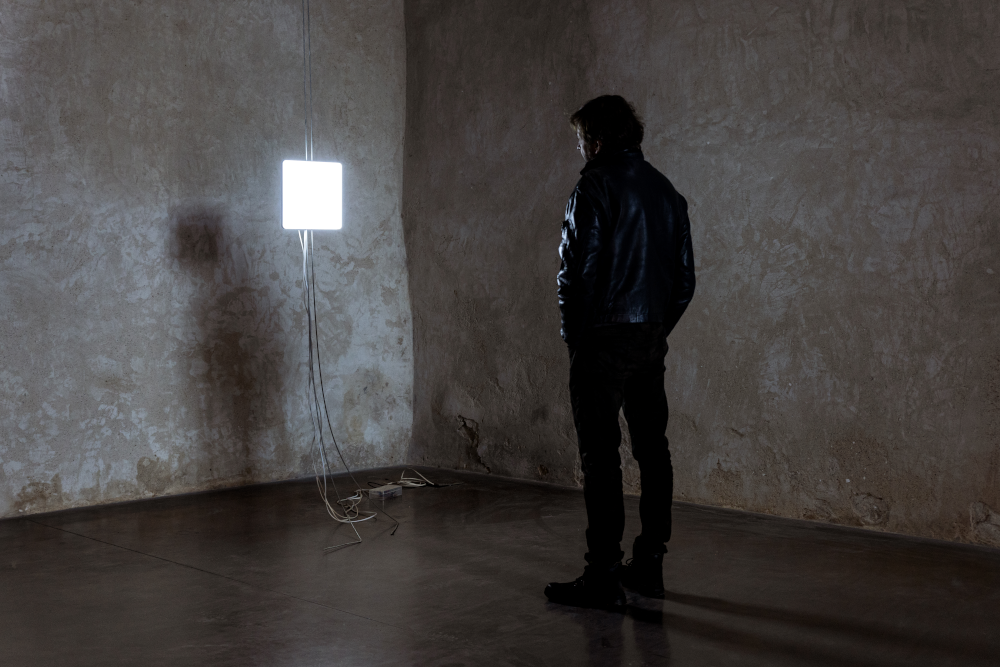
Antoine Schmitt. Pixel Single, 2021. Generative installation. Photo: Quentin Chevrier

According to Epicurus (341-270 BC), the universe consists of atoms constantly falling down, carried by their own weight into the void, like drops of rain. This endless cascade of billions and billions of atoms, ordered in neat columns, might be beautiful and dull but no one would see it, because nothing would exist. Epicurus explains that thanks to a slight swerve in their trajectory, the atoms collide with each other and, through chain reactions, create all matter. This subtle deviation from a perfectly straight path is what he calls the clinamen, a term that ignited the imaginations of Dadaists and Pataphysicians alike, and that now finds itself as the title of Antoine Schmitt’s first solo exhibition at DAM Projects.

Antoine Schmitt. Cascade Grand Oblique Video Recording, 2018. Code based art.

A programming engineer specializing in Human-Computer Interaction and Artificial Intelligence, Antoine Schmitt is a unique visual artist who distills inspiration from kinetic, cybernetic, and abstract art into a body of work that often appears unapologetically minimalistic: the square dominates his abstract generative artworks, sometimes with the authoritative presence of Malevich’s Black Square, sometimes integrated into a vibrating multiplicity of shapes as in Vera Molnar’s (Des)Ordres series, but more often as a humble pixel transiting a black void. However, representing purely abstract entities is not Schmitt’s goal, as his interactive installations attest: he is interested in people, societies, the ego, the Superego, and the laws of the universe. Rather than a mathematician, he sees himself as a physicist who, as Epicurus, uses his imagination to seek an explanation of reality and provide a representation of it. 

Antoine Schmitt is a unique visual artist who distills inspiration from kinetic, cybernetic, and abstract art into a body of work that often appears unapologetically minimalistic

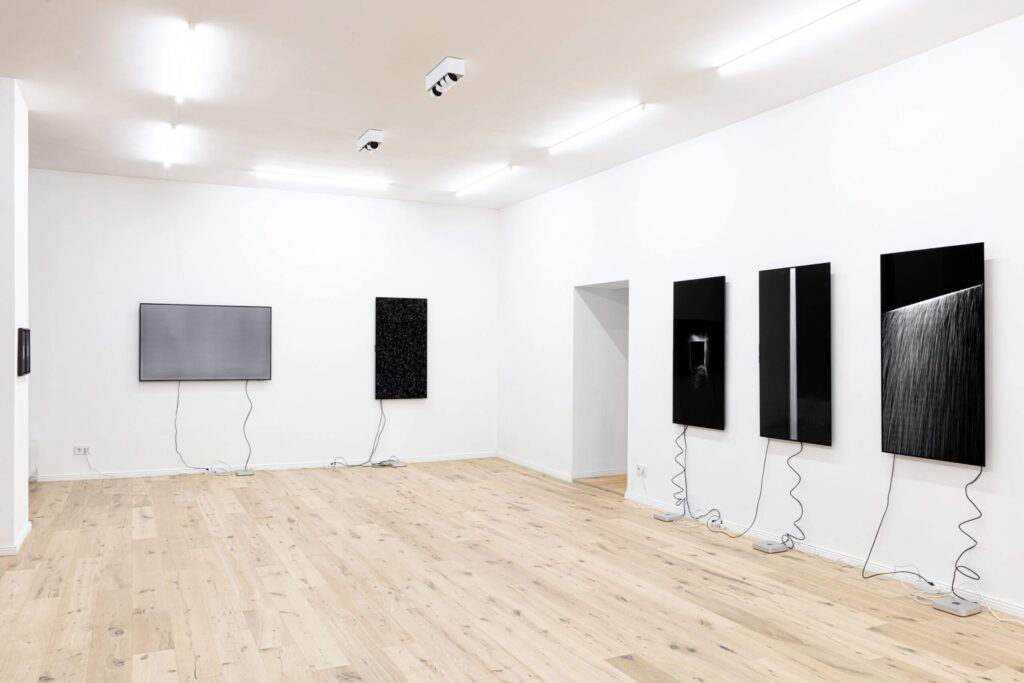
In this room, we are looking at black squares made visible by their absence, pixels gracefully dancing in strange choreographies, messing around, hurriedly crossing to the other side of the screen, or falling in cascades, carried by their own weight. Their movements are mesmerizing precisely because the artist has programmed a clinamen that gently deviates their trajectory and leads them into a seemingly chaotic, but also beautifully synchronized, behavior. Order and chaos are key to the work of an artist who does not “animate” the pixels, but creates situations and rules using code, and then lets the program run on its own. A series of performative events carried out by machines, the artworks build realities that exist in front of us in real time, mirroring the physical, social, and informational systems we are a part of.

Antoine Schmitt, Clinamen, 2023, exhibition view. Photography by Ea Bertrams. Courtesy of DAM Projects

A single pixel, hanging on the wall, pulsates at irregular intervals. It is trying to communicate its own source code, to replicate itself, if not as a physical entity or picture element on a screen, then at least as an idea. A Duchampian bachelor machine, it fails in its task. But ultimately it acts as a mirror of the person who observes it, reminding us that we are the pixels in these endless flows. And that we are, in turn, made of atoms that once, fortunately, strayed from their path and collided with each other.

Explore Antoine Schmitt’s artworks on Niio

Carlo Zanni: e-commerce, identity, and the epic of our times

Pau Waelder

An early practitioner of net art, Carlo Zanni is among the first artists to explore the nascent opportunities for the online art market and reflect on how the web would impact on our sense of identity and privacy. With a painter’s vision, he has seen in the development of online platforms and graphical user interfaces a space of visual compositions in which the computer desktop becomes a landscape, and everything in it is a fiction. 

He has also developed new forms of storytelling through web-based projects such as the “data cinema” trilogy: The Possible Ties Between Illness and Success (2006), My Temporary Visiting Position from the Sunset Terrace Bar (2007), and The Fifth Day (2009). In these online films, he combined a pre-defined narrative with data collected in real time from the same users who were watching the film, or from a distant webcam, or from different sources describing the social and political conditions of Egypt. 

Carlo Zanni, The Fifth Day (2009)

Explore Zanni’s data cinema artworks

Embedded in his work as an artist, his research on alternative models to sell digital art has led to pioneering yet unrealized projects such as P€OPLE ¥ROM MAR$ (2012), an online platform dedicated to selling video art and fostering a community of creatives based on shared revenue, or ViBo (2014-2015), a “video book” aimed at facilitating the sale of video art at affordable prices in unlimited series. He collected his experiences with these models in the book Art in the Age of the Cloud (Diorama Editions, 2017).

Niio is proud to present two selections of artworks by Carlo Zanni: Data Cinema Anthology, which brings together the Data Cinema trilogy and an additional artwork, and Save Me for Later, a code-based artwork recently presented at Zanni’s solo exhibition Accept & Decline at OPR Gallery in Milan. In the following interview, the artist discusses the artworks presented in this exhibition, which can be visited until April 28th.

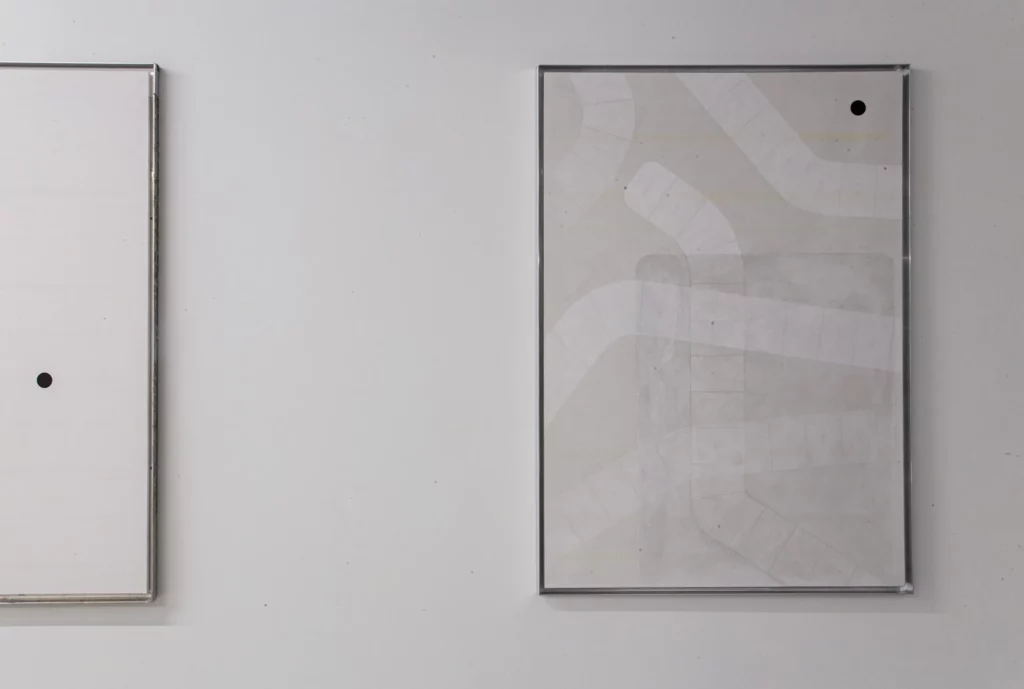
Carlo Zanni, Check Out Paintings, 2022. On view at OPR Gallery, Milan.

In this latest series you have come back to painting as a medium, after a long career focused on web-based art, but you keep exploring the same subjects. Can you take me through the main ideas in the Check-Out Paintings?

This cycle of paintings is part of a long-term investigation of the social and psychological role of eCommerce in our society. It stems from the memories of the eCommerce check-out pages: a final destination we all are funneled to, in every online buying process. The check-out pages of eCommerce sites represent a highly symbolic limbo that precedes the dopamine rush where we all hope to find shelter. A form of addiction, but as shown during the pandemic, also a lifeline. 

“Our identity bounces between the happiness for buying, and the sense of guilt for having bought.”

Buying online is both a sort of pursuit of happiness as we have been taught by our society, both a way to escape reality, procrastinating any possible confrontation with ourselves. Our identity bounces between the happiness for buying, and the sense of guilt for having bought. Between the satisfaction of an increasingly frictionless, user-friendly, fast, and on-time experience; and the anxiety, and also the shame, for what this transient fake happiness often entails on a social, work, and human level for thousands of people: directly (shifts and working conditions, small local businesses), and indirectly (tax evasion of mega-corporations and environmental impact).

Unlike early works such as DTP Icons Paintings (2000), here you do not look for a realistic representation of the interface, but rather create almost abstract compositions, why is that?

True, because here is more about inner feelings than simple representation. It’s not witnessing from the outside but feeling from the inside, then trying to show a glimpse of it, if possible, in the real world.  So the rationalist layout, typical of these pages, fades into memory, it turns into a dreamlike experience, into a psychological post-image, while some details of the transaction, such as measures, prices, and quantities, emerge from the background when one gets closer to the surface of the painting: they bring us back to reality.

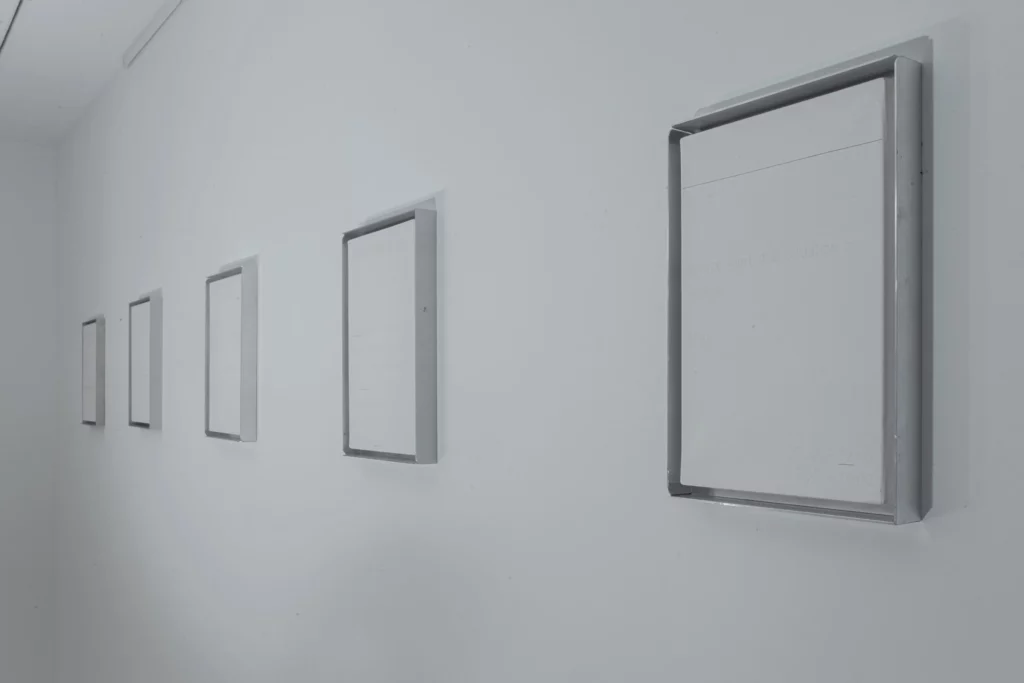
The subtle color fields of these paintings make them very difficult to be mediated or “seen” online (e.g. on Instagram, or on a PDF), instead they open up and expand in front of the viewer when experienced for real. While our society continues to demand fast, easily communicable images, these paintings are slow, almost invisible, non-existent images, and they ask for something very precious: our time.

Carlo Zanni, Check Out Paintings, 2022. On view at OPR Gallery, Milan.

How did you achieve this faded effect in the canvases?

The color used in these works is acrylic mixed with water and in some cases acrylic medium. This way tones are soft and they mesh one into the other when seen from a certain distance, vaporizing the memory of the whole picture. I take advantage of the cutting plotter to write numbers and other “technical” details. I cut the letters in vinyl (negative) with a size that allows me to draw inside them with a sharp pencil without touching the vinyl edges. This way the sentences and the lettering look “straight” and “guided” from a distance, and handmade from a closer inspection.

“When you stick your nose onto the canvas, the work transforms from an abstract field into a condensed epic of our times.”

Formally speaking, the style of these paintings was born in response to a period of social isolation due to the pandemic, during which, as a balance, we have tried to mediate all the possible human activities: meetings, purchases, employment, leisure, study, culture… I felt the need to go the other way, working on something that could be only appreciated when seen in person.

If you want to find some roots, these works echo the mature practice of artist Agnes Martin, in the use of pencil and subtle water-based colors, but here all the “modernist” and “minimalist” values of the time are almost gone. So all the pencil details and most of the color fields are only visible when you stick your nose onto the canvas, and the work transforms from an abstract, almost white, field, into a condensed epic of our times touching themes such as anxiety, desire, happiness, fear, gender identity, pandemics, politics, tragedies, wars.

While the paintings look almost abstract, they also contain references to the present, as is frequently found in your web-based artworks, what role do these references play?

The paintings dig into our daily culture and politics, for instance by discreetly showing disclaimers referring to the current Ukraine war. (Since February 2022, many eCommerce added such disclaimers for multiple reasons: from giving updated shipping info to giving their support to the Ukrainians). I see these paintings as a vehicle for meditation, an attempt to temporarily alienate ourselves from this endless moment of upheaval and unrest; while being violently dragged back to reality when we get closer to the surface: they are a way to extract some time from our hectic lives to sense the delicacy and fragility of our body and the transience of happiness while diving into our time.

While they are very different artworks, I would point out to Average Shoveler (2004) as having a similar approach in terms of its meditative aspect and the connection to real life events. In that work, which was commissioned by Rhizome, I created an online video game in which the player controls a man who has to shovel the snow falling on the streets of New York. Each time he does, several images taken from CNN and other news outlets in real time pop up and disappear. Additionally, some non-player characters stop and speak out news headlines. The main character invariably ends up dying of exhaustion, unable to shovel the incessant amount of snow. But the game also includes some secret spaces meant for the player to relax and just observe the scene, distanced from the gameplay. In a way, these paintings also provide that distanced space of observation while having these subtle hooks to reality.

Carlo Zanni, Average Shoveler (2004)

Talking about hooks, you describe some elements in the paintings as “clickbait,” can you elaborate on that?

Yes, the dark dots and solid-colored shapes (lines, rectangles, circles) that appear in some of the paintings are what I call “clickbaits” for one’s eyes. Seen from afar these canvases look pretty white and empty, but these dots stand out and catch your attention. They work similarly to how advertising plays with colors, double meanings, and impressive images to stand out in a visually saturated landscape.

They also remind of the so-called “dark patterns”, which are interface design strategies quite common in e-commerce pages, that are meant to fool the user into doing what the vendor wants them to do, such as sign up for a newsletter, add an extra service, or choose the most expensive option among several choices. In my paintings, the shapes intend to lure you into looking closely at the painting and finding what it is actually about. However, I would say that while clickbait is content that over-promises and under-delivers, in my paintings I under-promise and over-deliver 🙂

Carlo Zanni, Save Me for Later (2022)

Save me for later (2022) is also an intriguing artwork in the sense that it is not what it appears to be, and it connects with a concept you have explored over the years, which is the computer screen as a landscape

“Save me for later” is actually a bot browsing Amazon.com, continuously adding products to the cart that is visible in the right sidebar. When the cart reaches its limit, it automatically moves products to the “saved for later list”, making room for the new freshly added ones. The bot embeds a floating window with the webcam stream framing me while performing. This repetitive and almost hypnotic performance, with apparently no beginning and no end, speaks of the type of procrastination we all carry out while browsing e-commerce sites, looking for products that will bring us happiness and make our lives better.

As with the paintings, the experience of isolation during the pandemic was key to conceiving this artwork, in which the computer screen becomes a landscape, a place of escapism and daydreaming. The performance is consciously slow and cryptic, and as it is playing out in real time, in the real Amazon website, the items that appear reflect our present time just as the subtle writings on the paintings take us back to the world we are living in. For instance, when I first ran the program, the bot frequently picked up COVID-19 self-tests, which at some point were very much in demand and right now are almost forgotten. 

“This repetitive and almost hypnotic performance speaks of the type of procrastination we all carry out while browsing e-commerce sites, looking for products that will bring us happiness and make our lives better”

I see this project also as a vehicle for meditation, an attempt to alienate ourselves momentarily from our daily lives and our anxieties (so the title “Save me for later”). And behind the activity itself, what you see on the screen that is apparently me browsing the Amazon site but is in fact an automated process carried out by a computer program, is an interesting exchange of data. Data collected by the Amazon site about this meaningless routine (constantly adding items to the cart without ever checking out), data displayed by Amazon about the articles on sale, data that is processed by Amazon’s algorithm to display new items related to previously selected products. 

See a two-hour excerpt of Zanni’s endless automated performance on Amazon

Data is for me what gravity probably was for Bas Jan Ader. “The artist’s body as gravity makes itself its master.” These mysterious words were used by Bas Jan Ader to describe his short films Falling I (Los Angeles) and Falling II (Amsterdam) when he showed them in Düsseldorf in 1971. He was playing with gravity, he was becoming gravity, accepting its outcome: failures, fragilities, spiritualism, poetry, meditation, ascension. 

I feel that I use data in a sort of similar way, accepting the fact that most of my works will cease to exist quite soon after their birth. By using data from media outlets such as CNN, tools from Google, data collected from users, and so on, I consciously open my work to a vulnerability as the price to pay for creating a work that is always connected to the present and fed by data that circulates online. Then, an API is changed, a tool is discontinued, and the artwork cannot exist anymore. Sometimes you can fix them, sometimes you just don’t want to do it. 

Other times you start again from scratch as recently I did with Cookie Portrait (2002-2022), a work about online identity and privacy that had to be rewritten when it was launched at OPR Gallery last year, 20 years after it was first created. This work is based on the same cookie technology that is used – for instance – for the internal session management of an eCommerce site and more generally for user profiling and marketing activities. This work reminds us that, in our online existence, we are made of data. The body is thus the sum total of your data, the artwork is a temporary and transient experience of something elusive, like our own existence is.