Florence Lefebvre: Marine Emotions

Niio Editorial

Florence Lefebvre is a self-taught French digital artist whose practice emerges from a lifelong dialogue with the sea. Growing up with formative summers in the South of France and later observing the shifting coasts of Normandy, Brittany, and the North Sea, she developed a deep sensitivity to tides, light, and movement. What began as hours spent underwater with a mask and snorkel evolved into a visual language built from fluidity, rhythm, and transformation. Today, she translates these marine memories into immersive digital compositions, describing herself as a “digital explorer” navigating an ocean of pixels.

Following the launch of her solo artcast Waltz of Flowers on Niio, we had a conversation about her creative process and the sources of her inspiration.

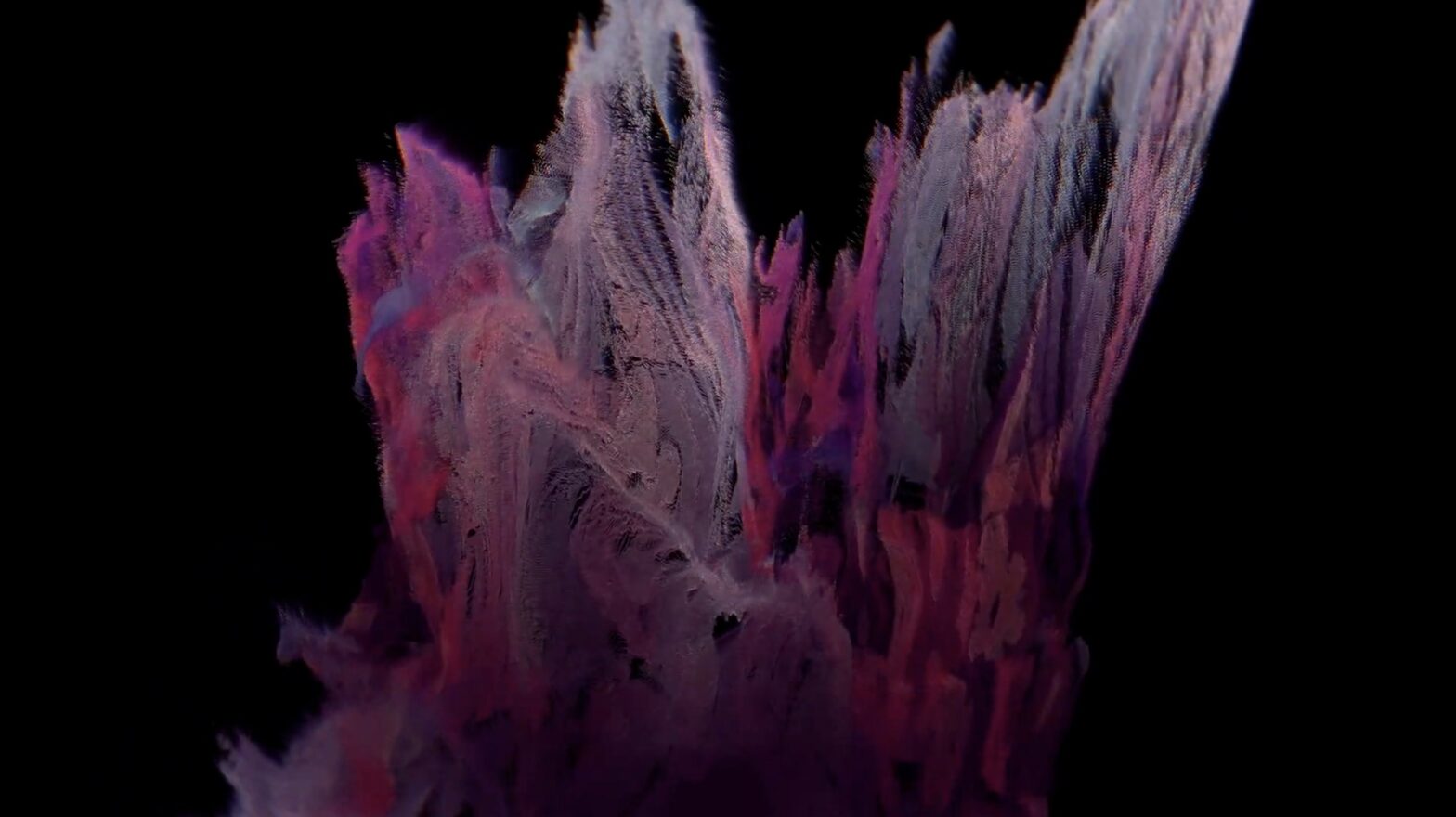
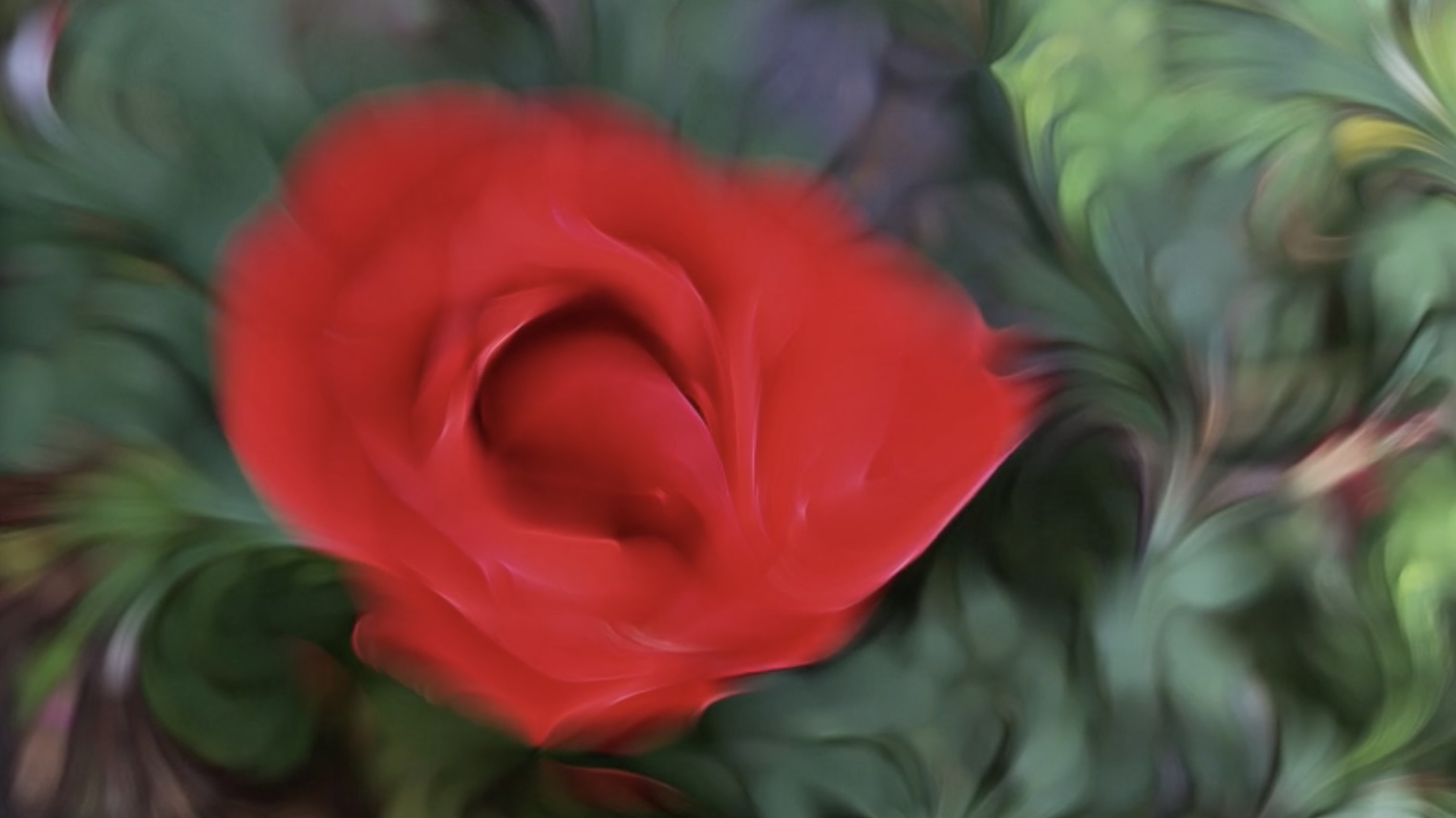
Florence Lefebvre. Waltz of Flowers #1, 2022

You have stated that your work draws its inspiration from “marine emotions.” Could you share with us a specific memory, place, or marine sensation that continues to inspire your work today?

For me, the sea is an emotional language: an endless immersion where fluid, uninterrupted movement inspires my digital exploration.

Every summer, during long family holidays in the South of France, I discovered my first wonders beneath the surface of the water. Equipped with just a mask and snorkel, I spent hours exploring this secret realm, fascinated by the light filtering through the waves and the shifting reflections. The green of the seaweed rippled gently, while fish, their hues ranging from red to orange, then to blue and silver, moved through this world like a living dance. These moments instilled in me the beauty of rhythm, color, and movement—essential elements of any artistic composition.

My creations immerse us in a universe where art transcends the boundaries of the canvas!

Even today, I regularly observe the beach and the sea along the Normandy and Brittany coasts, as well as in the North Sea, where the tides constantly create new patterns on the sand and alter the dance of the waves. On winter mornings, on calm or windy days, I watch the light change with every moment: the sky merges with the sea, clouds stretch to the horizon, and sometimes silvery reflections illuminate the surface. I feel fully connected to this shifting space, attentive to every ripple of the water and every variation of color brought about by the tides.

The sea has taught me that nothing is fixed, that everything is fluid and transformative. In my digital ocean, each pixel becomes a grain of sand to explore!

My art is a dialogue between the real and the digital, where each composition carries the memory of an inner journey that continues endlessly!

Florence Lefebvre. Stellar Melodies, 2025

In your work, you prioritize contemplation first, then mastering the production process. What does “contemplation” look like in your daily practice?

For me, contemplation is an active immersion, the starting point of all creation. It always begins far from screens, with careful observation of nature. I am deeply moved by the spectacle of the tides and the perpetual movement of the waves.

My approach unfolds around three axes: flow and energy, forms and textures, and time for reflection. By exploring the Normandy and Brittany coasts, I capture the metamorphosis of the shores under the action of the sea, the power of the waves, and the fluidity of their movements. I linger on the rhythms of the water, the undulations of the sand, the contrasts between rock and sea, building a repertoire of sensations that I then transpose into my digital creations.

“It is during my walks along wild coastlines that my works take shape in feeling, before technology becomes an extension of my gaze”

The settling time involves knowing how to detach oneself from the digital world, allowing these impressions to organize themselves internally. It is during my walks along wild coastlines that my works take shape in feeling, before technology becomes an extension of my gaze, transcribing into images what the sea has whispered to me.

My art is thus a dialogue between the real and the digital, a perpetually transforming flow, where each pixel mirrors an instant, as a grain of sand carried away by the tide.

When did digital creation become the medium where you felt you could “fully” express your sensitivity, and what did it reveal that other forms did not allow?

One day, I embarked on this artistic quest of creativity and exploration as a self-taught artist, using whatever tools I had at hand. I explored, tested, observed, experimented, and created with passion, fascinated by the possibility of bringing to life the movements, textures, and colors I had observed in the sea since childhood. This moment remains very important to me because it marked the beginning of an intense period of artistic creation. I instinctively grasp computer tools and naturally become familiar with them, while working regularly and rigorously, which allows me to acquire technical mastery of the software. It’s a passion fueled by daily exploration, research, and creation.

“The sea has taught me that nothing is fixed, that everything is fluid and transformative. In my digital ocean, each pixel becomes a grain of sand to explore!

Digital creation became a universe for me where I could fully express my sensitivity when I felt the need to translate the flows, movements, and nuances of nature in a more immersive and vibrant way. Unlike other traditional forms, digital art allows me to capture the fluidity, light, and rhythm of my marine memories, to create subtle movements, infinite oscillations, and to experiment with variations of color and texture that paper, canvas, or sculpture don’t always allow.

Throughout my exploration, I also developed a passion for flowers, which I animate like peintures mouvantes (moving paintings), creating a dialogue between nature and digital art to produce living, poetic works.

This creative space has revealed to me that emotion can be immersed, amplified, and reinvented; that each pixel can convey a feeling; and that the interaction between the real and the virtual opens an infinite dialogue with the viewer. Where other forms could freeze a moment, digital art allows me to bring movement and transformation to life, to recreate the memory of ocean currents and the dance of the elements, while remaining true to my vision and artistic intuition.

Since then, I’ve defined myself as a digital explorer, approaching the screen as an ocean of possibilities. Each video I create becomes an immersive atmosphere, where every shape and color contributes to the experience and the feeling, offering a dialogue between the real and the virtual.

“Unlike other traditional forms, digital art allows me to capture the fluidity, light, and rhythm of my marine memories”

Florence Lefebvre, Infinitesimal, 2023

Your work often revolves around “digital fluids and forms.” Are these abstractions meant to evoke water, emotions, memory, or something else?

I work with digital fluids and forms to translate what I feel in the face of the sea and life, rather than representing the world literally. Water, with its fluidity and oscillations, becomes a central metaphor: it evokes movement, emotion, memory, and transformation.

For me, digital art is a space of infinite exploration, where each work can evolve, reinvent itself, and engage in a dialogue with the viewer.

I create dynamic and evolving fluids, where each element transforms and interacts across multiple dimensions. This universe allows me to explore inaccessible realms, where movement and color harmonize perfectly, offering the viewer a true escape.

“My goal is for the artwork to transport the viewer, transforming their contemplation into a unique emotional experience.”

Each work is born from a subtle balance between observation of reality and digital exploration. Waves, currents, and ocean currents inspire my rhythms and textures, but these elements are reinvented as free abstractions, capable of conveying the flow of an emotion or the memory of a moment.

My goal is for the artwork to transport the viewer, transforming their contemplation into a unique emotional experience. Each creation is designed to resonate with the space around it and invite everyone to feel emotion, a memory, or a sense of escape.

My works thus become a space for exploration where the viewer can perceive movement, color, and depth, while giving free rein to their interpretation. Digital fluids are therefore not just water: they constitute a visual language that evokes feeling: a dialogue between real and virtual, memory and emotion.

You mention algorithms and multidimensional composition. How do you reconcile control and emergence, and at what point do you want surprise to appear in the image?

In my work, control and emergence interact like two complementary forces. Through the software’s algorithms, I shape my creations, orchestrating rhythms, textures, and movements that I wish to explore.

However, I always leave room for surprise, because it is often in the unexpected that the most poetic and vibrant moments are born. Sometimes, a flow reacts differently, a color blends differently, a ripple forms unexpectedly: these moments become creative triggers that I then choose whether or not to incorporate.

I then become a conductor, or rather a captain: I steer my digital compositions with intention and mastery, while leaving the necessary space for emergence. “Ctrl+Z” becomes my magic wand: surprise is no longer a constraint, but the wind that fills my sails toward the unknown, transforming the unpredictable into an opportunity for exploration!

Florence Lefebvre. Flowergraph, 2022

You speak of linking contemporary life to the “cradle of primitive life.” What does “primitive” mean to you: biology, mythology, evolution, spirituality, or a psychological state? Your goal is to represent “the depths of the subconscious.” Do you start with an emotion and then find an image for it, or with an image to discover the emotion later?

I perceive the primitive as the vital force that animates the entire universe, a cradle of life that is simultaneously biological, instinctive, and psychological. It is this raw energy that flows through nature, from ocean currents to distant stars, and that inspires creation. My approach is akin to a biology of the imagination: an exploration of matter coming to life, where instinct and memory intertwine with digital technology.

My goal is to represent the depths of the subconscious, where emotions and memories converge. Sometimes, I begin with an emotion, allowing it to percolate and transform into image, form, and movement; sometimes, an image emerges spontaneously, revealing the latent emotion it carries. In all cases, the unexpected becomes the raw material of creation, and the primal, a living and inspiring source.

“I have also developed a passion for flowers I animate like peintures mouvantes (moving paintings), creating a dialogue between nature and digital media.”

The orchestration of my digital fluids allows me to create shifting, dreamlike worlds where life, poetry, and the invisible meet. I explore the infinitely small with works like “Infinitesimal,” observing digital fluids under a microscope.

In my series ‘Abyss’ and ‘The Secret of the Abyss’, the ocean depths mingle with the subconscious, giving rise to abyssal creatures that I call ‘Abyss’, born in the heart of these depths and bearers of the mysteries of the ocean. Finally, the celestial journey with the “Nebula” series connects the ocean depths to the most distant stars, continuing this quest for energy, cosmic fluidity, and infinite reverie.

Digital art offers me immense freedom of exploration, a boundless, dreamlike, and ever-shifting universe where the invisible becomes visible and the unexpected transforms into living inspiration.

Florence Lefebvre. Confusion, 2022

A significant portion of your work is abstract, dominated by fluids and fluidity, with some references to nature. However, some of your most recent works, created with AI models, lean towards figuration, with scenes reminiscent of street art and early hand-painted photographs. What does AI bring to your creative process that has motivated this evolution towards figurative compositions?

AI is primarily used in my work when I explore figurative art. It allows me to develop scenes, characters, and visual worlds that I explore through various themes, from street art to early hand-painted photographs, including sketches reminiscent of drawing or comics.

I use it as a tool for shaping and experimentation: I define the intentions, adjust the parameters, select, refine, and rework the images. The AI ​​generates suggestions, but the vision, direction, and aesthetic choices remain entirely my own.

“Working with AI is not a change of direction, but an expansion of my artistic language, where each work, with its own tools, contributes to the same vision.”

What interests me is not just the speed of execution, but above all the possibility of exploring a wide variety of subjects and styles without hindering the creative flow. Where my passion for digital fluidity explores colors, flows, geometric shapes, and multidimensional interactions, AI allows me to introduce a narrative dimension.

The common thread remains the same: life, color, and the subtle connections that interact with each other.

This is not a change of direction, but an expansion of my artistic language, where each work, with its own tools, contributes to the same vision.

Florence Lefebvre. Pop Culture, 2022

You stated that your work transcends the canvas, incorporating 3D and movement. What is your ideal viewing context: phone, large screen, installation, home space? And how does this context influence the perception of the work?

My work transcends the traditional canvas, incorporating 3D, movement, and an immersive dimension. I design my pieces to be felt in space, not just seen.

The viewing context plays a central role in the perception of the work:

  • Large screen or projection: this is ideal for fully experiencing the fluidity of movement, the depth of textures, and the Waltz of my flowers. The viewer is immersed in the universe I have created. The animated flowers, which I conceive as moving paintings, reveal all their subtlety, creating a poetic and immersive dialogue between nature and digital technology.
  • Installation or dedicated space: the artwork engages with its environment, and the viewer becomes an active participant in the perception, moving around the piece, discovering details and dynamics depending on the viewpoint.
  • Phone or small screen: even on a smaller screen, the artwork retains its power. Some details or subtleties of movement may be less perceptible, but the experience becomes more intimate, offering a direct connection that integrates into the viewer’s daily life.
  • Everyday setting: the artwork interacts with the rhythm of life and the environment, creating an emotional resonance where the digital and the living meet in everyday life.

Thus, the format and context influence how movement, depth, and narrative are perceived. I aim for a subtle balance between individual connection and total immersion in the world of my artworks, respecting the fluidity and energy of each piece, so that the viewer can fully experience the movement, color, vibration of the flows, and the digital life I seek to convey.

Florence Lefebvre. Waltz of Flowers #2, 2022

Regarding the context of experiencing the artwork, how do you think Niio and other companies that distribute digital art on public screens can benefit artists and art lovers? What has been your experience of presenting your work on digital screens in public spaces?

Niio displayed two works from my collection, “Waltz of Flowers” and “LINK,” on a high-quality screen at an event in a prestigious hotel. This was an enriching experience, as it allowed a wide audience to discover my creations and perceive the interaction between digital art and space. Seeing artworks presented on screens demonstrates how essential these exhibitions are in making digital art accessible and introducing it to a diverse audience.

Platforms like Niio and other companies offer artists the opportunity to showcase their work in diverse contexts, where it can come to life and be discovered in a space accessible to all. They allow us, as artists, to reach a sometimes unexpected audience that might not otherwise have had the opportunity to discover my work or that of other artists.

Being exhibited in varied venues and environments is an enriching and unique experience, as each presentation, regardless of the type or size of the screen, allows the artwork to reveal itself differently depending on the space and the audience, while also contributing to the artist’s career and professional development.

“Platforms like Niio and other companies offer artists the opportunity to showcase their work in diverse contexts, where it can come to life and be discovered in a space accessible to all.”
Elsa Carvalho: The Art of Impermanence

Pau Waelder

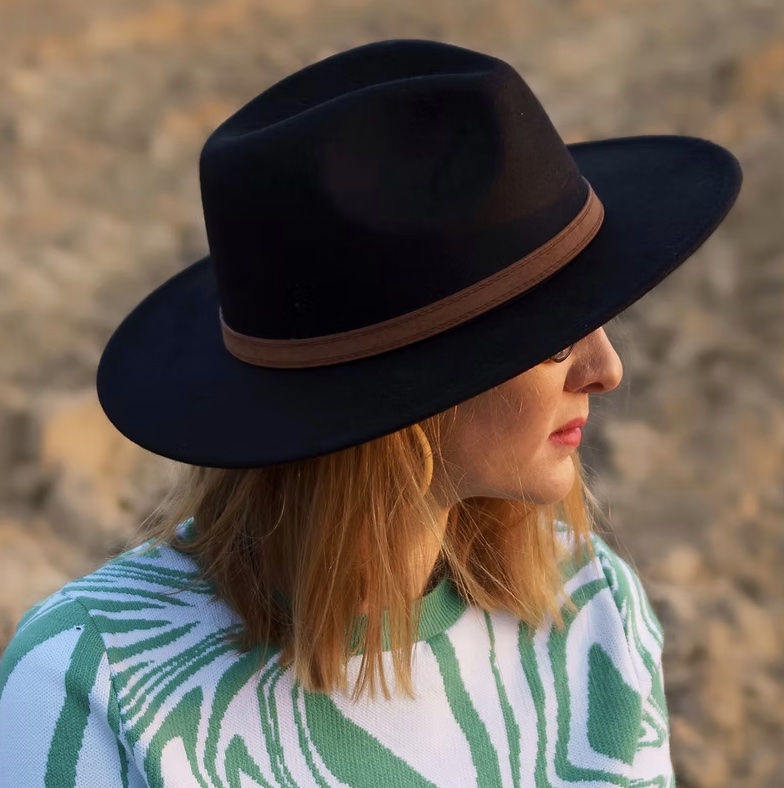
Elsa Carvalho’s path into visual art began not in a studio, but in the structured logic of computer science. A Portuguese software engineer with a PhD completed in 2012, she turned toward artistic creation in 2021, at a moment when the NFT movement opened new doors for digital experimentation. On the occasion of her solo artcast The Unfolding on Niio, we asked her a series of questions about her artistic practice and creative process.

In this conversation, Carvalho reflects on how poetry and coding share a common ground in working within constraints, how open access to AI tools made image-making accessible to her as a newcomer to visual art, and how she gradually moved from early experimentation toward a more personal visual language.

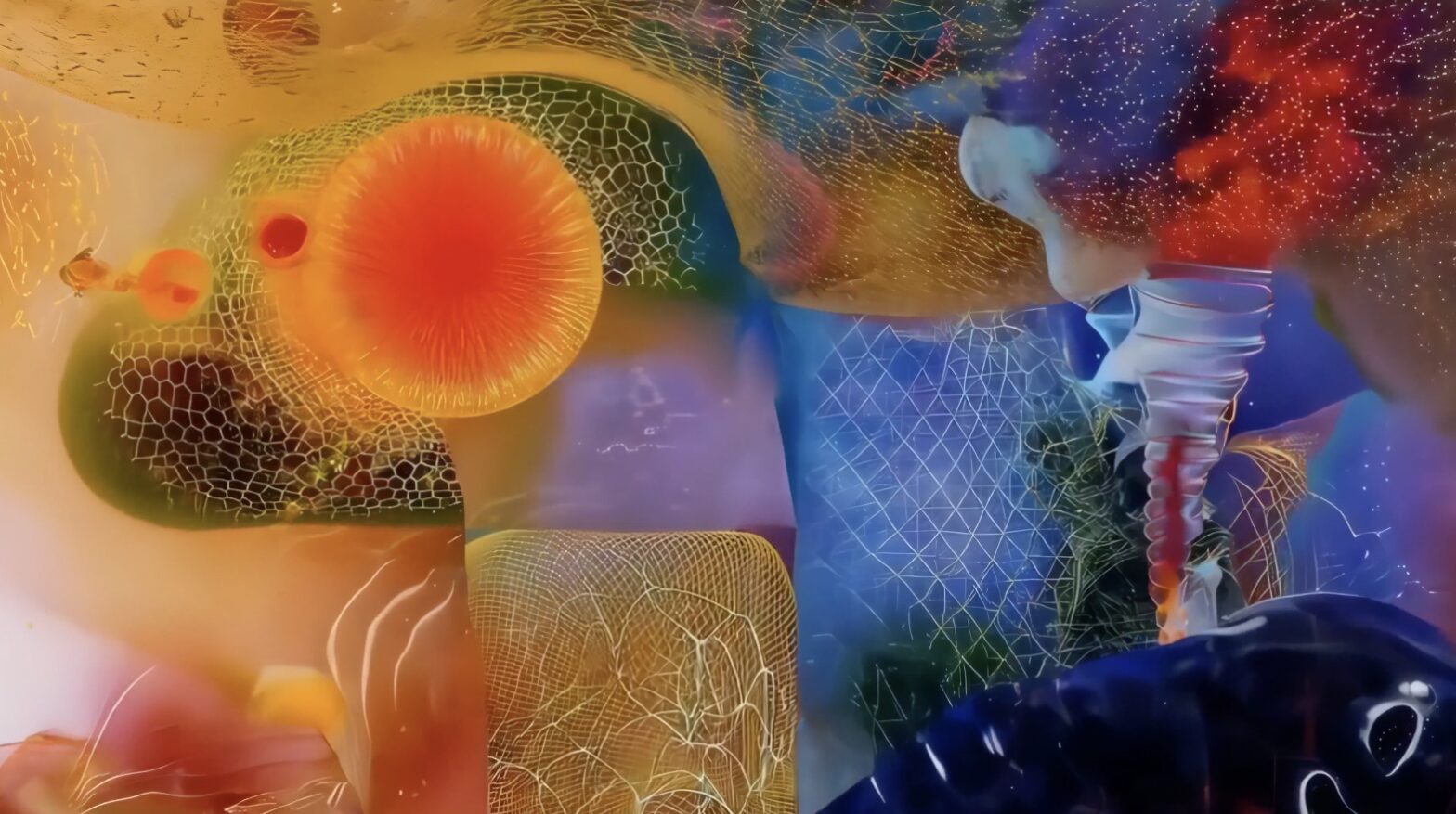
Elsa Carvalho. TheUnfolding#1, 2025.

You work as a software engineer but you have also always been interested in the arts, and have written poetry and prose. How would you relate poetry and literature to creative coding?

In my professional practice I always felt that coding is a very creative activity. Although this may seem counterintuitive, because it is full of rules and constraints, the fact is that you are creating something and, in the end, a result will emerge. There are different ways of achieving the same result, and the process of searching for and choosing a path is something I find very appealing. Often, what matters is not only the final output, but the decisions made along the way.

The same happens with writing. There are rules in language as well, but they can be bent or broken for poetic reasons. In creative coding I feel a similar freedom: working within constraints, but still allowing intuition, experimentation, and small deviations that can change the outcome.  

“Creative coding means working within constraints, but still allowing intuition, experimentation, and small deviations that can change the outcome.”

You decided to dive into visual art in 2021, at the time of the NFT boom. How did the NFT scene shape your understanding of art, and how has it evolved over the last years?

The NFT movement was the trigger for me to start exploring digital art. It felt like something important was happening and I wanted to be part of it, not to be left out of what seemed like a meaningful way to step into digital creation. In many ways, it was the entry point that allowed me to discover this artistic side of myself.

At that time, I had no experience with digital art, and that was one of the reasons AI attracted me so much. It opened the possibility to experiment visually without a traditional background. In that sense, AI felt very democratizing, allowing many people, including myself, to explore image-making in a more accessible way.

More recently, my relationship with that space has changed. I became more interested in slower processes and in developing a personal visual language. Discovering platforms like Niio, where my work can exist on large screens or in people’s living spaces, appeals to me more now than the NFT space itself. Still, I feel I will always be connected to that movement, as it was the precursor to my entry into the artistic world, and I owe a lot to it for opening that door.

Elsa Carvalho. TheUnfolding#2, 2025.

As a software expert, you know how software can shape what a user is able to do or even think they can do. Over the last decades, artists working with code have developed new tools that allow them to bypass the limitations of commercial software, and created a community around sharing. What do you think of this open source movement and how has it helped you as an artist?

I think the open source movement is very relevant and powerful. One of its biggest strengths is that it allows people to bypass the high costs of commercial software and to build tools together that anyone can use. This kind of shared effort has a real impact and reaches millions of people.

In my own practice, I did not take full advantage of artist-led open source tools, but open access to AI algorithms was essential for me in the beginning. Having Google notebooks available, with increasingly better GAN models and later other algorithms, was what allowed me to start experimenting with AI and image generation.

I also used non-paid platforms like Artbreeder, especially in my early exploration, alongside commercial AI tools. So my path was a mix of open, shared resources and proprietary software. Without that initial access to open algorithms and notebooks, I probably would not have entered this field in the same way.

“Discovering platforms like Niio, where my work can exist on large screens or in people’s living spaces, appeals to me more now than the NFT space itself.”

You use creative coding to generate visuals that then feed into an AI model to create a unique visual language. Can you take us through this process?

My process usually starts with creative coding. Through code, I generate images with more geometric structures, and this is where the core aesthetic of the work is defined. At this stage, I also establish the color palette and the visual coherence that runs through the series.

These images then become the starting point for the use of AI. AI allows me to introduce more organic qualities into the visuals, inspired by natural forms. It transforms the geometric structures and adds a layer of complexity and softness that I could not achieve through code alone.

From there, I curate the resulting images and use them as the basis for video works. I use AI tools to create the videos, either by introducing movement into the images or by morphing between different images. This final step allows the work to unfold over time and reinforces the idea of transformation that is central to my practice.

“I started my artistic practice with a mix of open, shared resources and proprietary software. Without that initial access to open algorithms and notebooks, I probably would not have entered this field in the same way.”

Both creative coding and artistic creation with AI deal with the tension between controlling the output and letting the program surprise you. How do you manage this tension? Do you sometimes fear that a good visual might be ruined once interpreted by the AI?

There is always a balance between control and surprise in my process. With creative coding, I have more control over structure, color, and overall direction. With AI, I accept that the visuals will change in ways I cannot fully predict.

Of course, there is always the risk that a visual I like might be altered in a way that does not work. But one of the pleasures of working with AI, and also with creative coding that includes some degree of randomness, is precisely the possibility of being surprised by the process.

Unexpected results often become important. Sometimes they even guide the direction I decide to follow. Rather than trying to protect a single image, I work through many variations and curate carefully, trusting that the process itself will lead me to the right outcomes.

Elsa Carvalho. TheUnfolding#3, 2025.

You have stated that your interest in organic forms stems from your childhood experiences in a farm, surrounded by animals and nature. Yet the forms you create are abstract and strongly evoke Surrealist painting. Why have you chosen this aesthetic?

Organic forms appeal to me a great deal, and that comes from growing up surrounded by animals and nature. Those experiences stayed with me, even if they are not represented in a direct or literal way.

At the same time, I am not interested in reproducing nature as it is. I prefer to work with suggestion rather than representation. By keeping the forms abstract, I can give hints instead of clear answers and leave space for the viewer’s own interpretation.

This approach allows me to connect personal memories with a more open visual language. The work does not describe something specific, but it can still evoke familiar sensations or emotions linked to nature.

Your early work shows more “mainstream” experimentation with AI, first applying textures to photographs of nature, then generating portraits of women with surreal elements, then moving into classical painting and surreal scenes that remind the work of Max Ernst and Paul Delvaux, as well as some photorealistic imaginary landscapes. What didn’t work for you in all these phases, that made you move forward? How have the advances in AI image generation contributed to this process?

It is interesting that you ask this question. When I started this path, not long ago, I met several Portuguese artists who were also involved in NFTs. I remember speaking with one of them about how to find my own style, and she explained it very simply: it can only happen with time, experimentation, and by understanding what makes sense for you at each moment.

In the early days, I was mainly exploring the tools. I was trying different approaches, testing what AI could do, and learning through practice. What did not work for me in those phases was the feeling that the results were too dependent on existing visual references, and that they resolved too quickly.

I enjoy experimenting, and I tend to move on when repetition becomes too comfortable. Over time, and with the advances in AI image generation, I was able to refine my process and gain more control. Now that my creation pipeline is better defined, it is easier for me to explore different themes while keeping a consistent process and aesthetic, which I hope is becoming more recognisable.

“One of the pleasures of working with AI, and also with creative coding, is precisely the possibility of being surprised by the process.”

Color plays an important role in your compositions, which feature deep blues and bright oranges and yellows, as well as a wide range of strongly contrasting colors that underline the constant changes taking place. How do you work with color? Does it serve purely compositional concerns or does it incorporate a particular meaning?

I work with a small set of color palettes that I use in a more or less random way during the creative coding phase. This helps give consistency to the final works, even when the forms and structures change.

I am very drawn to strong colors. Sometimes the world feels very grey, especially in the period we are going through, and I feel that people need strong colors in their lives. For me, color brings energy and intensity to the work.

There is no specific meaning attached to the colors I choose. Intuition plays an important role. In the end, the resulting colors are a mix of what comes from the initial coded image and what comes from the AI prompts, and I curate the results by choosing the images that appeal to me the most.

“Sometimes the world feels very grey, and I feel that people need strong colors in their lives. For me, color brings energy and intensity to the work.”

In the series tran·sience you collaborated with Bruno Miranda, who created a musical score for your compositions. Seeing the artworks with music almost feels as if the shapes are reacting to the score. How did this collaboration come to be? What does music bring to your work?

Bruno Miranda is my husband, and although music is not his day-to-day work, he has a strong passion for composition. The collaboration came very naturally, as it felt like a way to give the videos a stronger impact.

The process usually starts with the visuals. Once a video is ready, I ask him to create a musical composition for it, sometimes suggesting a mood or style. Music adds rhythm, movement, and emotional depth that the visuals alone cannot convey, making the work feel more alive and immersive.

Elsa Carvalho. TheUnfolding#4, 2025.

You have stated that impermanence is one of the most fundamental truths of life. Following this line of thought, where do you think your work might take you next? Have you considered video mapping, installation, sculpture, or other forms of creation?

Like my works, I tend to let life and intuition guide me. After several years working consistently on my process, sharing my work on X (ex-Twitter), and selling NFTs occasionally on different platforms, I began receiving more recognition. Instead of going after opportunities, I started getting invitations.

First, I was invited to sell my videos as NFTs on a well-known AI video platform. Later, platforms like Niio, which provide video artworks to be shown in public spaces or companies, invited me to submit my work so their clients could choose from my artworks. More recently, I was invited to create pieces for an important event here in Portugal. Challenges make our minds search for creative solutions, and if somebody challenges me to show my work in a different or innovative way, I will certainly try to make it happen. I prefer to let these kinds of invitations guide me and shape the work I explore next.

A purely visual experience. The art of Eisuke Ikeda

Niio Editorial

Born in Osaka in 1976 and trained in post-production editing after graduating from the University of Fine Arts, Eisuke Ikeda has developed a distinctive visual language that seamlessly weaves analog sensibility into digital precision. His works are marked by an intentional embrace of imperfection—subtle distortions, organic pulses, and delicate fractures that bring a surprising tactility to the virtual screen. Central to Ikeda’s practice is a deep trust in the viewer’s intuition. He eschews overt symbolism or narrative structure, focusing instead on the phenomenological act of seeing. Subtle distortions, organic fluctuations, and textural echoes mimic natural erosion and evoke the tactile essence of physical matter, despite being rendered entirely in the digital realm.

Niio has recently launched the solo artcast Eternity of the Ephemeral, which features five artworks that, more than just moving images, unfold like ambient states of consciousness. These are not works to be watched in the conventional sense—they are to be dwelled in, felt, and absorbed. Each composition becomes an experiential landscape where the viewer’s perception becomes the true medium. In the following interview, the artist elaborates on his creative process and the concepts that underlie his artistic practice.

Eisuke Ikeda. EXoC 2681257 | 2025 Remix |, 2025

You have worked as a post-production CGI specialist for film productions. How does this background influence or nurture your artistic production? What have you learned in terms of software usage and image production that you are now applying to your artistic projects?

When I worked in post-production, my duties ranged from assisting with television editing to creating CGI components and producing opening visuals for music events.

What impressed me most during that time were the veteran craftsmen at the Kyoto film studios. Cinematographers, editors and script supervisors—professionals who, in other careers, would already be retired—devoted themselves to finishing each project, working through the night without hesitation. Their approach to filmmaking was more than technical skill; it was a way of life. The blend of boldness, precision and pride they embodied remains vivid in my memory.

Those experiences still shape my practice today. Although my methods have evolved, the resolve to “communicate through moving images” and the quiet sincerity with which I face each work are values I inherited from them.

“The interweaving of nature with daily life and the presence of temples and shrines in Kyoto have formed my aesthetic foundation since childhood.”

My sensibility is also rooted in Kyoto’s environment. The interweaving of nature with daily life and the presence of temples and shrines have formed my aesthetic foundation since childhood. From art-school days to the present I have been drawn to contemporary art, Japanese Zen, Buddhist art and classical arts; the decorative and symbolic qualities of hanging scrolls, folding screens and esoteric Buddhist implements continue to influence me spiritually.

The software skills I acquired by self-study at university became my technical base. I entered the field just as digital tools were being introduced, and programs such as After Effects, Photoshop and non-linear editors proved indispensable in both commercial and personal work. Those skills still underpin my art today. More recently I have expanded my toolkit—again self-taught—to include TouchDesigner and Ableton Live.

Thus, beyond any single CGI technique, it is the mindset and sensibility cultivated in post-production, together with my exposure to diverse art forms, that define the core of my creative work.

Eisuke Ikeda. EXoC 2681257 | 2025 Remix |, 2025

Can you briefly describe the process of elaboration of your artworks? Despite being abstract compositions, what are the experiences, images, or ideas that trigger their creation?

I currently rely on TouchDesigner and Ableton Live to pursue abstractions in which sight and sound intertwine. Although I once produced 3-D character animation, I gradually became more attracted to abstraction—forms that leave interpretation to the viewer rather than imposing narrative or figuration. I am drawn to structures with no beginning or end, no fixed centre, in which spiritual resonance can reside.

My process is improvisational. Instead of following a strict concept, I trust “moments of visual delight.” As light, motion and colour shift, I adjust elements in real time, responding with my emotions and bodily sense—an approach akin to musical improvisation.

The five works uploaded to Niio focus on delicate particle movements, yet my style remains fluid. Depending on my state of mind I may move toward flat compositions, high contrast or rapid motion. In every case I seek to evoke pre-linguistic emotions or fragments of memory, rather than convey explicit meaning.

“I am drawn to structures with no beginning or end, no fixed centre, in which spiritual resonance can reside.”

In your artworks, you avoid any rigid interpretation or meaning. In fact, the title of each video is mostly a reference number, with no intention of providing any narrative. Yet the descriptions are quite poetic, with references to memory, silence, the soul, or eternity. How do you balance the purely abstract and rational with the more evocative and narrative aspects of your work?

Titles such as EXoC or abCnW are deliberately cryptic: abbreviations of words that interested me at the time. They preserve ambiguity and poetic space, encouraging open interpretation rather than prescribing it. 

Ultimately I want to offer a “purely visual experience” that quietly expands awareness. What I call a “tactile sensation beyond the screen” is this spiritual and sensory resonance—one that connects, for me, with the animistic quietude in traditional Japanese aesthetics.

“Ultimately I want to offer a purely visual experience that quietly expands awareness.”

Ephemerality is a key concept in your work, expressed in fleeting elements, bursts of light, and also darkness. Is the search for the expression of the ephemeral what led you to work with digital media? How do motion, light, and darkness play a role in your work?

Creating art has always been a digital act for me. Since my student days I have worked on a computer; I have never painted on canvas. Thus expression and digital media are inseparable in my practice.

I did not adopt digital tools because I sought ephemerality; rather, I have long explored how to express ephemerality within the digital environment I know so well.

That sense of impermanence appears in flickers of light, bleeding shadows and formless tremors that rise and vanish. These overlap with memory fragments and emotional echoes, permeating the viewer as a subtle perception of time and space.

Motion, light and darkness are indispensable to this. They remain understated—quivering softly inside the frame, leaving a quiet trace. Only digital media allow the fine-grained accumulation of change that produces the fragile texture I seek.

Eisuke Ikeda. EXoC 2681257 | 2025 Remix |, 2025

Each artwork in this series features a meditative soundtrack. How does music support the visual experience? Does it introduce a narrative, or convey a certain emotion?

For every piece in this series the soundtrack was composed after the visuals were completed. The music introduces no explicit narrative; its purpose is to support atmosphere and mood.

Sound and image function symbiotically: audio flows with the rhythm of light and movement. Rather than directing viewers toward set emotions, the restrained soundscape leaves room for personal reflection and sensory introspection.

“Only digital media allow the fine-grained accumulation of change that produces the fragile texture I seek.”

The use of Artificial Intelligence models is gaining widespread use in artistic creation. Are you interested in applying AI to your creative process in any way?

Advances in AI have opened a new perspective on my work. When OpenAI’s ChatGPT gained wide attention a few years ago, its potential struck me powerfully. For an artist rooted in digital expression, AI’s arrival echoed the shock photography once delivered to painting, prompting artists to reconsider their medium.

Many creators now collaborate with AI. I have begun tentative experiments in TouchDesigner, exploring AI-driven possibilities. My use is still preliminary, but I am gradually looking toward deeper integration—generating code and widening the scope of interaction.

Jinsil Lee: Opposites living together

Niio Editorial

Jinsil Lee is a visual artist based in Seoul, South Korea. She earned a BFA degree in 2019 from School of Visual Arts, New York City, where she initially developed her photography work. She later on moved to Seoul, where she continues her career as an artist while working as a content specialist at Tesla Korea. Her work has been featured on the Samsung US website and Samsung Mobile USA social channels, and she has also participated in group shows such as the Naver Z Metaverse Exhibition (2022), Pulse Art Fair in Miami (2019), and School of Visual Arts Mentor Show (2019).

On the occasion of her first solo artcast on Niio, Transcendence, we talked with Jinsil about her creative process and the way she transforms scenes captured in her daily environment into mesmerizing abstract compositions. 

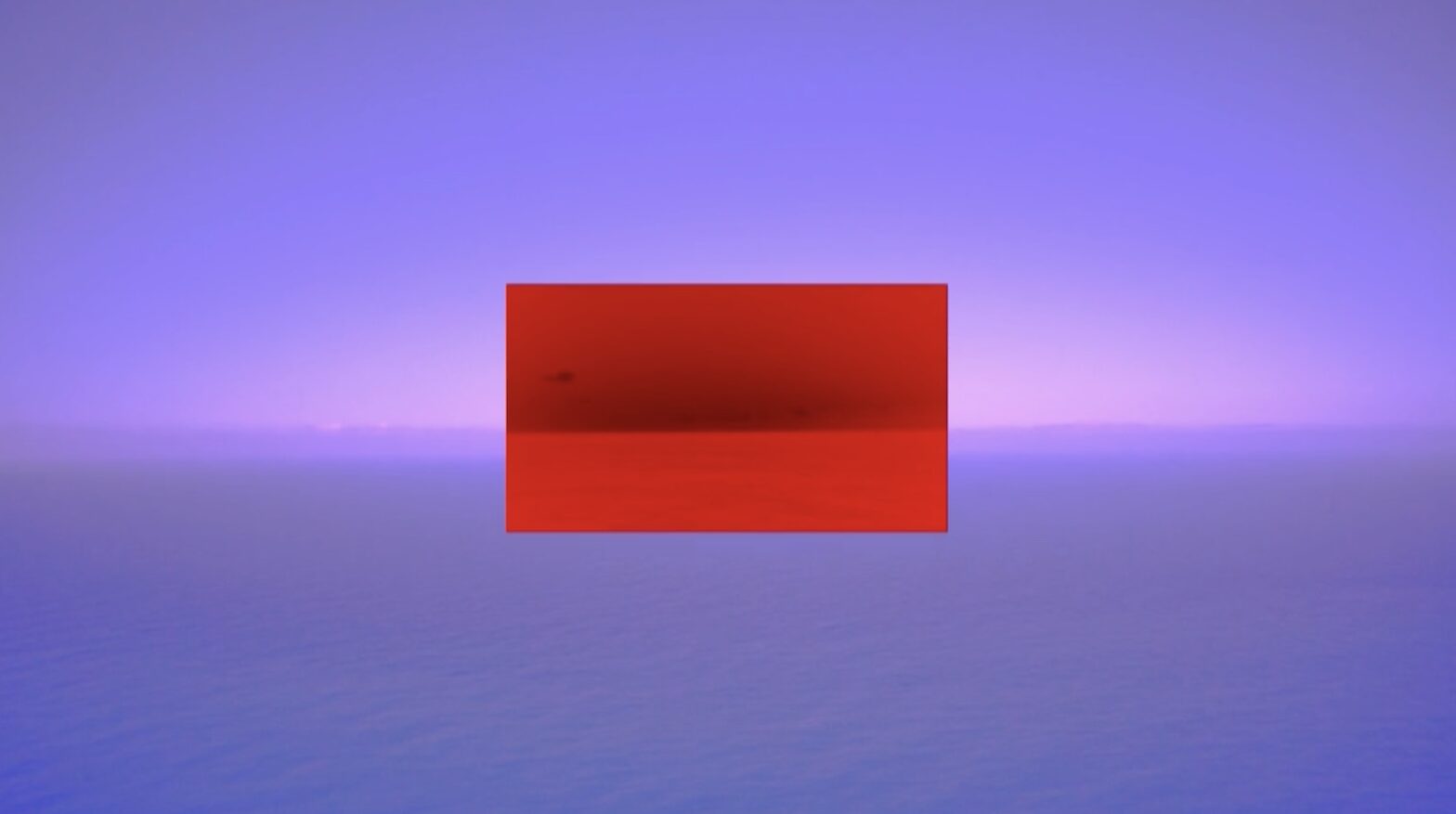
Jinsil Lee. Dream of a summer night, 2019

You studied at the NY School of Visual Arts and currently live and work in Seoul as a visual artist and content specialist. Both New York and Seoul are vibrant cities, each with their own pace and culture. What has been more inspiring to you from your experience living and developing your career between the US and South Korea?

New York and Seoul are very similar and different cities. Both cities are full of their own charm, and both have been very inspiring to me in different ways. I grew up in Korea, so I’m more influenced by Korean culture in terms of the way I think and the language, but it was in the US where I really started to pursue art. I was able to explore art more freely in New York with its huge art scene, various art fairs, galleries, and artists, and this has greatly influenced my work today. Both cities have influenced me in different ways. Seoul has influenced me as a person, and New York has influenced my artistic work.

“I’ve lived in cities all my life, so I have a longing for nature.”

Your work is based on photography, yet it becomes a moving, abstract image. Can you explain to us your creative process? How does the transition from the captured image to the final composition come about?

I’ve been drawing since I was a kid. In my teenage years, I mostly painted in oils, and I loved the freedom to express whatever I imagined on the canvas. Then I started photography and applied my painting style to the medium of photography. I took a series of photographs and used tools like Photoshop to create short videos, and then I moved on to working with footage shot in video format.

Jinsil Lee. Sunset Town, 2018

Scenes from daily life and natural landscapes are sources of inspiration in your work. What are you most attracted to? Do you consider the scenes in front of you in terms of their aesthetics (colors, light, movement) or do you also consider their context, the meanings and stories that underlie the image you are capturing?

I’ve lived in cities all my life, so I have a longing for nature. I work and live in a big building in the city, but I question every day whether this environment is right for our bodies and minds, so when I’m close to nature, I feel an indescribable sense of awe. I think about this a lot, especially when I’m at the beach and I’m looking at the water moving like it’s breathing and the sunlight shining on it, and I realize that it’s so much like a human being, and I think about how long they must have traveled to get to where I am, and I think about how the moment that I’m in with them feels like a miracle, and it’s amazing. The visual beauty in front of me inspires me, but I think it’s probably the backstory that has a bigger impact on me.

Jinsil Lee. 20 18, 2018

Abstract art seeks the essence of things and at the same time removes the viewer from any reference to a specific time or space. What do you find most interesting about focusing on abstraction? What do you think that might be missing from the first-hand experience you get while capturing the original images?

I think there’s a lot of power in abstract art, and the reason I loved painting as a kid was that I was free to express my thoughts on a white canvas. I think abstract art, similar to the experience of painting, gives the audience a bigger room to run around in by removing the boundaries, and that’s the power of abstract art, that other people can see what I’ve imagined and they can develop their own imagination. That’s how we connect through art, and I think it’s very similar to nature, where everything is connected organically. So I try to make the forms as minimal as possible, and then I use the power of color to replace them, so that the audience doesn’t see them in their rawest state, but on the other hand, they see them in their most basic, unclothed form.  

”The power of abstract art is that other people can see what I’ve imagined and they can develop their own imagination.”

Water, oceans, fluids, are common elements in your work. This is often combined with symmetrical structures, creating a certain tension between order and chaos, staticity and fluidity. What do you find most interesting about this tension between opposites? Could there be one without the other?

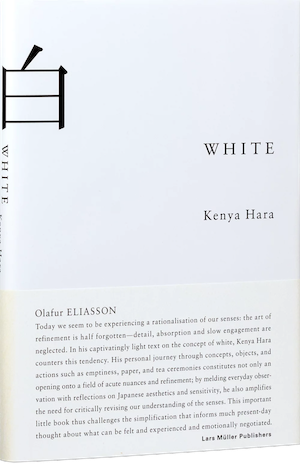
I love the book White by Hara Kenya, and there’s a quote in it that goes something like this. “The black color of type is only truly valuable when it is paired with the white it is based on.” I believe that two opposites are more valuable when they coexist, like you can only feel joy when there is sadness, and that’s why I like to play with this idea. In fact, my biggest inspiration is nature, but capturing it as a pixel-based digital photograph and editing it through digital tools, I think this process is very similar to human life. There are quiet people and there are loud people, there are people like me who are good at drawing but not so good at talking, and there are people who are better at expressing themselves through words than through drawings. I think my artistic process is a lot like our lives, where we have these opposites living together.  

Jinsil Lee. 4AM, 2019

While your compositions are abstract and rationally geometric, the titles of your artworks suggest a narrative, which in some cases is expressed with words, as in These Foolish Things. Can you elaborate on the use of narrative in your work?

One of the most important things in my life is music. I feel unimaginable happiness from a favorite song and can be immersed in that emotional state for long periods of time. So when I start listening to a song, I usually memorize the lyrics from start to finish, and then I take those lyrics and rearrange them or turn the words into something that expresses my thoughts and use them in my artwork. I think it’s interesting that in this process, I’ll be thinking about the song while looking at my work, but I’m taking the audience into a world that I’ve “recreated”.  

“My artistic process is a lot like our lives, where we have these opposites living together”

Sound and music also play a role in your work, which is sometimes silent, and sometimes features a music score or the sounds of the environment you recorded. Can you tell us a bit more about the connection between images and sound, and what leads you to choose whether the piece will be silent, with music, or ambient noise?

I often meditate, and sometimes music helps me to focus, and sometimes I’m able to focus more deeply when there is no sound at all. When I work on my art, I feel similar to when I meditate, sometimes I work with music and sometimes I work in a silent environment. For each piece, I choose sound to support the audience’s visual experience, and sometimes I choose silence so that the audience can focus on the visual experience alone.

Jinsil Lee. In Your Orbit, 2019

The growing influence of AI in the visual arts offers artists the possibility to work with source material that doesn’t exist, but is created by a prompt. Are you interested in incorporating this technology into your work, for instance to start with an AI-generated video and then turn it into an abstract composition, or else use real footage and transform it with the aid of AI tools?

100%. I consider my work to be a 3 way collaboration between nature, myself and digital technology. I am quite interested in how digital cameras capture and read moments. For example, the actual color I remember is often not the same as the color the digital camera reproduces, but I find the process and how it works fascinating, so I use it as it was captured. In this context, the idea of AI generating an image based on the data it has stored over the years, with prompts from me, is very interesting.

“I want to create a work of art in which I and the AI imagine a universe that I can’t actually photograph.”

It’s a vague idea, but I want to create a work of art in which I and the AI imagine a universe that I can’t actually photograph. If so, I’m very excited to see where that AI’s data comes from and how amazing it would be to see how it came to meet me.

Jaime de los Ríos: sculpting infinity

Pau Waelder

Jaime de los Rios (Donostia/San Sebastian, 1982) is a visual artist and programmer, founder of the open laboratory of art and science ARTEK[Lab] (2007). An expert in free software and hardware, he has developed over the last decades a body of work that blends contemporary art, science and technology, creating immersive environments and generative works, often in collaboration with other artists, scientists and engineers. 

On the occasion of his solo exhibition “El problema de la forma” at Arteko Gallery, we present in Niio a selection of his recent digital works and conduct this interview in which we delve into the career, work processes and inspiration of the Spanish artist. 

Explore a selection of artworks by Jaime de los Rios in On The Problem of Form

Jaime de los Ríos. LeVentEtSaMesure I, 2024

As a visual artist and programmer, you unite the two essential aspects of digital creation. What led you to develop your career in this field? Which aspect tends to prevail, the one that seeks a particular aesthetic expression, or the one that seeks to experiment with new technologies?

I consider that creation is intimately linked to the paradigm that the artist inhabits. In my case, different contemporary aspects intersect that have led me to use new technologies, as well as the aesthetics of these technological times. I did my studies in electronic engineering and I was educated to successfully manage the technical capabilities of my time. However, in the process of learning, certain desires and results have come in the way. These were not initially desired, but they responded to a philosophy or a concern. I remember well when I had to program an automaton that controlled a traffic light and I forced it to make a certain error that made the three lights blink in a randomized cycle. This reminded me of the famous movie “Close Encounters of the Third Kind” (Steven Spielberg, 1977) and how it used the language of sound and color, with the notes Sol re Sol. There I realized that to control the technology of the moment was also to be able to use the best tools in a critical and aesthetic way and that in such a technologized society artists have an important role to reconfigure or offer a political view of the situation. 

I work mainly with algorithms. I don’t always do it from a programming language but the logic is the same. I compose simple systems that are governed by different equations: these combinations make the system complex, quantum we could say. In its infinity I cannot know how the system will behave at a given moment but I can frame its behavior. It is like sculpting infinity. When handling these systems, I navigate among the mathematics themselves and it is these that make the possibilities emerge that perhaps would never have been in my head if I had thought about it from the beginning, so aesthetics and technology are absolutely linked to each other.

In your work there are influences of geometric abstraction and the work of pioneers such as Manfred Mohr. What references have marked the visual vocabulary of your works?

Of course, Manfred Mohr, Vera Molnar, Frieder Nake…. And also the whole ecosystem of the Computing Center of Madrid, including artists such as José Luis Alexanco or Elena Asins. At the moment when these artists became acquainted with computation through the computer there is a moment of singularity that is very inspiring for me and can be appreciated in my last exhibition. The precarious resources, such as simple geometries, and yet the great capacity for resolution are undoubtedly a great metaphor for the work of these artists in their time. It is the first  painting made using a computer, but it has immense poetics. 

I have arrived in my work to these artists that I already knew but I have done it at a later time, after exploring the history of painting itself and activating algorithms in a pictorial way. In recent years I have wanted the work to speak of its own support and its own algorithms in a transparent way and that is why the elements I use are precisely reminiscent of that synthetic painting.

Jaime de los Ríos. FlyTheProblem, 2024

A main aspect of your work lies in the use of generative algorithms to create constantly morphing compositions, with each work being what Frieder Nake once defined as “the description of an infinite set of drawings.” What attracts you to the possibilities of generative art? What is it like to conceive of a work that does not consist of a finished visual composition, but rather a set of instructions and behaviors?

It is undoubtedly one of the great differences with respect to plastic art. Algorithms allow us to think and develop artworks that change endlessly. We work with movement, fundamentally, let’s say that so far we have a new characteristic which is rhythm and we leave behind, as if it were a curse, the texture and smell of painting. 

Here there are also two types of digital artists, those who direct their creation to something they have previously thought of and others like me who navigate mathematics and in the dialogue with the algorithm itself we let emergencies flow, but then both types of artists need to conceive the work as a system, a framework of possibilities. The work is never solved but it is enclosed in a space of freedom. 

The most exciting thing about this technique, I would say, is to reach the infinite in a poetic way that enables contemplation. To do this, and knowing that it is a post-editing technique, that is, it does not begin or end, we only have to look at nature, the largest infinite system that can be known. From there it is trapped into mathematics and transferred to aesthetic systems. Some artists do it in a very direct and figurative way, others use a system of color and a rhythm that we can perceive as human beings, everyday phenomena such as the reflection of the light in the sea, the shoals of fish or the choreography of birds. 

“The work is never solved, but locked in a space of freedom.” 

In addition to pictorial references, in your work you have explored the relationships between digital art and film, using Gene Youngblood’s concept of “expanded cinema”, and also with the electroacoustic music of Iannis Xenakis, as well as jazz. What do these connections with film and music bring to digital art, and especially to your work?

My work is an incessant search for pictorial, tactile, and sound systems. However, I rarely generate my own sound, so I use the mathematics of music to apply it to the artworks. Many of us electronic art artists work transcoding data, that is, a work can be silent and at the same time have a lot of musicality as is the case of my work on Iannis Xenakis, where I use his famous equation, the curve, which he applied on the one hand in architecture but also in sound composition, to move a series of kinetic artifacts that are like windmills. By activating a movement directly proportional to this curve and also generating a very powerful rotational sound, the whole immersive work, which is also projected, forms a universe that evokes the work of Xenakis. It is almost a scientific experiment: what would have happened if we human beings did not have the sensors to hear, and had to translate those frequencies in the form of color, for instance.

Jaime de los Ríos. pixelsunshine, 2024

Telepresence is a concept you have worked with in several projects, which have notably incorporated a complex interaction between devices, people, and spaces. What attracts you to the possibility of creating these remote connections? Based on your experience with these projects, how do you see the ubiquity of digital art through platforms like Niio, which make it easy to integrate artworks on any screen?

The telepresence I worked with is situated in time between the utopia of net art, the rhizomatic connection, and the quantum era of entanglement. It is one of those concepts that are human aspirations and that Roy Ascott and Eduardo Kac, of course, talked about and developed a lot. In the days of the Intact collective we did teleshared actions between many places around the world. The most interesting thing is that they were not based on video as in our new tools, but given the precariousness of the Internet connection what we sent was mostly mathematics. So I became an interactive beacon of light to the music coming from the SAT in Montreal thanks to the data flowing through the fiber optic cables. 

Niio is a revolution for digital art, it takes advantage of the nature of the medium and takes art out of the black box. One of the big problems of art today is that it has not changed at the pace of society, today we must be accessible and in the pockets of the user, the art lover and not exclusively in centers or institutions and galleries, which of course provide a great value to the work but limit access. Likewise, one of the characteristics that most interests me about Niio is to be able to enjoy the works in privacy, at a contemplative pace and in a space of one’s own without the pressure of contemporary daily life. Enjoying the work during different times throughout a day, a week or as long as you wish, that is the way in which art becomes great and we truly understand it.

“One of the features that interests me most about Niio is being able to enjoy the works in privacy, at a contemplative pace and in a space of one’s own without the pressure of contemporary daily life.”

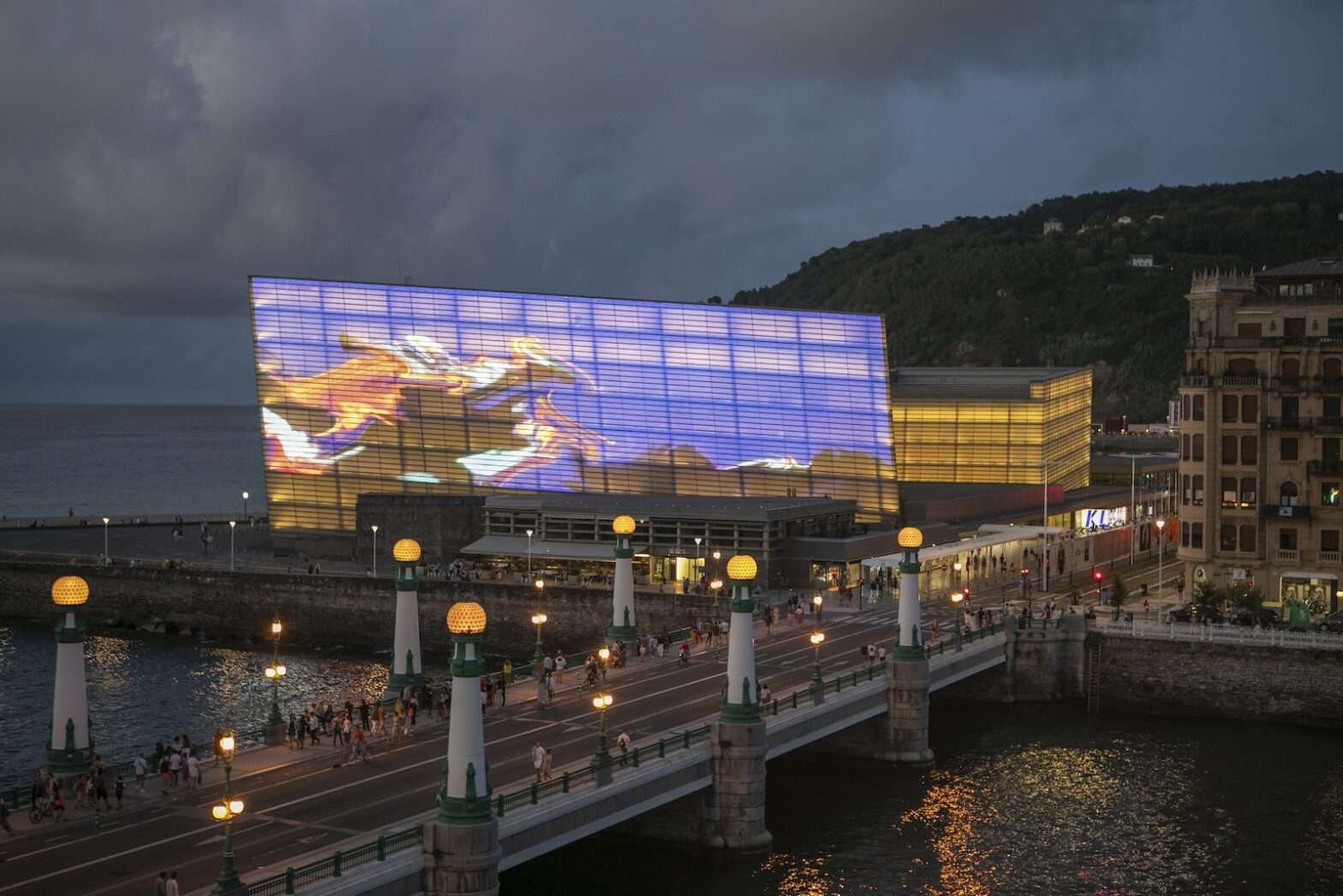
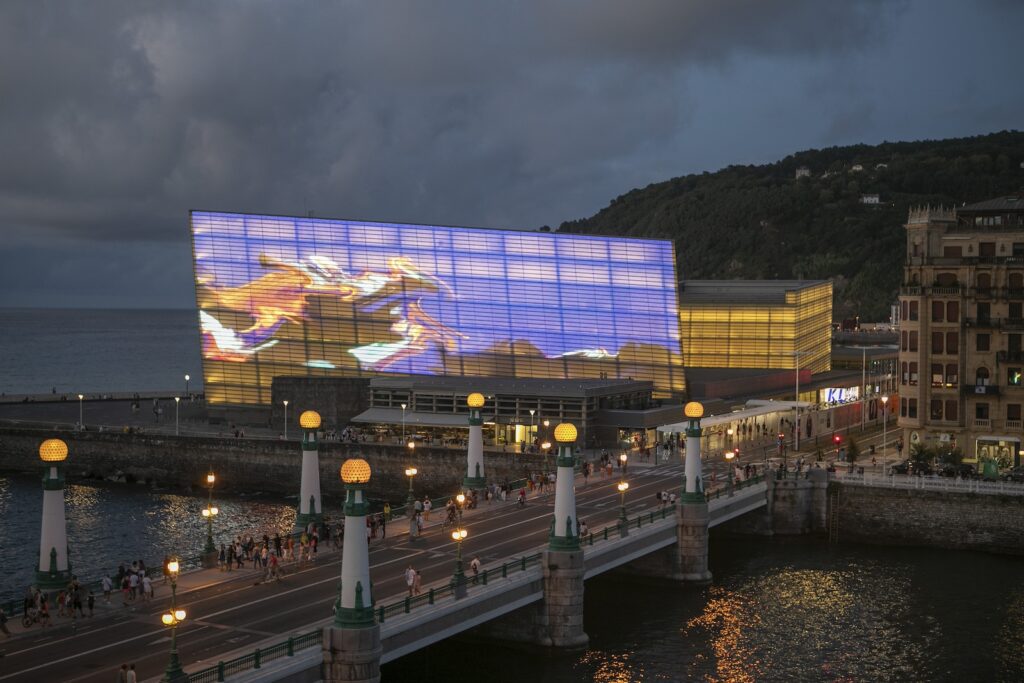
Your works have occupied the facades of large buildings such as the Etopía center in Zaragoza or the Kursaal in Donostia. What are the challenges of creating a work for the public space and in large dimensions? How would you say they contribute to raising awareness and appreciation of digital art? 

Besides the technical complications, because each digital facade has its own nature, what I am most interested in is to dialogue with the space, to reduce the gap between art that people feel safe with and is part of their history and digital art. Of course this is not the same everywhere. For example, in the city of Zaragoza, which is closely linked to classical art, I created a work called Goya Disassembled. It was the first work made for the facade of the art and technology center Etopia and the result of an artistic residency in this cultural institution. It was an infinite work in which the artist’s entire color palette was displayed, based on all his paintings and drawings. In most of the cities of the world this work would be a rhythm of colors, however in the Aragonese city it spoke of its history and the people who saw it knew perfectly well that these are the colors that in one way or another inhabit the city: dark, strong colors, just like the paintings that they know and love so much of Francisco de Goya

Jamie de los Ríos. Crimson Waves, 2021. Kursaal, Donostia/San Sebastián. Photo: Sara Santos

Much of your work is characterized by collaborations with other artists or collectives. What have these collaborations contributed to your work? How does the creative process differ when you work on a piece individually from when you work as part of a team?

My artistic work has always been linked to collaboration, and I think that in general all artists working with new technologies are constantly busy! In my case I think that for better or worse I have developed a more personal line and when I have the opportunity to work with other artists in the creation, being a very hard and difficult process, it allows me to get out of my more personal line and activate other issues. If I look back, I’d say that when I work in a collective I am much more political and semantic, while when I work on my own I’m more romantic and liberated. 

In any case there are different types of collaborations. When you work with different disciplines, for example in my case I have worked with musicians, we allow ourselves to be ourselves and reach something common. When you work with other digital or plastic artists you have to create a whole new space, that’s why many times you start from discussions and it’s more complicated to speak from the heart.

“When I work with a collective I’m more political and semantic whereas when I work on my own I am somewhat more romantic and liberated.”

You have a long experience in the design and technical coordination of digital art exhibitions and events in Spain, such as the Art Futura festival or the exhibition “Sueños de Silicio,” among many others. From this perspective, how have you seen the presentation and reception of digital art in Spain evolve? What successes and missed opportunities would you point out, globally?

This is a complicated question and at the same time essential to understand the contemporaneity of electronic art. I will begin by talking about the artists themselves and how they have been affected by the way of exhibiting this type of art, which is often related to spectacle and the possibilities of the future of art. Electronic, digital and new media art has been closely linked to the exhibition of new technologies and this has generated a precarious business model for artists who, by collaborating with more people, generate grandiloquent and very expensive works. The spectacularization of the medium has not served to professionalize the artists but rather the other way around, we have festivals in which we seek to be impressed by the use of new technology, and this has caused us to generate a niche, a place apart from contemporary art. 

This is not bad per se, but we must enable new paths, encourage professionalization and the labor of art, with works in a smaller scale but also more linked to a personal production. This may sound a bit classical but I had the opportunity to work with the Ars Electronica archive some time ago for the curatorship of a small exhibition in Bilbao. The vast majority of artists who participated in this festival throughout its history do not create art anymore. Perhaps it is still a very young art. 

Finally, I would like to add that I work at the New Art Collection and I study the work of artists in the technological field. In recent years there has been a great step forward in the field of collecting, with serious proposals from the creators that will allow new generations to enjoy this art.

Jaime de los Ríos. Scintillant, 2019. Collaboration with IED Kunsthal Bilbao and Susana Zaldívar.

Over the last two decades you have been active in the training aspect of digital art, running workshops and being part of teams in medialabs, notably as founder of ARTEK [Lab] at Arteleku. Can you give me an overview of the genesis and development of the maker and open source communities in Spain? How have the collaborative and training spaces in which you have participated influenced the development of a digital art scene in Spain? How has the reception of digital art that you mentioned in the previous question affected these spaces?

I have great memories of the first digital artists I met in Spain. They were linked to centers like medialab Prado. They were collectives like Lumo, which lived in a space of open creation, where they worked in the technological field from a political position of open source but also aesthetics. Not to beat around the bush, I will say that all this changed with the arrival of the maker movement. Being interesting and positive in the first instance, this movement took the political facet (open source, collaboration, etc.) and turned it into its emblem but left behind the aesthetic and even critical field. It linked creation to a certain machinery and it can be said that it made us almost slaves of those machines. 

I lost many people along the way who, from being free researchers, turned exclusively to machines and the machinery of the market. I would say that here there is a first stage which is the hackmeeting, hacktivism as epicenter and hybridization of new ways of thinking in terms of technopolitical, cosmovisionary feminism, and then maker culture, a reductionism with neoliberal tendencies, oriented to generate a third industrial revolution linked to new economies. 

“We have festivals where we seek to impress ourselves by the use of new technology, and this has caused us to generate a niche, a place apart from contemporary art.”

You are currently working as advisor and technical coordinator of the New Art Foundation, the largest collection of digital art in Spain. What challenges does the preservation of digital art pose, and how do you see the future of this type of artistic creation in terms of its permanence in institutional collections and the knowledge of its history?

Indeed, I am the technical director of the collection and I am passionate about it. We work with more than one hundred and fifty works, 95% of which belong to living artists. From the first thoughts on cybernetics in the video art of Peter Weibel to the generative art of Alba Corral. All the works are of a different nature and this implies a maximum challenge, a knowledge of thousands of sub technologies, different operating systems and different interfaces. It is still a path that is being generated thanks also to the support of all the artists, but it is certainly a collective challenge that we face and we want our works to survive in the future. 

If I have to give some advice, in order for our works to be enjoyed in the future, I would comment that it is important that we work with tools that we know very well, that we make them our own and little by little we feel that we control those supports absolutely. Our lines of code are our paint strokes and the screens, our canvases, appropriating their colors and their movements. This may sound a bit unpopular, but the field of collecting requires a certain security when it comes to a work working or being restored. We are also developing protocols for the collection that make it possible to arrange the craziest works, of course! 

Jaime de los Ríos. Vortex, 2024

In “The problem of form”, your current exhibition at Arteko Gallery, from which we present a selection of digital pieces in Niio, you recover the connection between painting and algorithmic creation that underlies much of your work. The exhibition combines digital works with pieces on paper and digital printing on aluminum. At the current moment of maturity in your career, how do you conceive the role of digital art in relation to other forms of contemporary artistic creation? How has the exhibition been received in the context of a contemporary art gallery?

I’m really excited about exhibiting at Niio, the exhibition has expanded in an unimaginable way. Now it travels through the networks and sneaks into screens all over the world. It is a very personal work that above all I have been able to exhibit in my homeland. After several exhibitions in the Arteko gallery, I can say, and this seems to me very important, that people have made my art their own. 

In times of globalization and the tentacular capacity of the Internet, it is common to think that the number of “likes” is more important than the number of people around you. This is why the exhibition has been very successful, even in terms of sales! And nowadays I would say that digital art is already part of contemporary art. Both art lovers and people who are more distant from the medium are already more familiar with this movement that speaks of issues they are aware of, and uses the same tools they use in their daily lives.

“For our works to be enjoyed in the future, it is important that our lines of code are our paint strokes and the screens our canvases.”